Pelvic Misalignment: Signs, Symptoms And Effective Treatment
In today’s fast-paced world, spending long hours sitting at a desk, moving too little, holding poor posture, carrying loads on one side, or training with improper technique has become routine for many people. These habits — small as they may seem — can silently and gradually knock the hips, spine, and pelvis out of their natural balance. This is one of the most common contributing factors to pelvic misalignment, a condition in which the pelvis is no longer in its normal physiological position and may tilt, rotate, or shift to one side. When the pelvis shifts out of alignment, your body can send warning signals such as a dull ache in the lower back, hip pain, buttock pain, an uneven gait, and even a sensation that one leg feels longer or shorter than the other.
This article provides a comprehensive overview to help you understand what pelvic misalignment is, recognise its common causes and signs, know when to see a professional, and — most importantly — explore corrective strategies, physiotherapy approaches, and exercises that can support improvement at home.
Medical disclaimer: The content in this article is intended for general health education and reference purposes only. It is not a substitute for professional diagnosis or an individualised treatment plan from a doctor or rehabilitation specialist.
What Is Pelvic Misalignment?
Pelvic misalignment is defined as a condition in which the pelvic girdle can no longer maintain its natural physiological balance — instead tilting, rotating, or shifting to one side relative to the body’s vertical axis. This causes asymmetry between the two sides of the hips, which in turn creates a chain reaction affecting the spine, gait, overall posture, and how load is distributed across both legs.
To better understand this, it helps to appreciate the role the pelvis plays in the body:
- The body’s foundation: The pelvis is a critical junction between the upper body (spine) and the two lower limbs. It acts as a stable base that supports the lumbar spine and the internal organs.
- Force transmission: The pelvis helps transfer forces from the upper body down through the hip joints and legs during walking, standing, running, and jumping.
- Attachment point for major muscle groups: This is where key core muscles attach — including the abdominals, lower back muscles, gluteals, thigh muscles, and hip muscles. The coordinated action of these muscle groups keeps the body stable and moving efficiently.
When the pelvis shifts out of alignment, this imbalance can spread throughout the kinetic chain, causing problems that radiate from the lower back and hip joints down to the knees and even the ankles.
Understanding the difference between functional and structural misalignment:
- Functional misalignment: This is the most common form, typically driven by poor postural habits, prolonged sitting, or muscle imbalances — where some muscles become over-tight while others weaken. In this case, the bony structure itself is normal. The good news is that functional misalignment responds well to habit changes and appropriate rehabilitation exercises.
- Structural misalignment: This type may involve congenital factors or underlying conditions such as scoliosis, a true leg length discrepancy, hip joint deformity, or the aftermath of a serious injury. Structural misalignment requires thorough evaluation by a specialist to identify the cause and determine the most appropriate course of management.
Common Types of Pelvic Misalignment
Not all cases of pelvic misalignment are the same. Depending on which muscle groups are imbalanced and what habits are involved, the pelvis can shift out of position in several different directions.
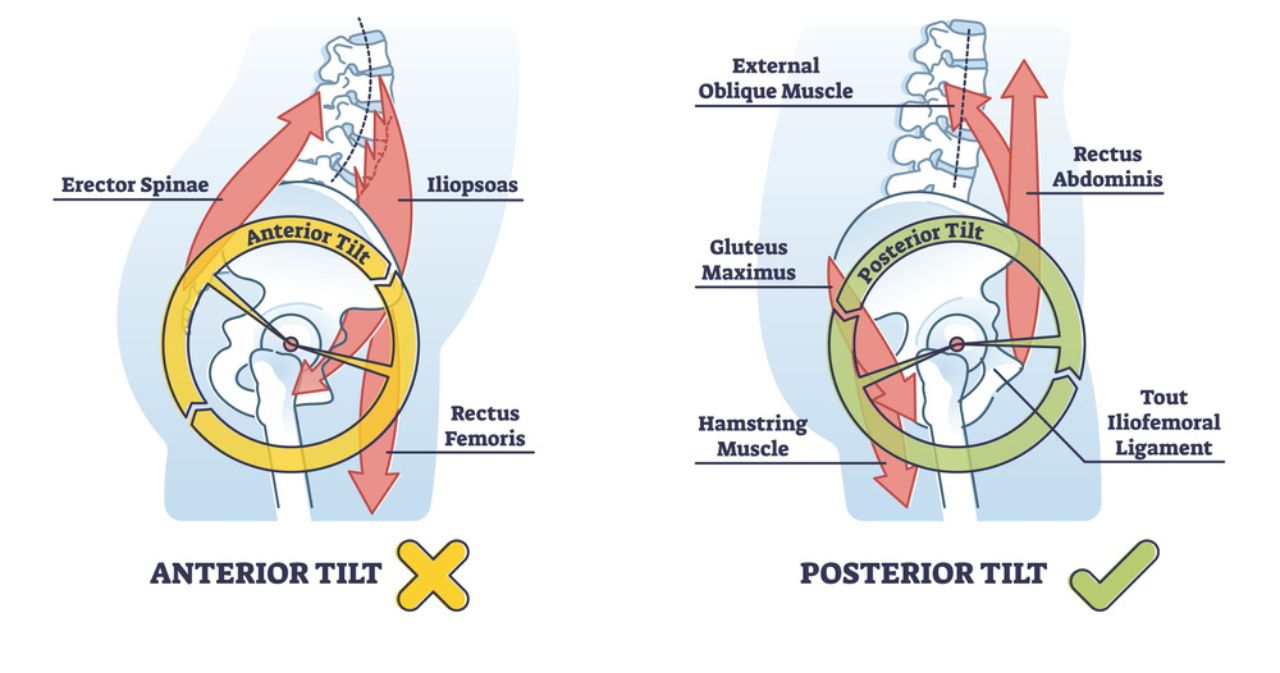
Anterior Pelvic Tilt
- Explanation: This is a condition where the top of the pelvis tips forward. People with an anterior pelvic tilt typically display an exaggerated arch in the lower back, while the abdomen tends to protrude forward.
- Muscles involved: The hip flexors (front of the thigh) and lower back muscles tend to be shortened and tight. Conversely, the abdominal and gluteal muscles are typically weakened and underactive.
- Who is commonly affected: Office workers who sit for long periods, sedentary individuals, or those who train with poor technique — for example, excessively arching the lower back during exercises such as squats or deadlifts.
Posterior Pelvic Tilt
- Explanation: The opposite of an anterior tilt, a posterior pelvic tilt occurs when the top of the pelvis tilts backward. This reduces or eliminates the natural curve of the lumbar spine, causing the lower back to appear flatter than normal.
- Muscles involved: The hamstrings (back of the thigh) and abdominal muscles may be tight. Meanwhile, the lower back muscles and hip flexors can be weak and underactive.

Lateral Pelvic Tilt and Uneven Hips
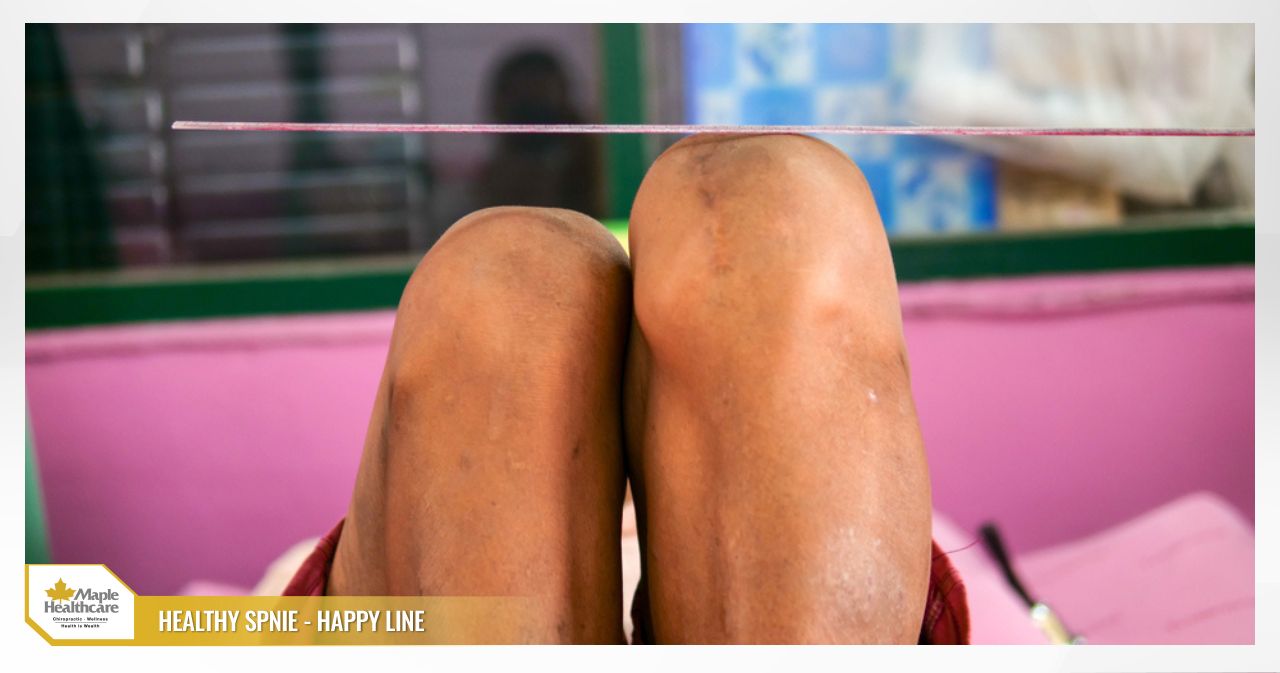
- Explanation: This is a condition where one side of the hip or iliac crest is noticeably higher than the other, resulting in visibly uneven hips. When you look in a mirror, you may notice that your waistband sits at an angle, or that one side of your waist appears higher. You may also feel as though one leg is longer than the other.
- Consequences: The gait becomes uneven, body weight is distributed unevenly, and greater pressure is placed on one side of the hip, knee, or foot — increasing the risk of pain and injury over time.
Pelvic Rotation
- Explanation: In this case, one side of the pelvis rotates forward or backward relative to the other side. This can create a sensation of the body feeling “twisted” while walking, and may cause pain in the hip region or the sacroiliac joint — the joint connecting the sacrum to the pelvis.
Causes of Pelvic Misalignment
Pelvic misalignment rarely develops from a single cause. It is typically the result of multiple factors combining and accumulating over time.
Poor Postural Habits in Daily Life
This is the most common cause in modern life. When an asymmetrical posture is repeated consistently, the body “adapts” by causing certain muscle groups to tighten while opposing muscle groups weaken — gradually pulling the pelvis out of its balanced position.
- Habitually crossing your legs, especially always crossing the same side.
- Standing with your weight shifted onto one leg.
- Sitting lopsided, slumping forward in your chair, or leaning excessively to one side.
- Carrying a heavy bag or backpack on one shoulder.
- Falling asleep at a desk or sleeping curled up heavily to one side for extended periods.

Prolonged Sitting, Low Activity, and Office Work
Sitting for consecutive hours causes the hip flexors to shorten and tighten, while the gluteal muscles (the primary hip extensors) gradually weaken. This muscle imbalance is a key driver of anterior pelvic tilt.
Muscle Imbalances Around the Hips, Glutes, Lower Back, and Abdomen
- Tight hip flexors & weak glutes: Create a tendency toward anterior pelvic tilt.
- Tight lower back muscles & weak abdominals: Increase stress on the lumbar spine.
- A weak gluteus medius on one side: Causes the hip to drop on the opposite side during walking, resulting in an uneven gait.
- Strength asymmetry between the two sides of the body: Creates a tendency for the pelvis to rotate or tilt.
Injuries to the Hip, Back, Spine, or Legs
Injuries such as falls, road traffic accidents, or sports injuries can directly or indirectly damage the pelvic structure. Even after an injury has healed, the body may develop a protective guarded posture that leads to functional misalignment. More serious injuries, such as pelvic fractures or femur fractures, can leave lasting effects including a true leg length discrepancy and structural misalignment.
Leg Length Discrepancy
- True (structural) discrepancy: Present from birth, or resulting from a healed fracture or surgery.
- Functional discrepancy: Caused by pelvic tilting or rotation, muscle contractures, or foot malalignment. The body automatically tilts or rotates to compensate, which can make pelvic misalignment more pronounced.
Pregnancy and the Postpartum Period
During pregnancy, the body’s centre of gravity shifts, and the growing abdomen increases the lumbar curve. Pregnancy hormones also cause the pelvic ligaments to become more lax and flexible. After delivery, if the abdominal muscles, pelvic floor, and glutes have weakened — combined with poor posture while holding or breastfeeding a baby — pelvic imbalance becomes very easy to develop.
Improper Training Technique or Overexertion
- Performing squats or deadlifts with an excessive lower back arch.
- Running with improper form, placing uneven stress on one hip.
- Training only one side of the body.
- Increasing training intensity too rapidly.
Underlying Medical Conditions
- Scoliosis.
- Disc herniation.
- Sciatica.
- Sacroiliac joint inflammation.
- Spinal degeneration.
- Hip joint conditions.
These conditions cause pain, muscle guarding, or altered body mechanics, forcing the pelvis to tilt or rotate in compensation.
Common Signs and Symptoms of Pelvic Misalignment
The signs of pelvic misalignment may appear locally — around the hips and back — or radiate to other parts of the body. Here are the key signs to be aware of:
- Persistent or recurring lower back pain: The discomfort is often dull and achy, worsening with prolonged sitting, prolonged standing, bending forward, or lifting heavy objects.
- Pain in the hip, buttock, hip joint, or sacroiliac joint: The ache may be felt on one or both sides, particularly in the dimples at the base of the lower back just above the buttocks.
- One hip visibly higher than the other: This may be noticeable when you are wearing trousers — the waistband will sit at an angle rather than horizontally, indicating uneven hips.
- Uneven gait or asymmetrical steps: You may sway more to one side when walking, or notice that your stride length feels different between legs.
- A sensation that one leg feels longer or shorter: This is a very common experience, and may result from either a true leg length difference or functional pelvic asymmetry.
- Pain radiating down the leg, numbness, or leg fatigue: Pay particular attention if the pain feels like an electric shock, burning, or causes numbness and weakness in the leg, as these may be signs of sciatic nerve involvement.
- Asymmetry in the shoulders, waist, or knees: One shoulder may appear higher, the waist curves may look uneven on each side, or one knee may tend to rotate inward or outward more than the other.
- Difficulty standing or sitting for extended periods, or bending forward.
- Reduced athletic performance — tiring more quickly when running or becoming more prone to injury.
If these signs persist, if the pain is progressively worsening, or if they are affecting your daily life, you should seek professional evaluation rather than relying solely on exercises found online.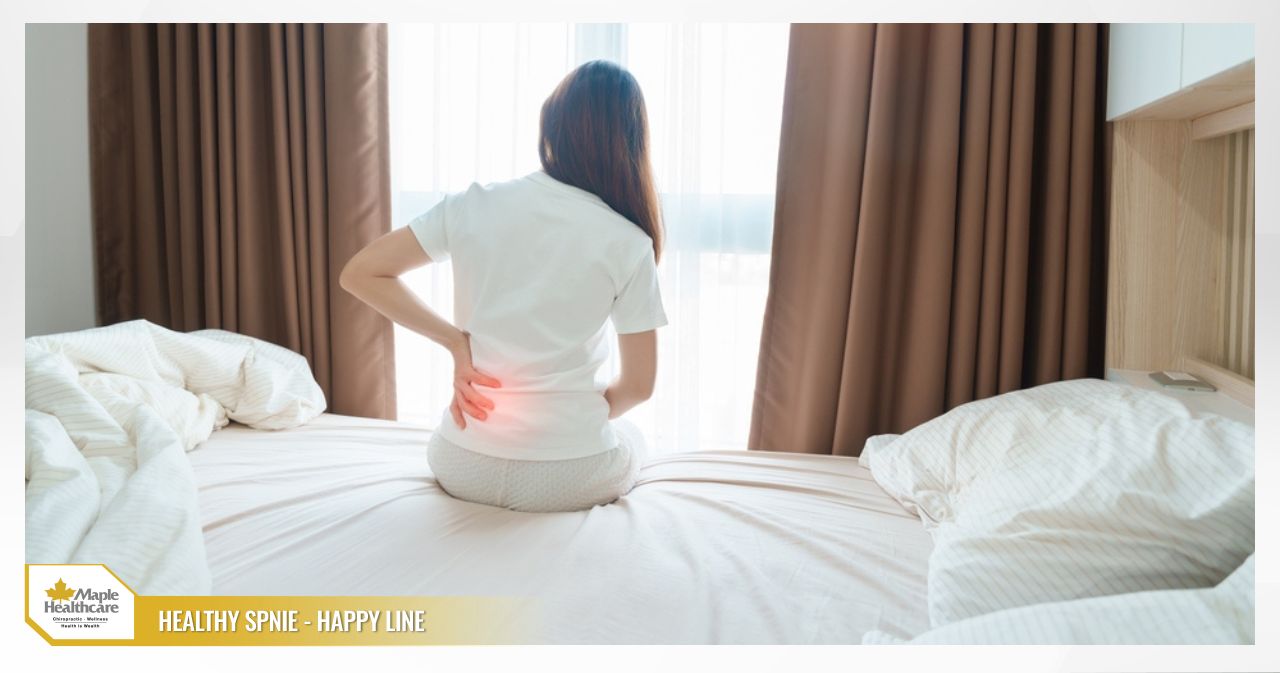
Is Pelvic Misalignment Dangerous?
Pelvic misalignment is not in itself an immediately life-threatening condition. However, if left unaddressed, it can set off a chain of increasingly serious problems for the musculoskeletal system and your overall quality of life.
- Impact on posture and appearance: Uneven hips, uneven shoulders, and an asymmetrical gait can affect how you feel about your body.
- Persistent back pain, hip pain, and joint pain: When the pelvis is misaligned, forces on the lumbar spine, sacroiliac joint, and hip joints are no longer evenly distributed — leading to overloading and chronic discomfort in those areas.
- Increased load on the lumbar spine: This biomechanical imbalance can be a contributing factor that accelerates spinal degeneration or raises the risk of disc herniation in those who are predisposed.
- Increased risk of injury during physical activity: Uneven load distribution can lead to repetitive strain injuries such as knee pain, ankle pain, tendinopathy, or muscle strains.
- Possible contribution to sciatica: If pelvic misalignment is accompanied by disc herniation or tightness in the deep piriformis muscle, it can compress the sciatic nerve.
- Impact on quality of life: Persistent pain and discomfort can make it difficult to work at a desk for extended periods, participate in sports you enjoy, disrupt sleep, and cause ongoing anxiety and stress.
In summary, while pelvic misalignment may not be immediately dangerous, it is a signal that your movement system is out of balance. Early intervention can help prevent longer-term complications.
How to Self-Check for Pelvic Misalignment at Home
The methods below are for observational reference only. They cannot replace a formal clinical assessment from a qualified professional.
Mirror Observation
- Stand upright in front of a large mirror with your feet hip-width apart, relaxed, and weight evenly distributed on both feet.
- Observe whether your waistband or the top of both hip bones (iliac crests) sits level.
- Check whether the curves at your waist look symmetrical on both sides.
- Look to see whether one shoulder is higher than the other, or whether your knees or feet appear rotated.
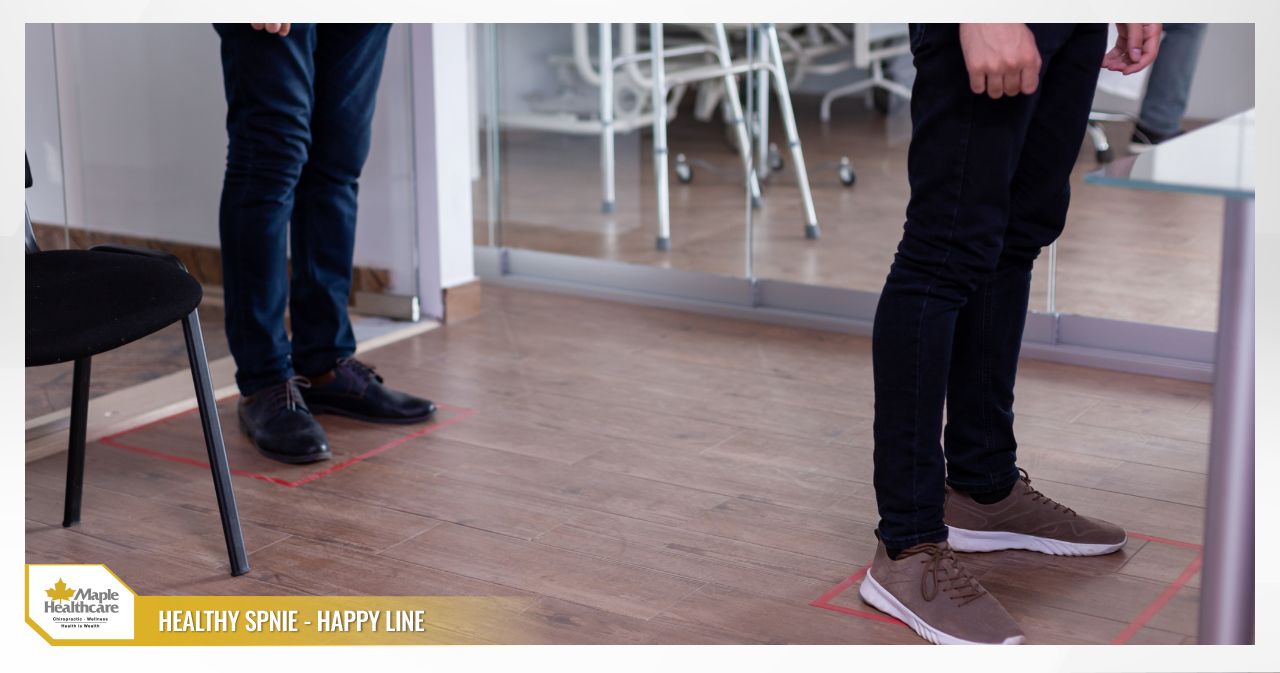
Gait Observation
- Ask a family member to record a short video, or have them observe you from behind while you walk naturally.
- Notice whether your torso leans to one side, whether your hips sway excessively to one side, and whether your step lengths are even.
Shoe Wear Pattern Check
- Take your most frequently worn pair of shoes and compare the soles.
- If one sole is significantly more worn than the other, or shows an unusual wear pattern (for example, heavy wear on the inner or outer edge), this may suggest that your body weight is not being distributed evenly across both feet.
Lying Down Leg Length Check
- Lie flat on your back on a firm surface (such as the floor), with both legs straight and relaxed.
- Try to compare the position of both heels or both inner anklebones. A noticeable difference may suggest a leg length discrepancy — either true or functional.
Palpating Pelvic Landmarks
- Place your index fingers on the two most prominent bony points at the front of each hip (the anterior superior iliac spines, or ASIS).
- Look in the mirror to compare whether both fingers sit at the same height. This method requires a degree of body awareness and may not be accurate without experience.
Important note: Self-checking is only a rough, preliminary reference. You should not draw conclusions about the severity of your own pelvic misalignment or attempt to self-manipulate. If you notice clear asymmetry accompanied by pain, please seek assessment at a qualified healthcare facility.
When to See a Professional for Suspected Pelvic Misalignment
Not every case of pelvic misalignment requires immediate medical attention. However, you should seek advice from a doctor or specialist when any of the following apply:
- Lower back pain or hip pain that has persisted for more than a few weeks with no signs of improvement.
- Pain that worsens with movement, prolonged sitting, prolonged standing, or when lifting heavy objects.
- Pain that radiates from the buttock down into the thigh, calf, or foot.
- Neurological symptoms such as numbness, leg weakness, pins and needles, electric shock sensations, or burning pain.
- A visibly uneven gait, difficulty walking, or frequent trips and falls.
- A history of injury, surgery, or fracture in the back, hip, or leg area.
- Postpartum women experiencing persistent pelvic pain that is affecting daily activities.
- You have tried correcting your posture or doing rehabilitation exercises at home but have seen no improvement — or the pain has worsened.
Warning signs that warrant prompt or urgent medical attention:
- Sudden, severe pain.
- Rapidly progressing leg weakness.
- Loss of bladder or bowel control.
- Fever, unexplained weight loss, or night sweats accompanied by back or hip pain.
- Pain that began following a significant trauma (a fall from height, a motor vehicle accident).
The goal of seeking professional care is to identify the underlying cause of the misalignment and develop an appropriate management plan — rather than simply managing pain symptoms on a short-term basis.
Effective Approaches for Managing Pelvic Misalignment
Managing pelvic misalignment effectively means addressing the underlying contributing causes. There is no single approach that works for everyone. A comprehensive management plan typically includes a combination of the following:
Correcting Daily Posture Habits
This is the first and most important step:
- When sitting: Always keep your back straight with good back support. Place both feet flat on the floor, and avoid crossing your legs for long periods.
- When standing: Practise distributing your weight evenly across both feet, avoiding the habit of leaning heavily onto one leg.
- When carrying loads: Use a two-strap backpack rather than a single-shoulder bag. If you must carry heavier items, divide the load between both hands.
- Set up an ergonomic workspace: Position your computer screen at eye level, and adjust your chair so that your hips and knees form approximately a 90-degree angle.
Rehabilitation Exercise
The guiding principle in rehabilitation exercise is “stretch what is tight, strengthen what is weak”:
- Muscle groups that commonly need stretching: Hip flexors, quadriceps, hamstrings, piriformis, and lower back muscles.
- Muscle groups that commonly need strengthening: Gluteus maximus, gluteus medius, deep abdominals, and the entire core muscle group.
Physiotherapy
A physiotherapist can use a range of techniques to support your recovery:
- Manual therapy: Gentle joint mobilisation to address stiff joints and release muscle trigger points.
- Soft tissue massage: Helps reduce muscle tension and improve circulation.
- Personalised exercise prescription: A tailored programme designed around your specific type of misalignment and individual presentation.
Chiropractic Care or Spinal and Pelvic Adjustments
In some cases, the hands-on adjustment techniques used by chiropractic doctors can help restore better joint position. This approach should only be carried out by qualified, trained practitioners and only after a thorough assessment has been completed to rule out any contraindications. Manual adjustments alone are unlikely to produce lasting improvement without being combined with targeted rehabilitation exercises and postural correction.
Orthopaedic Shoe Insoles for Leg Length Discrepancy
In cases where a true leg length discrepancy is confirmed, a doctor may recommend the use of custom orthopaedic insoles to help rebalance the body’s alignment from the ground up.
Treating Underlying Medical Conditions
If pelvic misalignment is a consequence of an underlying condition such as scoliosis, disc herniation, or arthritis, treating those conditions directly is essential and should be the primary priority.
7 Supportive Exercises for Pelvic Misalignment at Home
The following exercises are intended as supportive tools for mild cases of functional pelvic misalignment. They should only be attempted once you are confident that there are no serious underlying medical concerns.
General notes before you begin:
- Always warm up gently beforehand.
- Move slowly, control your breathing, and pay attention to what your body is telling you.
- Never push through sharp pain. If pain increases or numbness spreads down your leg, stop immediately.
- Prioritise doing each exercise correctly over doing more repetitions.
Pelvic Tilt
- Goal: Improve awareness and control of pelvic position, activate the deep abdominal muscles, and relieve tension in the lower back.
- How to perform:
- Lie on your back with both knees bent and feet flat on the floor.
- Inhale gently and allow your lower back to relax.
- Exhale, gently engage your abdominals, and press your lower back towards the floor by rotating your pelvis slightly backwards.
- Hold this position for 3–5 seconds, then slowly return to the starting position.
- Suggested repetitions: 10–15 reps per set, 2–3 sets.
- Common mistakes to avoid: Holding your breath, tensing the neck and shoulders, or pressing the lower back down so forcefully that it causes pain.
Glute Bridge
- Goal: Strengthen the gluteal muscles — the primary stabilisers of the pelvis.
- How to perform:
- Remain lying on your back with feet hip-width apart.
- Squeeze your glutes and slowly lift your hips off the floor until your shoulders, hips, and knees form a straight line.
- Hold at the top for 2–5 seconds, continuing to squeeze the glutes.
- Slowly lower your hips back to the starting position under control.
- Suggested repetitions: 10–12 reps per set, 2–3 sets.
- Common mistakes to avoid: Hyperextending the lower back (relying on the back rather than the glutes), or allowing the knees to fall inward.

Kneeling Hip Flexor Stretch
- Goal: Reduce hip flexor tightness — particularly useful for people who sit for long periods and tend toward an anterior pelvic tilt.
- How to perform:
- Kneel on one knee (you can place a folded towel under the knee for comfort), with the other foot planted forward at a 90-degree angle.
- Keep your torso upright and gently engage your core and glutes.
- Slowly shift your hips forward until you feel a gentle stretch at the front of the thigh of the kneeling leg.
- Hold the position for 20–30 seconds.
- Suggested frequency: 2–3 repetitions on each side.
- Common mistakes to avoid: Arching the lower back excessively as you shift the hips forward, or pushing so forcefully that it causes pain.
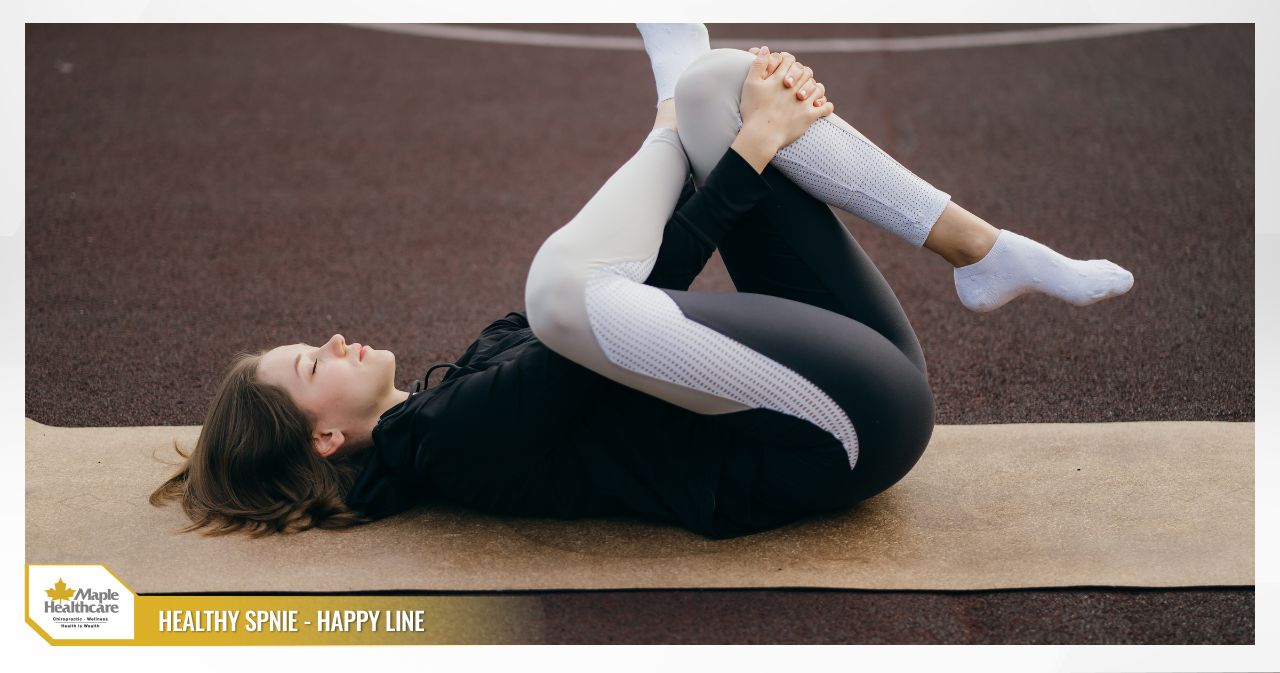
Piriformis Stretch
- Goal: Release tension in the piriformis — a deep muscle within the buttock region — which can help reduce hip and buttock pain.
- How to perform:
- Lie on your back with both knees bent.
- Place your right ankle over your left thigh, just above the knee.
- Thread both hands behind your left thigh and gently draw it towards your chest until you feel a stretch deep in your right buttock.
- Hold for 20–30 seconds, then switch sides.
- Suggested frequency: 2–3 repetitions on each side.
- Important note: Do not force the stretch if you feel a nerve-type pain radiating down your leg.
Plank for Core Strength
- Goal: Strengthen the entire core muscle group to improve spinal and pelvic stability.
- How to perform:
- Get into a forearm plank position, supported on your elbows and toes.
- Keep your body in a straight line from head to heels.
- Engage your core and glutes, and avoid letting your lower back sag.
- Hold the position for 10–30 seconds according to your ability, breathing steadily throughout.
- Suggested frequency: 2–4 sets.
- Common mistakes to avoid: Sagging the lower back, lifting the hips too high, or holding your breath.
Bird-Dog for Spinal and Pelvic Stability
- Goal: Improve trunk control and stability, and reduce pelvic rotation during movement.
- How to perform:
- Start on all fours, with your weight supported on both hands and both knees.
- Engage your core, then slowly extend your right arm forward and your left leg backward at the same time.
- Keep your hips and shoulders level — imagine your back is a flat tabletop that should not tilt or twist.
- Hold for 3–5 seconds, then slowly return to the starting position and switch sides.
- Suggested repetitions: 8–12 reps per side, 2–3 sets.
- Common mistakes to avoid: Rotating the hips, arching the lower back, or lifting the leg too high.

Clamshell for Hip Muscle Strengthening
- Goal: Strengthen the gluteus medius — a critically important muscle that keeps the pelvis stable and prevents it from dropping to one side during walking.
- How to perform:
- Lie on your side with both legs stacked on top of each other and your knees bent to approximately 45–90 degrees.
- Keep your feet touching and hold your hips steady — do not allow them to roll backward.
- Slowly rotate your top knee upward as far as you comfortably can, like a clamshell opening.
- Lower it back down in a controlled manner.
- Suggested repetitions: 12–15 reps per side, 2–3 sets.
- Common mistakes to avoid: Using the whole body to roll backward, or lifting both feet off the floor.
These exercises can help support improved muscle control and reduce imbalances, but they are not a universal fix for every situation. For those with more significant pelvic misalignment, persistent pain, a history of injury, or postpartum changes, a personalised programme designed by a qualified professional is strongly recommended.
Common Mistakes to Avoid When Dealing With Pelvic Misalignment
When suspecting pelvic misalignment, many people handle it in ways that can prolong pain or make the condition worse.
- Self-manipulating the pelvis at home: Attempting to crack, twist, or forcefully jolt the lower back or hips based on videos found online is potentially dangerous and can damage joints, ligaments, or nerves.
- Following generic online exercise videos without personalised guidance: Everyone’s misalignment pattern and contributing causes are different. An exercise that is helpful for one person may be harmful for another.
- Only exercising one side of the body: Attempting to “compensate” by only targeting the weaker side can make the imbalance more pronounced if you have not correctly identified which side needs stretching and which needs strengthening.
- Ignoring persistent lower back or hip pain: Dismissing ongoing pain and assuming it will resolve on its own may mean missing the right window to address underlying conditions such as disc herniation or joint inflammation.
- Continuing to sit for long periods without changing posture: This is the most common mistake, as it keeps certain muscle groups locked in an imbalanced state.
- Over-relying on pain medication: Pain relievers only mask symptoms temporarily — they do not address the underlying mechanical cause.
- Continuing heavy gym training while the body is out of balance: Exercises such as heavy squats, deadlifts, or high-intensity running can worsen pain if technique is not first corrected.
- Not maintaining good habits once the pain has settled: Posture-related pelvic misalignment is highly likely to recur if you return to the same habits that caused it in the first place.
How to Prevent Pelvic Misalignment From Recurring
For posture-related and muscle-imbalance-driven pelvic misalignment, preventing recurrence is just as important as the initial management.
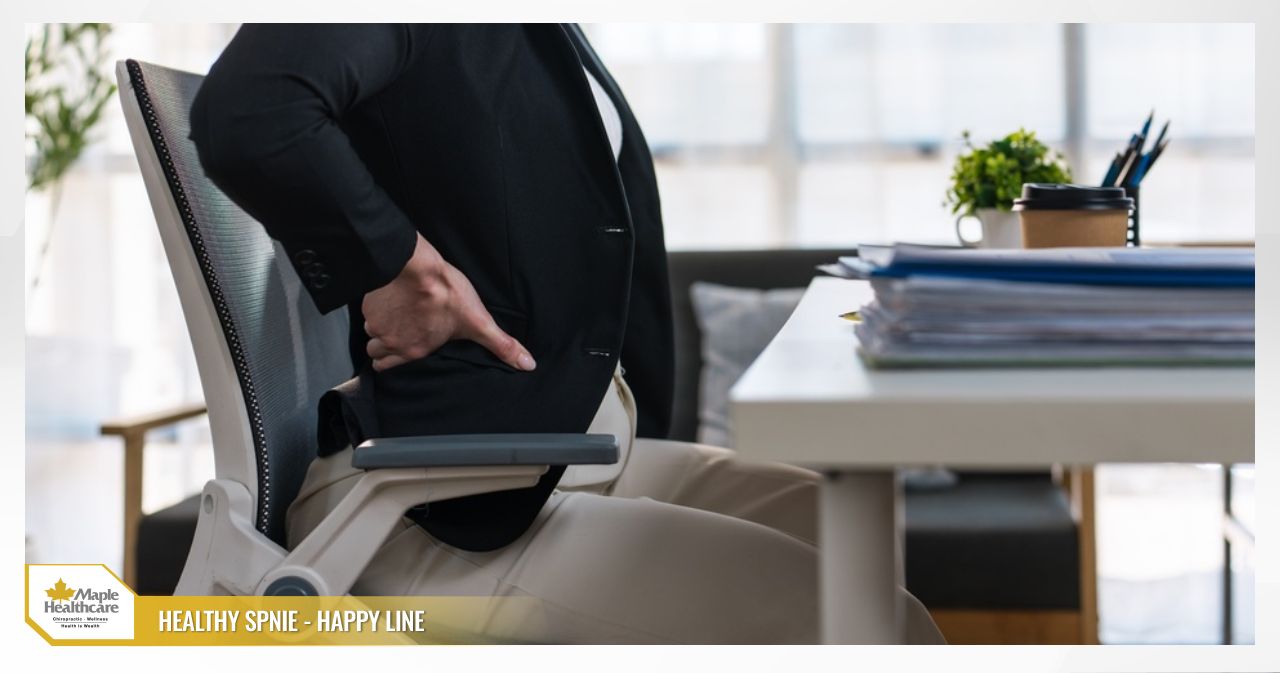
- Maintain correct sitting posture: Keep your back straight, shoulders relaxed, and both feet flat on the floor. Use a lumbar support cushion if needed.
- Stand and walk with balance: Cultivate the habit of distributing your weight evenly across both feet, and avoid standing with all your weight on one leg.
- Regularly exercise your core, glutes, and hip muscles: Maintain exercises such as the glute bridge, plank, bird-dog, and clamshell at an appropriate level to keep your body’s “centre” strong and functional.
- Warm up thoroughly before sports and exercise: Always prepare the body, especially the hips, lower back, and knees.
- Avoid carrying loads unevenly to one side: Opt for a two-strap backpack. If you must carry bags, alternate sides regularly or divide the load between both hands.
- Manage your weight: Reaching and maintaining a healthy body weight helps reduce overall load on the musculoskeletal system.
- Take regular movement breaks when working at a desk: Every 30–60 minutes, stand up, walk around, and do some gentle stretching and shoulder rolls.
- Schedule periodic musculoskeletal health check-ups: This is especially important for office workers, athletes, postpartum women, and anyone with a history of back pain.
Conclusion
Pelvic misalignment is not merely a cosmetic concern — it is a biomechanical imbalance that can lead to pain and a meaningful reduction in quality of life. The most common contributing factors stem from everyday habits: prolonged sitting, poor posture, low physical activity, and muscle imbalances.
The encouraging news is that the majority of functional cases can improve significantly through postural corrections, regular movement, and appropriate rehabilitation exercises. Recognising the early warning signs, making proactive changes, and listening to your body are all key to protecting the long-term health of your spine and pelvis.
If you are experiencing pelvic misalignment accompanied by persistent pain, leg numbness or weakness, or symptoms that are significantly affecting your daily life, do not hesitate to seek professional advice. At the Maple Healthcare in Ho Chi Minh City, our doctors and physiotherapists can help you identify the underlying contributing causes and develop an individualised management plan — supporting your journey towards more comfortable, active living.
FAQ: Frequently Asked Questions About Pelvic Misalignment
Can pelvic misalignment resolve on its own?
Answer: Mild functional misalignment caused by recently adopted poor postural habits may improve if you make appropriate lifestyle changes and follow a proper rehabilitation programme. However, if the misalignment has been present for a long time, is causing chronic pain, or has a structural underlying cause (such as scoliosis or a true leg length discrepancy), it is unlikely to fully resolve on its own and will benefit from professional guidance.
Can pelvic misalignment cause back pain?
Answer: Yes. When the pelvis is out of balance, the forces transmitted through the lumbar spine change — and this is one of the common contributing factors to ongoing lower back pain. That said, not all lower back pain is caused by pelvic misalignment, which is why a professional assessment is important if your pain persists.
Is pelvic misalignment common in postpartum women?
Answer: Very common. After giving birth, a woman’s pelvis is susceptible to imbalance due to hormonal changes that loosen ligaments, weakening of the abdominal and pelvic floor muscles, and poor posture during holding or breastfeeding. If you experience persistent pelvic or lower back pain following delivery, a physiotherapy assessment is strongly recommended.
How long does it take to see improvement?
Answer: The timeline for improvement depends on the cause, the degree of misalignment, and your consistency with rehabilitation. For mild posture-related cases, noticeable improvement may be possible within a few weeks to a few months of regular exercise and habit changes. For more complex presentations, the realistic goal is to reduce pain and improve function — rather than achieving “complete correction.”
Should you consider spinal or pelvic manipulation for pelvic misalignment?
Answer: This may be worth considering if it is carried out by a qualified practitioner (such as a chiropractic doctor) and only after a thorough clinical assessment. Under no circumstances should you attempt to self-manipulate at home or seek treatment from unlicensed providers. Manual adjustment is most beneficial when it is part of a broader programme that includes rehabilitation exercises and postural correction, rather than being used in isolation.
Related articles:
Developmental Dysplasia of the Hip: Signs & Diagnosis
Contact for consultation
MAPLE INTERNATIONAL CO., LTD
Phone: 0705 100 100
Tax code: 0311948301
Date Range: 21 - 08 - 2012
Issued: Department of Planning and Investment of Ho Chi Minh City
Healthcare Group Members



Contact Us
COPYRIGHT