
Contact for consultation
Spinal Adjustment Method (Chiropractic pain relief treatment Vietnam)
Many people are interested in non-surgical approaches to managing back pain, neck discomfort, and other musculoskeletal conditions. Chiropractic therapy is one approach that uses manual techniques to support joint mobility and help manage certain types of musculoskeletal pain.
Chiropractic originated in the United States in 1895 and is now practised in many countries. What exactly is chiropractic therapy, how does it work, and who may benefit from it? Maple Healthcare explores these questions in the following article.

1. What Is Chiropractic Therapy?
Bone, joint, and muscle pain are common health concerns. Symptoms may be related to muscle strain, prolonged sitting, repetitive movements, sports injuries, falls, or underlying musculoskeletal conditions.
In some cases, conditions affecting the spine, discs, joints, or surrounding tissues may cause pain, stiffness, or limitations in movement. These symptoms require appropriate assessment because their causes can vary considerably.
Chiropractic therapy is a hands-on approach to musculoskeletal care that primarily involves manual techniques, including spinal adjustments. Depending on the patient's condition, chiropractic treatment may help support:
- Joint and spinal mobility.
- Management of certain types of neck and back pain.
- Muscle and joint function.
- Comfort during everyday movement and activities.

Chiropractic therapy may involve applying controlled manual force to selected joints when clinically appropriate. Chiropractors may use hands-on adjustment techniques alongside specialized treatment tables or supporting equipment.
The purpose of these techniques is to improve joint movement and help manage certain musculoskeletal symptoms. Spinal adjustments do not necessarily reposition displaced vertebrae, remove nerve compression, or correct every underlying cause of pain.
Before treatment, the practitioner should review the patient's medical history, symptoms, and relevant risk factors to determine whether chiropractic manipulation is suitable.
Chiropractic care may also be combined with exercise, physiotherapy, ergonomic guidance, and lifestyle recommendations to support long-term musculoskeletal health.

Chiropractic care may be considered as part of a broader musculoskeletal treatment plan for selected patients. The following conditions can involve the spine, joints, or surrounding tissues and may require different forms of assessment and treatment.
Important: Not every condition listed below is suitable for chiropractic adjustment. Some require specialized medical care, rehabilitation, or surgical assessment. Chiropractic treatment should only be considered when clinically appropriate.
1. Cervical Vertebrae:
- Cervical degenerative disc disease
- Cervical herniated discs
- Neck and shoulder pain
- Forward head posture (Turtle neck syndrome)
- Cervical radiculopathy
2. Shoulders:
- Shoulder periarthritis
- Shoulder bursitis or synovitis
- Frozen shoulder
3. Thoracic Vertebrae:
- Thoracic degenerative disc disease
- Kyphosis
- Scoliosis
4. Lumbar Vertebrae:
- Lumbar degenerative disc disease
- Lumbar herniated discs
- Mechanical low back pain
- Lumbar spinal stenosis
5. Hips:
- Hip osteoarthritis
- Hip bursitis
- Congenital hip dislocation
- Sciatica
6. Knees:
- Knee osteoarthritis
- Knee bursitis
- Torn meniscus
- Patellar tendinitis
7. Ankles:
- Ankle arthritis
- Ankle sprains
- Ligament tears in the ankle
8. Feet:
- Plantar fasciitis
- Heel spurs
- Flat feet
- Morton's neuroma (nerve compression in the foot)
9. Elbows:
- Lateral epicondylitis (Tennis elbow)
- Medial epicondylitis (Golfer's elbow)
- Elbow bursitis
10. Wrists and Hands:
- Carpal tunnel syndrome
- De Quervain syndrome
- Finger arthritis
- Trigger finger (stenosing tenosynovitis)
The presence of these conditions does not automatically indicate that chiropractic manipulation is appropriate. For example, scoliosis, congenital hip dislocation, significant nerve compression, and certain joint injuries may require assessment by an appropriate medical specialist.
2. The Potential Benefits of Chiropractic Therapy

Chiropractic therapy is a non-surgical approach that may help manage certain musculoskeletal conditions, particularly selected types of neck and back pain.
Its potential benefits depend on the patient's diagnosis, the techniques used, and their response to treatment.
For appropriately selected patients, chiropractic care may support:
- Joint and spinal mobility.
- Management of certain musculoskeletal symptoms.
- Muscle and joint function.
- Reduction of some types of pain and muscle tension.
- Improved range of motion.
- Greater comfort during everyday activities.
- Participation in suitable exercise and rehabilitation programs.
The potential advantages of chiropractic care include:
- A non-medication technique: Chiropractic adjustments are performed without medication. However, medicines may still be appropriate or necessary for some conditions, and patients should not stop prescribed treatment without medical advice.
- A non-surgical approach: Chiropractic care does not involve surgery. Nevertheless, spinal manipulation has potential risks and contraindications, and it cannot replace surgical care when an operation is medically indicated.
- Support for joint mobility: Manual techniques may help improve movement in selected joints and reduce certain types of musculoskeletal discomfort.
- Integration with rehabilitation: Chiropractic care may be combined with physiotherapy, strengthening exercises, and movement guidance when appropriate.
- Individualized care: Treatment techniques, appointment frequency, and follow-up recommendations can be adjusted according to the patient's symptoms and response.
Chiropractic therapy does not guarantee faster recovery, improved nervous system performance, or prevention of future musculoskeletal conditions. Outcomes depend on the individual condition and treatment plan.
Chiropractic techniques should be performed by appropriately trained professionals who are authorized to practise within the applicable regulations.
Education requirements and professional qualifications vary between countries. Patients should ask about a practitioner's chiropractic education, clinical experience, professional credentials, and authorization to practise in Vietnam.
A thorough assessment is particularly important before cervical spinal manipulation, as some neck conditions and vascular disorders may make certain techniques unsuitable.
3. Maple Healthcare – Your Destination for Chiropractic Therapy
Established in 2012, Maple Healthcare provides chiropractic and musculoskeletal care in Ho Chi Minh City.
The clinic offers services including chiropractic adjustments, physiotherapy, rehabilitation, and other approaches to managing musculoskeletal discomfort.

At Maple Healthcare, our approach emphasizes understanding each patient's symptoms, medical history, and physical condition before recommending treatment.
Depending on individual needs, care may include manual chiropractic techniques, physiotherapy, rehabilitation exercises, or guidance on movement and everyday activities.
With our motto, "Healthy Spine – Happy Life," Maple Healthcare aims to support patients in maintaining mobility and managing musculoskeletal concerns.
3.1 Dedicated Team of Healthcare Professionals
Maple Healthcare has an international team of doctors and practitioners with experience in chiropractic and musculoskeletal care.
Among them is Dr. Paul D'Alfonso, who has more than 20 years of experience in chiropractic practice and plays a leading role in the clinic's professional direction.
The team focuses on assessing musculoskeletal concerns, discussing appropriate treatment options, and providing care according to individual clinical needs.
Maple Healthcare's therapists and supporting personnel also participate in professional training and ongoing skill development.
During appointments, patients can discuss their symptoms, ask questions about the recommended services, and receive guidance on relevant follow-up care.
3.2 Modern Facilities
Maple Healthcare provides facilities and equipment to support chiropractic care, physiotherapy, and rehabilitation services.
Available treatment equipment may include specialized chiropractic tables, spinal decompression equipment, and devices used for physical therapy.
The choice of equipment or treatment technique depends on the patient's condition and professional assessment. Not every patient requires the same combination of services.
Our treatment areas are designed to provide a comfortable environment for consultation and musculoskeletal care.
3.3 Chiropractic Treatment Process and Service Costs
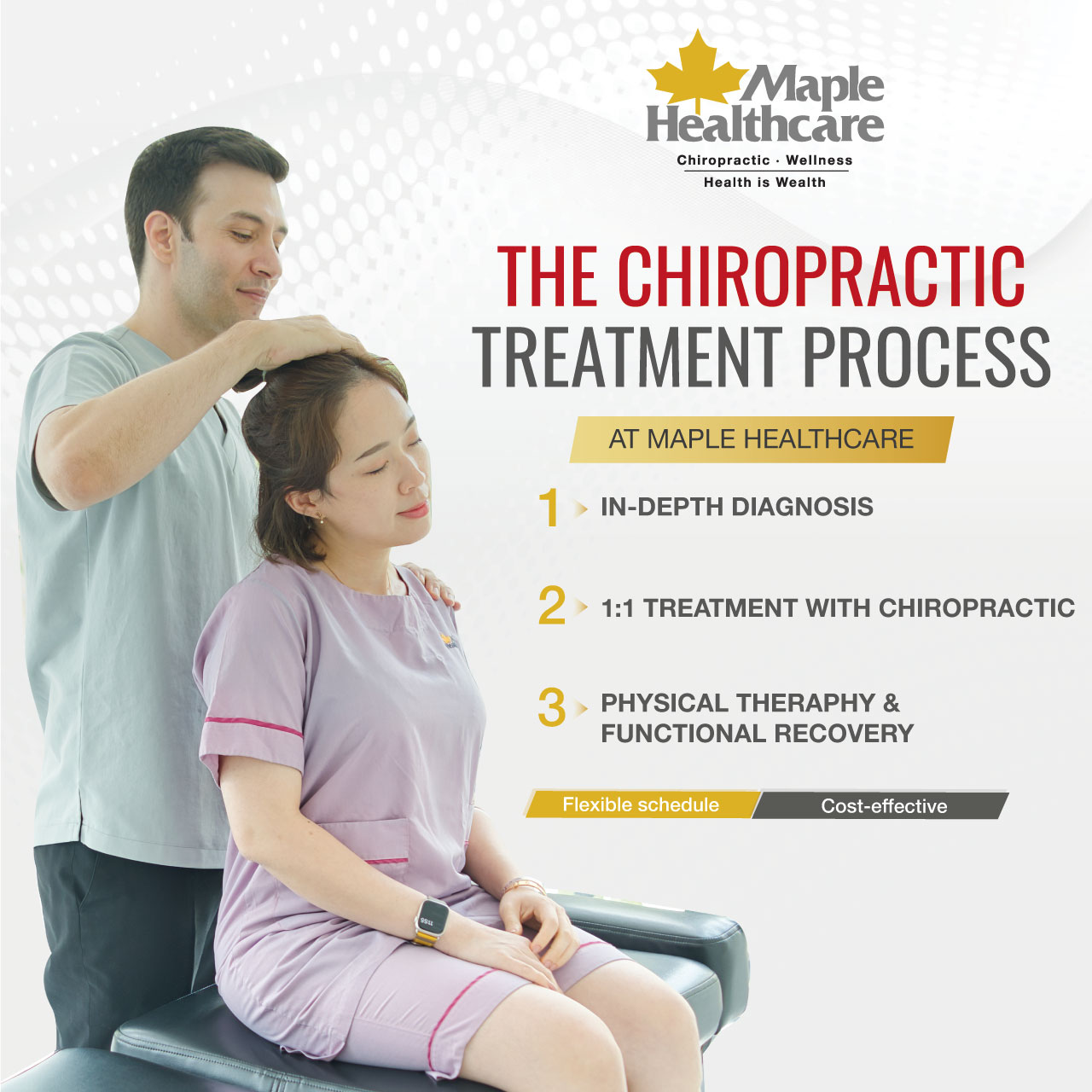
At Maple Healthcare, chiropractic care begins with a clinical assessment. Depending on the patient's condition and the recommended services, the treatment process may include the following steps:
Step 1: Initial Consultation and Assessment
The doctor reviews the patient's medical history, current symptoms, and relevant musculoskeletal concerns.
The examination may include an assessment of posture, joint mobility, muscle function, and neurological signs when necessary.
Additional investigations, such as X-rays or MRI, may be recommended when clinically indicated. Imaging is not required for every chiropractic patient.
Based on the findings, the practitioner discusses appropriate treatment options and whether further medical evaluation is needed.
Step 2: One-on-One Chiropractic Adjustment
When chiropractic manipulation is considered suitable, the practitioner may perform controlled manual techniques or use specialized equipment to support joint mobility and manage certain musculoskeletal symptoms.
The treatment is selected according to the patient's examination findings, medical history, and any relevant contraindications.
Patients may also receive guidance on movement, everyday activities, and habits that could contribute to their symptoms.
Step 3: Physiotherapy and Rehabilitation (When Indicated)
Depending on the patient's condition, the practitioner may recommend physiotherapy or rehabilitation alongside chiropractic care.
Available techniques may include ultrasound therapy, electrical stimulation, spinal decompression, or therapeutic exercises when appropriate.
These methods are intended to support the management of selected symptoms and functional limitations. They are not automatically included in every chiropractic adjustment session.
How Much Does Chiropractic Adjustment Cost?
The cost of chiropractic treatment at Maple Healthcare depends on the services selected and the patient's individual care plan.
A chiropractic adjustment session costs VND 1,100,000, while a combined chiropractic adjustment and physiotherapy session costs VND 1,650,000.
Other service fees include an initial consultation at VND 550,000, physiotherapy at VND 550,000, and rehabilitation at VND 1,100,000.
| Service | Price (VND) |
|---|---|
| Initial Consultation | 550,000 |
| Chiropractic Adjustment | 1,100,000 |
| Physiotherapy | 550,000 |
| Chiropractic Adjustment + Physiotherapy | 1,650,000 |
| Rehabilitation | 1,100,000 |
Note: Consultation and treatment fees are listed separately. The total cost depends on the services provided. Additional investigations or treatments, when necessary, may involve separate charges.
Maple Healthcare also offers service packages using its MSP point system. Patients can contact the clinic to learn about available packages, point conversion rules, eligible services, and package conditions.
The number and frequency of chiropractic appointments depend on the patient's condition, treatment goals, and response to care.
Some patients may require only a limited course of treatment, while others may benefit from additional physiotherapy or rehabilitation. There is no fixed appointment schedule suitable for everyone.
Patients should seek medical assessment when experiencing persistent back or neck pain, reduced mobility, numbness, weakness, or other concerning symptoms. Routine chiropractic adjustments are not necessary for everyone and should not be considered a guaranteed way to prevent future spinal conditions.
4. Guiding Principles of Maple Healthcare
At Maple Healthcare, our approach focuses on understanding patients' musculoskeletal concerns and supporting their ability to move comfortably in daily life.
We recognize that pain and movement limitations can be influenced by multiple factors, including physical activity, medical history, work habits, and underlying health conditions.
Our goal is to provide individualized care based on clinical assessment and clear communication about treatment options.
We value the appropriate integration of chiropractic care, physiotherapy, rehabilitation, and lifestyle guidance when these approaches suit the patient's condition.
Our doctors and healthcare professionals aim to support patients through consultation, treatment, and follow-up recommendations.
If you are experiencing back pain, neck discomfort, or other musculoskeletal concerns, contact Maple Healthcare to discuss an appropriate assessment and available chiropractic services.
You can schedule an appointment or reach us through MAPLE HEALTHCARE FANPAGE.
Related articles:
- Tips for Low Back Pain
- Exercises for Back Pain and Disc Herniation
- Tips for Choosing Shoes
- Back Pain Treatment During Pregnancy
- Common Causes of Neck Pain and Methods of Treatment
Contact for consultation
MAPLE INTERNATIONAL CO., LTD
Phone: 0705 100 100
Tax code: 0311948301
Date Range: 21 - 08 - 2012
Issued: Department of Planning and Investment of Ho Chi Minh City
Medical Practice License: No. 08834/HCM-GPHĐ
Healthcare Group Members



Contact Us
COPYRIGHT