When facing pain from spinal degeneration, many people tend to rest and limit their movement. However, research and medical experts have shown that gentle, proper exercise is the key to managing pain and improving quality of life. This guide will provide you with over 25 safe and effective exercises for spinal degeneration, designed to be done right at home, helping you proactively care for your spinal health.
Spinal degeneration is a condition where the discs and joints in the spine naturally wear down over time or due to prolonged strain. This condition commonly occurs in two main areas: the cervical spine (neck) and the lumbar spine (lower back), causing symptoms like aching pain, stiffness, and limited movement. These at-home exercises for spinal degeneration focus on stretching muscles, strengthening the core muscle group, and improving joint flexibility. Regular practice helps improve blood circulation, reduce inflammation, and decrease pressure on discs and nerves, thereby offering more sustainable pain relief compared to passive rest alone.
In this article, you will receive:
- A detailed list of over 25 exercises categorized for the cervical spine, lumbar spine, core, and full-body stretching.
- Detailed safety guidelines to ensure you exercise correctly.
- A 4–6 week workout plan to help you track your progress.
- A sample 7-day workout schedule that’s easy to start today.
Spinal Degeneration: Causes, Symptoms, and When Not to Exercise at Home
Understanding your condition is the first step toward a safe and effective exercise plan.
Common Causes of Spinal Degeneration:
- Aging: Over time, discs lose water and elasticity, and spinal joints gradually wear down.
- Poor Posture: Sitting incorrectly at work, looking down at your phone for long periods, or slouching puts significant pressure on the spine.
- Sedentary Lifestyle: Prolonged sitting weakens the muscles that support the spine, especially the core and back muscles.
- Repetitive Overload: Jobs that require heavy lifting or repetitive movements can accelerate the degeneration process.


Typical Symptoms of Spinal Degeneration:
- Dull ache in the neck or lower back, which worsens with prolonged sitting, standing, or changes in weather.
- A feeling of joint stiffness in the morning after waking up.
- Reduced range of motion, with difficulty bending, extending, or twisting.
- In severe cases, pain may radiate down the shoulders, arms, or legs, accompanied by numbness or tingling if a nerve root is compressed.
When to Start and When Not to Start Exercising:
- You should exercise: When your pain is mild and manageable (around 3/10 on a 0-10 pain scale). The pain should not be a sudden, sharp pain, and there should be no widespread numbness or weakness.
- You should NOT exercise and see a doctor immediately: If the pain exceeds a 3/10 level, is sharp or shooting, radiates with significant numbness or muscle weakness, or is accompanied by fever, unexplained weight loss, an acute injury, or loss of bowel/bladder control.
Safety Precautions for Spinal Degeneration Exercises
Safety is the top priority. Follow these principles to avoid worsening your condition and to achieve maximum benefits.
- The Golden Rule: Always listen to your body. You should only feel a gentle stretch or muscle fatigue, never a sharp or shooting pain. If pain increases or symptoms spread, stop immediately.
- Use a pain scale (0-10): Keep your exercise intensity within a safe range, meaning your pain level should not exceed 3/10. If you feel more pain, reduce the range of motion, decrease the number of repetitions, or take a rest.
- Always warm up and cool down: Spend 5-10 minutes on a spinal warm-up with gentle movements like marching in place. After your workout, perform stretches for 20–30 seconds per muscle group to help your body recover.
- Movements to Avoid: Avoid high-impact activities like jumping, sudden twisting, deep backbends, or abrupt forward bending.
Principles for Building a 4–6 Week Plan and Schedule
To achieve long-lasting results, you need a structured exercise plan with sensible progression.
- Frequency: Aim to exercise 4 to 6 days per week. It’s best to combine a variety of exercises: stretching, core strengthening, spinal stabilization, and light cardio.
- Intensity: Start gently and gradually increase the intensity. The sensation during exercise should only be mild muscle fatigue, not pain.
- Time: Each session should last between 20 and 40 minutes. If you don’t have enough time, you can break it into shorter 10–15 minute sessions throughout the day.
- Progression: After every 1-2 weeks, you can gradually increase the difficulty by increasing the number of repetitions or the hold time by about 10-20%. Keep a journal of your pain symptoms and sleep quality to track your progress.
Equipment to Support At-Home Spinal Degeneration Exercises
You don’t need complicated equipment. Most exercises can be done with simple items:
- A yoga mat for a comfortable surface.
- A folded towel or a thin pillow for support under your head or back.
- A resistance band to add difficulty to strength exercises.
- A small exercise ball or a foam roller.
- A wall or a sturdy chair for support.
- A hot/cold pack for pain relief after exercise.
5–10 Minute Spinal Warm-up
Never skip this step. A warm-up helps to warm your muscles, increase blood flow, and prepare your spine for movement.
- Light Cardio (3-5 minutes): March in place, perform gentle high knees, or use a stationary bike.
- Gentle Joint Rotations: Roll your shoulders forward and backward, and rotate your wrists and ankles.
- Pelvic Tilts (8-10 reps): Lie on your back with your knees bent. Gently press your lower back into the floor, hold for 3 seconds, then release.
- Cat-Cow (8-10 reps): Start on all fours. Inhale as you arch your back and look up. Exhale as you round your spine and tuck your chin. Perform slowly with your breath.

10 Exercises for Cervical Spinal Degeneration (Neck)
Goal: Reduce neck and shoulder pain, increase neck joint flexibility, and stabilize the head and neck area.
Group 1: Activation & Stabilization
Chin Tuck
- How to do it: Stand or sit with a straight back, possibly against a wall. Keeping your head straight, slowly pull your chin backward as if you are making a double chin. Hold for 5-10 seconds.
- Reps/Sets: 8–12 reps x 2–3 sets.
Isometric Neck Strengthening
- How to do it: Place your palm on your forehead and gently push your head forward while your hand resists the movement. Hold for 5–10 seconds. Repeat this for both sides of your head (temples) and the back of your head.
- Reps/Sets: 6–8 reps per direction x 2 sets.

Scapular Retraction
- How to do it: Sit or stand up straight. Pull your shoulder blades back and gently squeeze them down. Hold for 3–5 seconds.
- Reps/Sets: 10–12 reps x 2–3 sets.
Group 2: Stretching & Mobility
Controlled Neck Flexion and Extension
- How to do it: Slowly bend your chin toward your chest, then gently tilt your head back. Only move within a pain-free range.
- Reps/Sets: 8–10 reps.
Side Neck Bend
- How to do it: Keep your shoulders still and gently tilt your head to one side as if trying to touch your ear to your shoulder. Hold for 20–30 seconds.
- Reps/Sets: 2–3 times per side.
Neck Rotation
- How to do it: Slowly turn your head to one side as if looking over your shoulder. Hold for 5 seconds.
- Reps/Sets: 8–10 reps per side.

Trapezius and Levator Scapulae Stretch
- How to do it: Sit up straight and place your right hand on the top left side of your head. Gently pull your head diagonally forward (aiming your chin toward your right armpit). Hold for 20–30 seconds. Switch sides.
- Reps/Sets: 2–3 times per side.
Doorway Chest Stretch
- How to do it: Stand in a doorway and place your forearms on the frame, with your elbows at shoulder height. Step one foot forward and gently lean forward to feel a stretch in your chest area. Hold for 20–30 seconds.
- Reps/Sets: 2–3 reps.
Group 3: Upper Back Strengthening
Thoracic Extension with Foam Roller
- How to do it: Lie on your back with a foam roller placed horizontally under your upper back. Clasp your hands behind your neck to support your head. Use your legs to slowly roll your body up and down.
- Reps/Sets: Roll for 30–60 seconds.

Seated Row with Resistance Band
- How to do it: Sit up straight with your legs extended. Loop a resistance band around the soles of your feet. Pull both hands toward your lower abdomen, keeping your back straight and squeezing your shoulder blades together.
- Reps/Sets: 10–12 reps x 2–3 sets.
10 Exercises for Lumbar Spinal Degeneration (Lower Back)
Goal: Reduce pressure on the discs, strengthen the core and gluteal muscles, and improve posture.
Group 1: Core Activation & Control
Posterior Pelvic Tilt
- How to do it: Lie on your back with your knees bent and feet flat on the floor. Exhale, engage your abdominal muscles, and press your lower back firmly into the floor. Hold for 5 seconds, then release.
- Reps/Sets: 8–10 reps x 2–3 sets.
McGill Big 3 (Modified Version)
- Curl-up: Lie on your back with one knee bent and the other straight. Place your hands under your lower back to maintain its natural curve. Slightly lift your head and shoulders off the floor. Hold for 5-10 seconds.
- Side Plank (from knees): Lie on your side, propped up on your forearm and knees. Lift your hips so your body forms a straight line. Hold for 10–15 seconds.
- Bird-Dog: Start on all fours. Extend your right arm forward and your left leg backward, keeping your hips and back stable. Hold for 5-10 seconds.
- Reps/Sets: 6–8 reps for each exercise, per side.

Group 2: Movement & Stiffness Reduction
Cat-Cow
- How to do it: Start on all fours. Inhale to arch your back, exhale to round your spine. Move slowly with your breath.
- Reps/Sets: 8–10 breath cycles.
Knee-to-Chest Stretch
- How to do it: Lie on your back and slowly pull one knee toward your chest, holding it with both hands. Hold for 20-30 seconds. This can also be done with both knees.
- Reps/Sets: 2–3 times per side.
Supine Knee Rotations
- How to do it: Lie on your back with your knees bent and arms outstretched. Gently lower both knees to one side, keeping your shoulders flat on the floor.
- Reps/Sets: 8–10 reps per side.
Group 3: Strength Building
Glute Bridge
- How to do it: Lie on your back with your knees bent and heels about 30-40cm from your glutes. Squeeze your glutes and lift your hips off the floor until your body forms a straight line from your shoulders to your knees. Hold for 2-3 seconds.
- Reps/Sets: 8–12 reps x 2–3 sets.

Hip Hinge
- How to do it: Stand with your feet hip-width apart and a slight bend in your knees. Push your hips back as if you are about to sit in a chair, keeping your back straight.
- Reps/Sets: 8–10 reps x 2–3 sets.
5 Core Exercises for Spinal Stability
A strong core acts like a natural brace to protect your spine.
- Transverse Abdominis (TA) Bracing and Diaphragmatic Breathing: Lie on your back, place one hand on your belly and the other on your chest. Inhale deeply to let your belly rise, then exhale and gently engage your lower abdominal muscles.
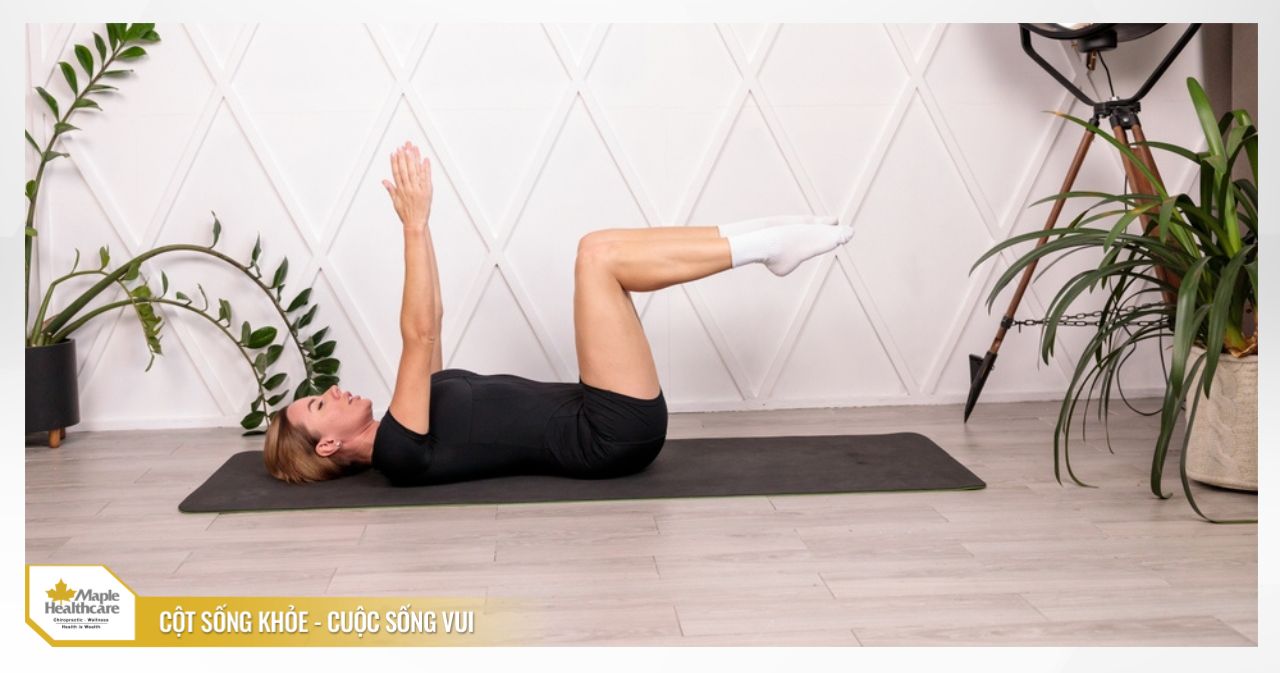
- Dead Bug: Lie on your back with your arms extended toward the ceiling and your legs bent at a 90-degree angle. Slowly lower your right arm and left leg toward the floor, keeping your back pressed firmly against the floor.
- Pallof Press: Stand sideways to the anchor point of a resistance band. Pull the band with both hands to your chest, then press it straight out in front of you, resisting the rotational force of the band.
- Farmer’s Carry: Hold a moderately heavy object (like a water bottle or dumbbell) in one hand and walk with a straight back.
- Clamshell: Lie on your side with your knees bent at a 90-degree angle and your heels together. Lift your top knee, keeping your hips stable.
6 Supplementary Stretching and Mobility Exercises
Improving flexibility helps reduce tension in muscles and joints.
- Hamstring Stretch: Lie on your back, loop a towel or strap around the sole of your foot, and gently lift your straight leg up.
- Hip Flexor Stretch: Kneel in a lunge position and push your hips forward.
- Piriformis Stretch: Lie on your back and cross your right ankle over your left knee. Pull your left thigh toward your chest.
- Child’s Pose: Kneel on the floor, sit back on your heels, and reach your arms forward.
- Nerve Glides: Perform gently and without pain to help nerves move more freely.
- Open Book: Lie on your side with your knees bent. Reach your top arm up and over, rotating your upper body to open your chest.

4–6 Week Workout Plan for Beginners
This is a sample plan to get you started. Adjust it based on how your body feels.
- Weeks 1–2: Pain Relief & Activation Phase:
- Goal: Get used to the movements, reduce pain, and activate stabilizing muscles.
- Key Exercises: Pelvic Tilts, Chin Tucks, Cat-Cow, Knee-to-Chest Stretch, Hamstring Stretch.
- Duration: 15–20 minutes per day.
- Weeks 3–4: Stability Building Phase:
- Goal: Strengthen the core and supporting muscles.
- Key Exercises: Add the McGill Big 3, Glute Bridges, and Banded Rows. Increase walking time to 20–30 minutes.
- Duration: 25–30 minutes per day.
- Weeks 5–6: Functional Strengthening Phase:
- Goal: Improve endurance and apply strength to daily activities.
- Key Exercises: Add light resistance exercises like Hip Hinges, Pallof Press, and Farmer’s Carry.
- Duration: 30–40 minutes per day.
11. Sample 7-Day Workout Schedule for Spinal Degeneration
You can rotate this schedule and gradually increase the difficulty as you feel more comfortable.
- Day 1 (Neck & Light Cardio): Warm-up (5 mins), Chin Tucks (2 sets), Trapezius Stretch (2 times/side), Light Walk (15–20 mins), Cool-down & Stretch (5 mins).
- Day 2 (Back & Core): Warm-up (5 mins), McGill Big 3 (1-2 sets each), Hip Flexor Stretch (2 times/side), Diaphragmatic Breathing (5 mins).
- Day 3 (Full Body): Warm-up (5 mins), Dead Bug (2 sets), Clamshell (2 sets/side), Banded Row (2 sets), Cool-down & Stretch (5 mins).
- Day 4 (Active Rest): Light walk or swimming (20–30 mins), Gentle full-body stretching.
- Day 5 (Back & Strength): Warm-up (5 mins), Glute Bridge (2-3 sets), Hip Hinge (2 sets), Gentle Nerve Glides (if pain-free), Cool-down & Stretch (5 mins).
- Day 6 (Neck & Upper Back): Warm-up (5 mins), Scapular Retraction (2 sets), Controlled Neck Rotations, Doorway Chest Stretch, Cool-down & Stretch (5 mins).
- Day 7 (Recovery): Pelvic Tilts, Child’s Pose, Self-assess your pain level and flexibility.
When Should You See a Doctor or Physiotherapist?
Exercising at home is a great tool, but it has its limits. You should seek professional advice if:
- Red flag symptoms appear: Pain increases and does not subside, radiating pain with numbness or weakness gets worse, you experience bowel or bladder dysfunction, fever, or unexplained weight loss.
- No improvement after 4-6 weeks: If you have been exercising consistently and correctly but your symptoms show no signs of improving.
- You need a personalized plan: If you have co-existing conditions such as severe osteoporosis, an acute disc herniation, spinal stenosis, or cardiovascular problems.
At Maple Healthcare in Ho Chi Minh City, our specialists and physiotherapists will conduct a thorough examination to identify the root cause of your pain and develop a personalized conservative treatment plan—”no drugs, no surgery”—just for you. The combination of Care, Physiotherapy, and specialized functional rehabilitation exercises will help you achieve safe pain relief, restore function, and effectively prevent recurrence.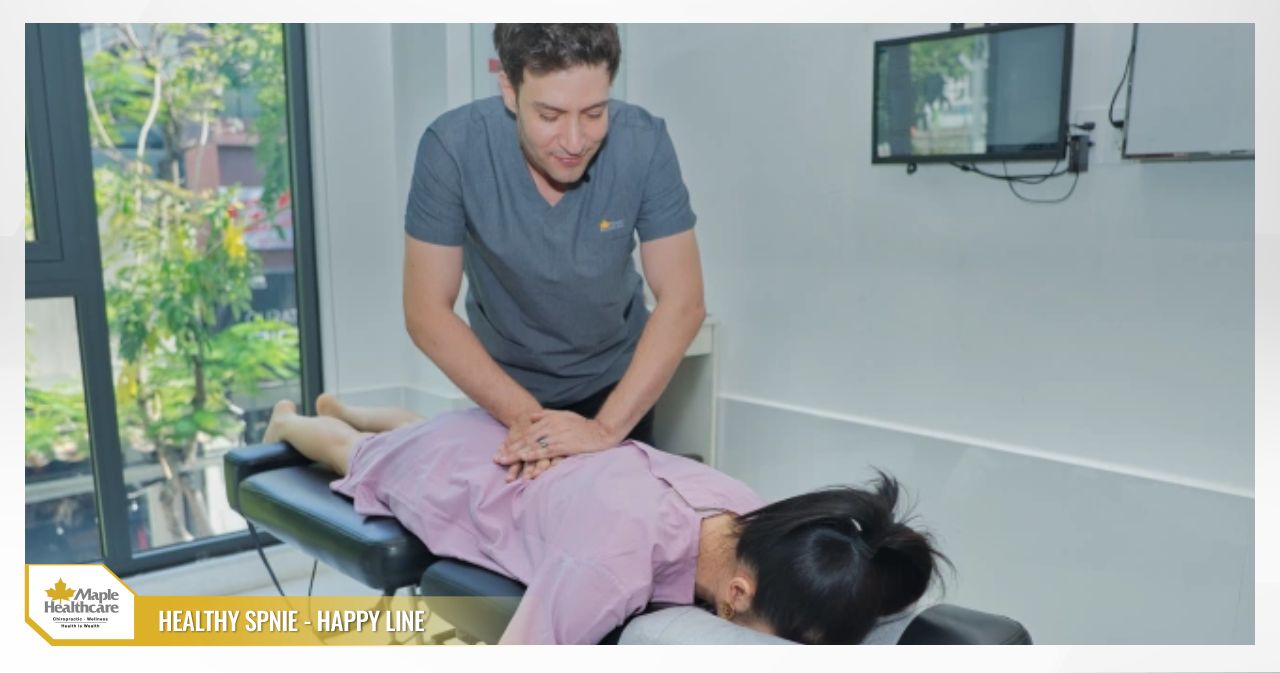
Don’t let pain from spinal degeneration hold you back. Start with the simple exercises in this guide and listen to your body. If you need professional support, please book an appointment at Maple Healthcare for a consultation and to build the most suitable spine care plan for you.
FAQ: Frequently Asked Questions about Exercises for Spinal Degeneration
1. Should I exercise if I have spinal degeneration?
Answer: Yes. Gentle and proper exercise is very important for managing pain and improving flexibility. However, you should only exercise when your pain is at a mild level (under 3/10) and you do not have any dangerous symptoms like sharp pain or radiating numbness and weakness.
2. When should I stop exercising and see a doctor?
Answer: You should stop exercising and see a doctor immediately if your pain increases, becomes sharp, radiates with increased numbness or weakness, or if you experience fever, unexplained weight loss, or a loss of bowel/bladder control. Additionally, if you see no improvement after 4-6 weeks of exercise, you should also seek professional advice.
3. How long should a beginner exercise each day?
Answer: For the first 1-2 weeks, you should start with 15-20 minutes per day. Afterward, as your body gets accustomed to the activity, you can gradually increase to 25-40 minutes per day. The most important thing is to listen to your body and not overdo it.
4. Can at-home exercises replace treatment at a clinic?
Answer: At-home exercises are a crucial part of managing spinal degeneration, but they cannot completely replace a professional diagnosis and in-depth treatment. For the best and safest results, you should combine your home exercise routine with a personalized treatment plan from specialists, such as Chiropractic Care and Physiotherapy.
Related Articles:
Contact for consultation
MAPLE INTERNATIONAL CO., LTD
Phone: 0705 100 100
Tax code: 0311948301
Date Range: 21 - 08 - 2012
Issued: Department of Planning and Investment of Ho Chi Minh City
Medical Practice License: No. 08834/HCM-GPHĐ
Healthcare Group Members



Contact Us
COPYRIGHT