Thoracic Spine Degeneration is a common cause of dull middle back pain, but it is often overlooked or mistaken for heart or lung problems. This condition is a natural aging process of the thoracic spine, yet it can cause significant discomfort and impact quality of life if not recognized and managed appropriately.
This article provides a comprehensive overview of thoracic spine degeneration—covering anatomy, causes, warning signs, and effective conservative treatment methods, including safe exercises you can do at home.
1. What Is Thoracic Spine Degeneration?
Thoracic spine degeneration is a chronic wear-and-tear process affecting the 12 vertebrae of the mid-back (labeled T1 to T12). Over time, the cartilage wears down, thoracic discs lose water content and elasticity, and the joints may enlarge and develop bone spurs. This leads to pain, stiffness, and reduced mobility in the middle back.
Compared to the neck and lower back, the thoracic spine is less prone to degeneration due to its support by the rib cage, which stabilizes and reduces load. However, because symptoms are often nonspecific and resemble heart, lung, or digestive issues, thoracic spine degeneration is frequently diagnosed late.
You should read this carefully if you experience any of the following:
- Dull or sharp pain in the middle back, between the shoulder blades.
- Pain worsens when sitting for long periods, working at a computer, coughing, or taking deep breaths.
- Stiffness and difficulty turning your back in the morning after waking up.
- Tingling, burning pain, or sensation of a tight band running along the ribs (intercostal pain).
2. Thoracic Spine Anatomy and Disease Mechanism
To understand why thoracic spine degeneration causes these symptoms, it’s important to grasp its anatomy and pathophysiology.
2.1. Key Anatomical Structures of the Thoracic Spine
- Thoracic vertebrae (T1-T12): 12 vertebrae forming the middle section of the spine.
- Thoracic discs: Located between vertebral bodies, acting as shock absorbers distributing forces on the spine.
- Facet joints: Located at the back, allowing smooth flexion, extension, and rotation of the spine.
- Costovertebral joints: Where ribs connect to vertebrae, forming a stable rib cage.
- Ligament system: Maintains stability of the vertebrae.
2.2. How Does Degeneration Occur?
Degeneration is a sequence of related events:
- Disc dehydration: Usually the starting point. Discs lose water, become thinner, less elastic, reducing their shock-absorbing ability. The space between vertebrae narrows.
- Facet joint overload: As discs collapse, more pressure shifts to the facet joints at the back, causing wear, inflammation, and enlargement.
- Bone spur formation: In response to instability and chronic inflammation, bone spurs (osteophytes) develop around vertebral bodies and joints. These can cause mechanical pain and increase stiffness.
- Thoracic spinal canal narrowing: In severe cases, enlarged joints, ligaments, and bone spurs may narrow the spinal canal, compressing nerve roots or the spinal cord.


Compared to the neck or lower back, thoracic spine degeneration is less common but can cause characteristic radiating pain along the ribs if nerve roots are compressed.
3. Signs and Symptoms of Thoracic Spine Degeneration You Should Know
Symptoms range from mild to severe. Early recognition helps you receive timely and effective intervention.
3.1. Middle Back Pain
The most common symptom, usually presenting as:
- Dull ache, sometimes sharp stabbing pain between the shoulder blades.
- Pain worsens with prolonged sitting, twisting, bending forward, or deep breathing.
- Pain often eases with rest, position changes, or lying down.
3.2. Stiffness and Limited Range of Motion
- Stiffness in the thoracic back, especially in the morning or after remaining still for long periods.
- Difficulty bending, extending, or rotating your torso.
3.3. Intercostal Nerve Pain (Thoracic Radiculopathy)
When bone spurs or degenerated discs press on nerve roots emerging from the thoracic spine, you may experience:
- Pain, numbness, tingling, or burning radiating from the back around the ribs to the front.
- Sensation of a tight “band” wrapping around the chest or abdomen.
3.4. Warning Signs of Spinal Cord Compression (Thoracic Myelopathy) – SEEK IMMEDIATE MEDICAL ATTENTION
Although rare, this serious complication requires urgent medical care. Signs include:
- Weakness in both legs, difficulty walking, unsteady gait, frequent stumbling.
- Spasticity or increased reflexes in the legs.
- Bladder or bowel dysfunction causing loss of control.
3.5. Important Differentiations
Chest pain can be caused by other serious conditions, so it’s important to distinguish:
- Heart/Lung causes: Chest pain accompanied by shortness of breath, sweating, nausea, dizziness requires emergency services (call 115 immediately).
- Shingles (Herpes Zoster): Burning pain with blister-like rash along a band of skin following a rib path.
4. Causes and Risk Factors for Thoracic Spine Degeneration
Degeneration is a natural process but several factors can accelerate progression and worsen symptoms.
- Biological aging: The primary cause. With age, spinal structures such as discs, cartilage, and ligaments gradually wear down.
- Poor posture and prolonged mechanical load: Hunching, looking down at computer or phone screens for hours, especially common in office workers.
- Injuries or repeated microtrauma: Heavy laborers, people regularly carrying loads, or contact sport athletes are at higher risk.
- Muscle imbalance: Weak back, shoulder, and core muscles reduce spinal stability, increasing joint stress.
- Obesity: Excess weight increases load on the entire spine.
- Other medical conditions: Osteoporosis (weakened bones prone to fractures), ankylosing spondylitis, rheumatoid arthritis.
- Lifestyle: Smoking, physical inactivity, and diets low in calcium and vitamin D contribute to degeneration.
- Genetics: Family history may play a role.
5. Potential Complications If Thoracic Spine Degeneration Is Left Untreated
Without proper management, thoracic spine degeneration can lead to several serious problems:
- Chronic middle back pain: Impacts work, daily activities, and causes sleep disturbances.
- Thoracic spinal canal narrowing: Causes nerve root or spinal cord compression, leading to leg weakness, gait disturbances, and even muscle wasting.
- Reduced chest expansion: Stiffness and pain can limit chest wall mobility, causing shortness of breath during exertion.

6. Diagnostic Process for Thoracic Spine Degeneration
Accurate diagnosis involves a thorough clinical evaluation by physicians.
6.1. Medical History
Doctors ask detailed questions about pain location and characteristics, factors worsening or relieving pain, injury history, and neurological symptoms.
6.2. Physical Examination
Assessment of thoracic spine range of motion, identification of tender points, and specialized neurological tests (muscle strength, sensation, reflexes).
6.3. Imaging
- X-ray: First-line imaging to detect disc space narrowing, bone spurs, or vertebral fractures.
- Magnetic Resonance Imaging (MRI): Gold standard to evaluate disc condition, spinal cord, and nerve roots. Recommended if disc herniation or spinal stenosis is suspected.
- Computed Tomography (CT) Scan: Helpful for detailed bone structure assessment, especially in severe degeneration.
- Bone Density Scan (DEXA): Performed if osteoporosis is suspected, particularly in postmenopausal women.
7. Treatment Principles for Thoracic Spine Degeneration: Prioritizing Conservative Care and Safe Movement
The treatment goals are to reduce pain, improve mobility, slow degeneration, and prevent recurrence. At Maple Healthcare in Ho Chi Minh City, we prioritize conservative, non-drug, and non-surgical treatments.
- Acute stage with mild to moderate pain: Focus on self-care, lifestyle modifications, combined with physiotherapy and guided exercises.
- Severe pain with nerve root compression signs: Requires more specialized interventions.
- Signs of spinal cord compression: Requires multidisciplinary consultation to consider surgery.
8. Self-Care and Lifestyle Changes at Home
You can start with these simple but effective changes:
- Relative rest: Avoid activities that increase pain, but do not stay immobile for long as it weakens muscles.
- Heat therapy: Applying warmth can reduce pain and relax muscles in chronic stages.
- Ergonomic workspace setup:
- Monitor: At eye level, about an arm’s length away.
- Chair: With back support, adjustable height so knees and hips form a 90-degree angle. Use lumbar cushions to support natural spine curves.
- Breaks during work: Every 30-45 minutes, stand up, stretch, and gently twist your torso.
9. Physiotherapy and Rehabilitation
This is the cornerstone of conservative treatment for thoracic spine degeneration. Physiotherapists develop personalized programs that include:
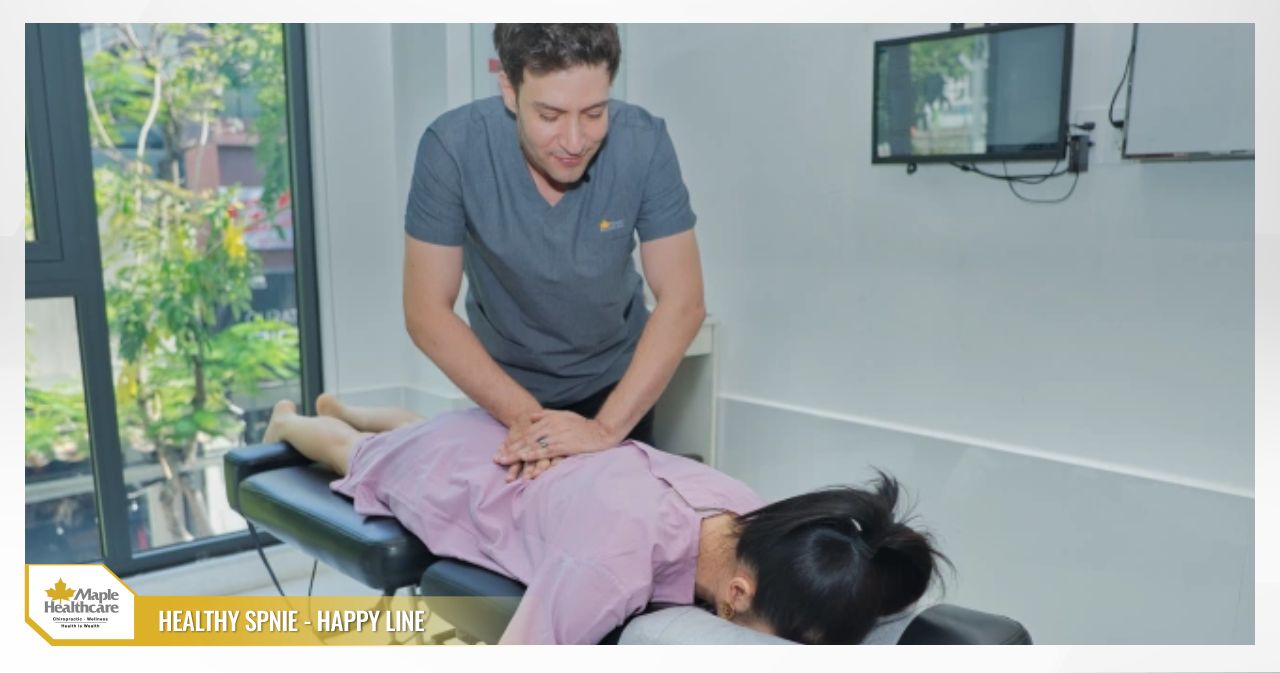
- Manual techniques: Mobilize joints, relieve muscle tightness, and improve mobility of the thoracic spine and ribs.
- Muscle strengthening: Target weak muscles such as the scapular stabilizers, mid-back, and core to build a strong support framework for the spine.
- Equipment guidance: Use of foam rollers for self-massage and chest opening, resistance bands for strengthening muscles.
10. Other Treatment Options When Necessary
- Medications: Non-steroidal anti-inflammatory drugs (NSAIDs) or muscle relaxants may be used short-term to control acute pain.
- Minimally invasive procedures: For severe pain from nerve root compression not responding to conservative care, corticosteroid epidural injections or facet joint blocks may be considered.
- Surgery: Only considered when there is clear progressive spinal cord compression or when conservative treatments have completely failed after 6-12 months.
11. Long-Term Prevention and Management of Thoracic Spine Degeneration
Prevention is better than cure. Maintaining the following habits can help protect your thoracic spine:
- Mind your posture: Sit upright, optimize your workspace, use ergonomic chairs and lumbar support cushions.
- Regular exercise: Combine walking or swimming with 2-3 weekly sessions of back and core strengthening exercises.
- Maintain a healthy weight: Reduce unnecessary pressure on the spine.
- Balanced nutrition: Ensure adequate calcium, vitamin D, and antioxidants.
- Quit smoking and manage stress.
12. When Should You See a Doctor Immediately?
Do not ignore chest or mid-back pain. Seek medical care promptly if you experience:
- Emergency signs: Chest pain with difficulty breathing, sweating, nausea.
- Signs of spinal cord compression: Weak legs, unsteady walking, loss of bladder or bowel control.
- Other signs: Pain accompanied by fever, unexplained weight loss, or severe pain following trauma.
13. FAQ: Common Questions About Thoracic Spine Degeneration
1. Is thoracic spine degeneration dangerous?
Answer: Most cases are benign and can be well managed with conservative treatment. However, it can become serious if complications like spinal cord compression occur.
2. Can this condition be completely cured?
Answer: Degeneration is a natural aging process that cannot be fully reversed. Treatment aims to control symptoms, slow progression, and restore function so you can live actively with less pain.
3. How is thoracic spine degeneration different from thoracic disc herniation?
Answer: Degeneration involves chronic wear of whole structures (discs, joints, bones). Disc herniation is when the disc nucleus protrudes, often causing more acute nerve compression. Both can coexist.
4. What is the best sleeping posture and mattress type?
Answer: Choose a mattress with medium firmness—not too soft to avoid spinal sagging. Sleeping on your back or side with a pillow between your legs is best. Avoid sleeping on your stomach.
If you experience symptoms of thoracic spine degeneration and self-care measures are insufficient, don’t hesitate to seek professional help. At Maple Healthcare in Ho Chi Minh City, our experienced doctors and physiotherapists will conduct thorough assessments and develop individualized treatment plans. These may combine chiropractic care, physiotherapy, and rehabilitation exercises to help you reduce pain safely, effectively, and sustainably.
Related Articles:
Contact for consultation
MAPLE INTERNATIONAL CO., LTD
Phone: 0705 100 100
Tax code: 0311948301
Date Range: 21 - 08 - 2012
Issued: Department of Planning and Investment of Ho Chi Minh City
Medical Practice License: No. 08834/HCM-GPHĐ
Healthcare Group Members



Contact Us
COPYRIGHT