
Do you often feel neck, shoulder, and upper back pain after a long day working at your computer? Or have you noticed that your posture — both when sitting and standing — is becoming increasingly hunched, with your head drifting forward? If so, you may be dealing with Forward Head Posture — a postural problem that is becoming increasingly common in the digital age.
Forward Head Posture is a condition in which the head and neck are pushed forward relative to the vertical axis of the shoulders, while the shoulders tend to round inward, causing the upper back to hunch. This creates a silhouette resembling a turtle stretching its head out of its shell. The condition not only affects appearance but is also an underlying cause of many musculoskeletal health problems.
The habit of looking down at your phone, working on a laptop with poor posture, and a lack of physical activity are the primary culprits driving the spread of this condition — particularly among office workers, school children, and university students. The early symptoms of Forward Head Posture may only involve mild discomfort, but if left unaddressed, they can progress to chronic pain, spinal degeneration, and other neurological problems. Of particular concern, Forward Head Posture in children is also on the rise, affecting the development of the spine and posture in the long term.
This article provides you with a comprehensive and detailed overview of Forward Head Posture, helping you understand:
- What Forward Head Posture is and how to recognise it.
- The underlying causes of this condition.
- Common symptoms and how serious they can become.
- How to improve the condition at home through rehabilitation exercises and postural adjustments.
- Key considerations specifically regarding Forward Head Posture in children.
Read on to take a proactive approach to protecting the spinal health of both yourself and your family.
What Is Forward Head Posture?
Forward Head Posture, also known as text neck syndrome when closely associated with the habit of looking down at a phone, is a common postural disorder. It is defined as a position in which the head and neck are carried forward relative to the vertical axis of the shoulders and torso. This posture is typically accompanied by a downward flexion of the neck, a protruding chin, rounded and inwardly rolled shoulders, and a mild hunch in the upper back.
Description of a typical Forward Head Posture:
- Head tilted forward: When viewed from the side, the earlobe no longer aligns vertically with the tip of the shoulder.
- Neck flexion and chin protrusion: To maintain balance when the head moves forward, the muscles at the back of the neck must remain constantly tense, while the chin tends to jut outward.
- Rounded shoulders: The shoulders are pulled forward, causing the chest to “close in” and lose its natural openness.
- Mild upper back hunch: The thoracic spine may increase in curvature, forming a slight hunch.

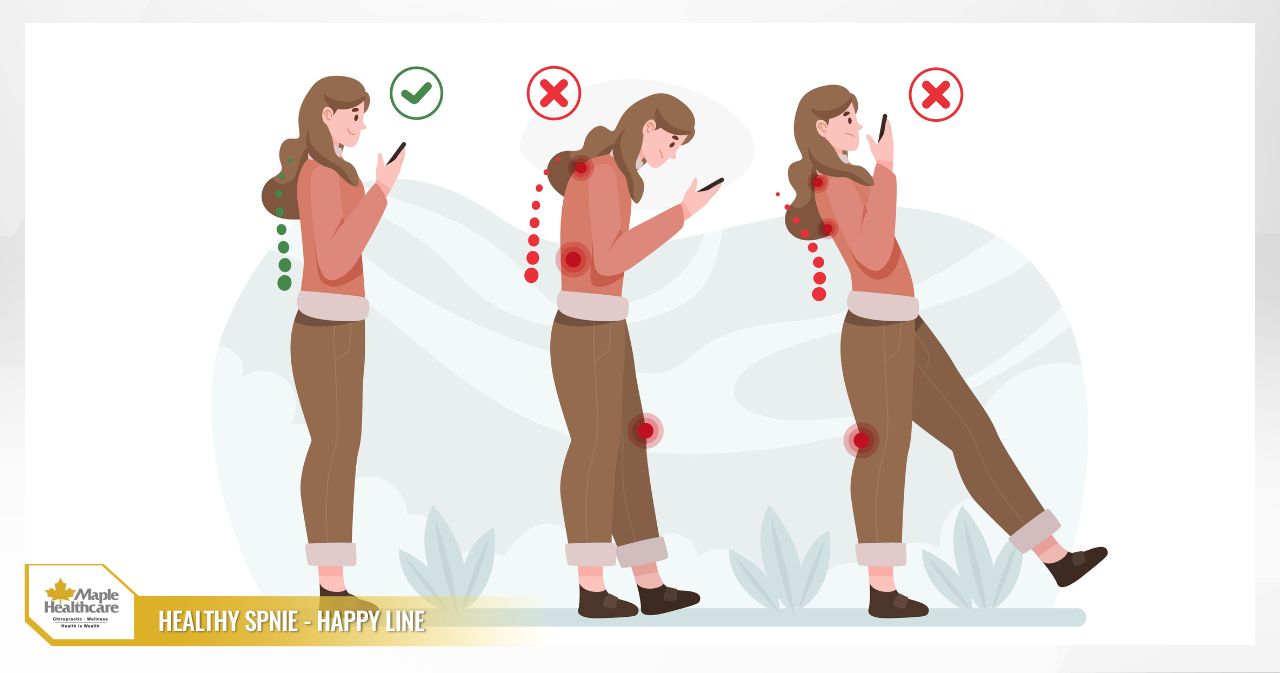
Comparing normal neck posture with Forward Head Posture:
To understand the difference more clearly, consider the following comparison:
- Normal neck posture
- Vertical alignment: When standing or sitting upright, the ears, shoulders, and hips are roughly aligned in a straight vertical line.
- Spinal curve: The cervical spine has a natural, gentle inward curve (lordosis) directed forward.
- Muscles: The neck and shoulder muscles are balanced and not under significant strain.
- Shoulders and chest: Shoulders are open and the upper back is relatively straight.
- Forward Head Posture
- Vertical alignment: The ear sits noticeably in front of the vertical line passing through the shoulder.
- Spinal curve: The natural cervical curve may become flattened or even reversed, placing significant pressure on the intervertebral discs.
- Muscles: The muscles at the back of the neck and across the upper shoulders are overstretched and under constant tension, while the muscles at the front of the neck become weakened.
- Shoulders and chest: Shoulders are rolled inward and the chest is compressed.
Who is most at risk?
- Office workers: Those who sit at a computer for many hours each day, especially when the screen is positioned too low or too far away.
- School children and university students: Those who sit studying for extended periods at desks and chairs that are not proportionate to their height, often bending their heads down to write or read.
- Heavy screen users: Those who spend hours with their heads bent down over smartphones or tablets.
- Sedentary individuals: People whose postural support muscles — in the back, shoulders, and neck — have weakened and are no longer strong enough to maintain proper alignment.
- People with poor habitual posture: Those who habitually slouch, lie on their stomachs while using their phone, or carry a heavy bag or backpack consistently on one side.
Common Symptoms of Forward Head Posture and How to Recognise Them Early
The symptoms of Forward Head Posture are not simply changes in outward appearance. They also encompass a range of musculoskeletal and neurological discomforts. Many people overlook the early signs until the pain becomes persistent, or until someone else points out their rounded posture.
Observable postural signs:
- The head consistently drifts forward relative to the shoulders, even when standing or walking naturally.
- When viewed from the side, the earlobe sits clearly in front of the shoulder line.
- The chin tends to jut out, or the neck flexes downward during periods of focused work or study.
- Rounded, inwardly rolled shoulders.
- A slight hunch in the upper back, giving the person a tired, less confident appearance.
Musculoskeletal symptoms:
- Stiffness and aching: A persistent feeling of tightness, soreness, and achiness in the neck, shoulders, and upper back — particularly after prolonged sitting.
- Dull, nagging pain: A low-grade ache at the back of the neck that may spread up into the base of the skull or down between the shoulder blades.
- Heavy, tense shoulders: A constant feeling of heaviness across both shoulders, making it difficult to fully relax.
- Reduced neck range of motion: Difficulty rotating the head from side to side, or a sense of stiffness when attempting to bring the chin toward the chest or tilt the head back.

Neurological and sensory symptoms (more common in advanced cases):
- Headaches: Particularly tension-type headaches that originate at the base of the skull and radiate up toward the top of the head.
- Dizziness and eye strain: Poor posture can affect blood circulation and create strain on the muscles involved in eye movement.
- Difficulty concentrating: Persistent pain and discomfort can make it harder to focus on work or study.
- Numbness or pain radiating down the arm: This is a serious warning sign, and may indicate that the abnormal posture has begun to compress nerve roots in the cervical spine. You may experience numbness, tingling, or pain travelling down the arm and into the fingers.
- Arm weakness: Difficulty gripping objects or a noticeable reduction in arm strength.
How to self-check for Forward Head Posture at home:
You can try these two simple assessments:
- Wall test:
- Stand with your back toward a wall, with your heels approximately 5–10 cm away from it.
- Make sure your buttocks and upper back (the area between your shoulder blades) are in contact with the wall.
- Relax your shoulders and observe: does the back of your head touch the wall naturally?
- If you need to significantly tilt your head back to touch the wall, or if there is a large gap between the back of your head and the wall, this is a sign of Forward Head Posture.
- Side-profile photo test:
- Ask someone to take a full-body photo of you from the side while you are standing in your most natural, relaxed position.
- In the photo, check the position of your earlobe relative to the tip of your shoulder. If your earlobe is clearly in front of your shoulder, you may be showing signs of Forward Head Posture.
Causes of Forward Head Posture
Forward Head Posture rarely develops overnight. It is the result of accumulated poor habits over time. The primary cause is typically a combination of poor posture, an unsuitable working environment, and muscular imbalances.
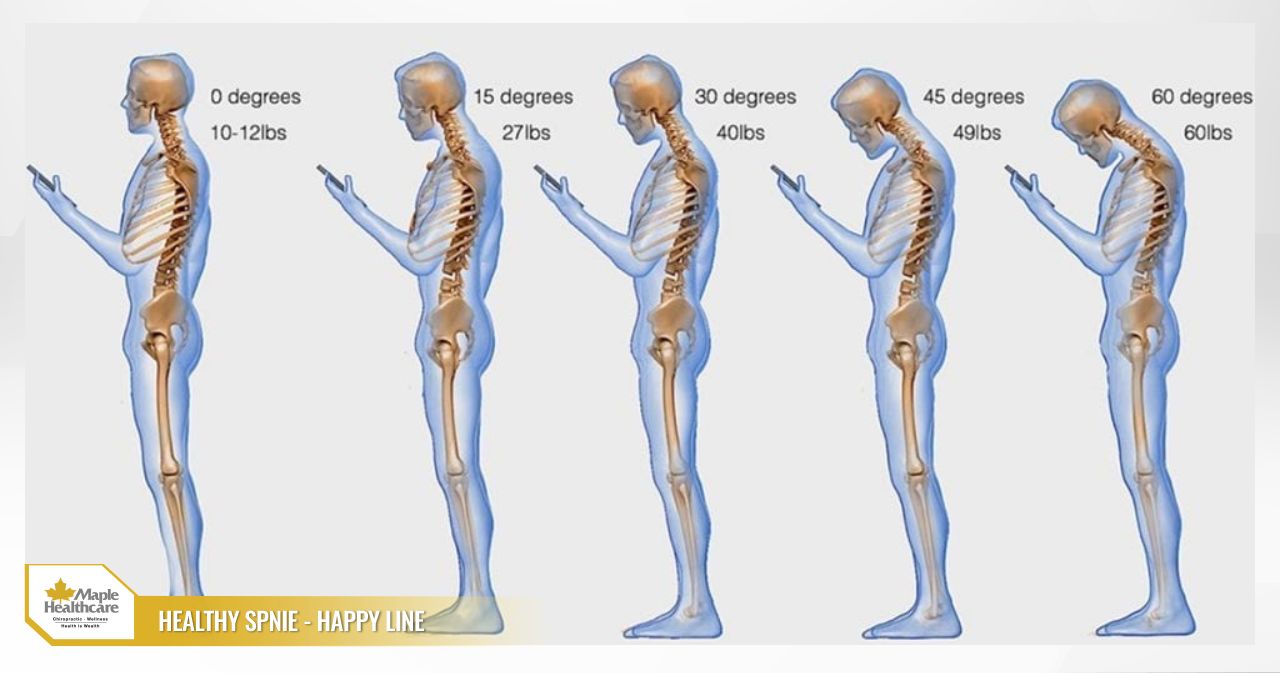
- Prolonged looking down at phones and tablets — text neck syndrome: This is the leading cause in modern society, also referred to as “text neck syndrome.” When you tilt your head downward, the gravitational load on the cervical spine increases significantly. Maintaining this position for many hours each day forces the muscles at the back of the neck to overwork in order to support the head, leading to tightness and pain.
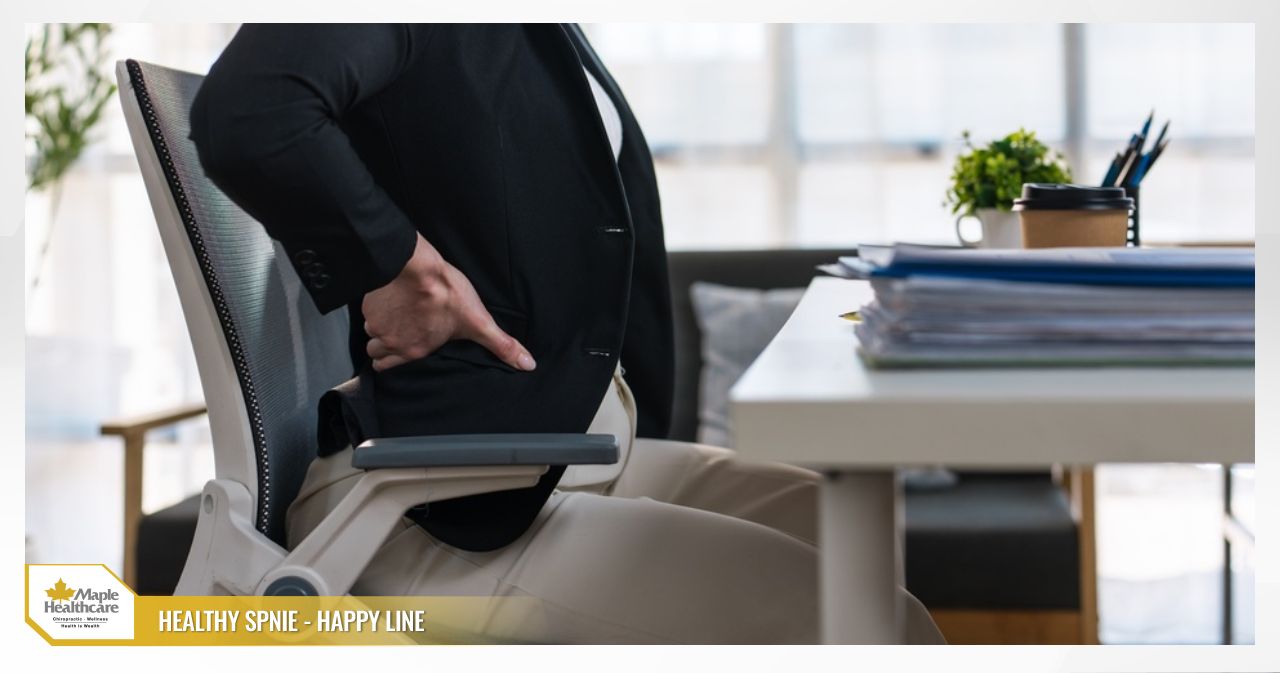
- Poor sitting posture during work or study: Slouching, leaning the head toward the screen, not using back support, or raising the shoulders toward the ears are all habits that place significant strain on the spine.
- Computer or laptop screen positioned too low or too far away: When the screen is below eye level, you are forced to tilt your neck downward. When the screen is too far away, you tend to unconsciously crane your neck forward to see more clearly. Both scenarios contribute to the development of Forward Head Posture.
- Poorly fitting furniture: A chair that is too high or too low, a desk at the wrong height, or a chair without proper back support can all make it difficult to maintain correct posture, resulting in slouching or neck craning to compensate. For children, a poorly sized study desk is a primary contributor to postural misalignment.
- Weakness in core muscle groups: The muscles of the upper back, around the shoulder blades, and the deep cervical flexors play an important role in keeping the shoulders and head properly aligned. When these muscles weaken from inactivity, they can no longer counteract the pull of the chest muscles (which become shortened through prolonged sitting), causing the shoulders to roll inward and the head to drift forward.
- Chronic stress: Under stress, the body’s natural response is to contract inward — hunching the shoulders and tensing the muscles of the neck and upper back — which can worsen poor posture over time.
- Poor sleep posture or unsuitable pillows: A pillow that is too high keeps the neck flexed throughout the night. Conversely, a pillow that is too flat or insufficiently supportive can cause the neck to fall out of alignment. The habit of lying on your stomach to read or use your phone is also a risk factor.
- Carrying a heavy bag consistently on one side: This habit creates an imbalance in the body, causing one shoulder to be pulled down or lifted up. Over time, it can contribute to a stooped or asymmetrical posture.

Is Forward Head Posture Dangerous?
In the early stages, Forward Head Posture may only cause cosmetic concerns and mild discomfort. However, if left unaddressed, the condition can lead to more serious complications that significantly impact your health and quality of life.
- Chronic neck, shoulder, and upper back pain: The muscles at the back of the neck and across the shoulders must continuously overwork to support the weight of the head in a misaligned position. This leads to persistent aching and stiffness that is prone to recurrence and can disrupt both sleep and daily activities.
- Increased pressure on the cervical spine: When the head is carried forward, the load placed on the cervical vertebrae and intervertebral discs increases substantially. This chronic overloading accelerates the natural wear and tear of the spine.
- Greater risk of cervical spondylosis and disc herniation: Sustained pressure on the intervertebral discs can cause them to lose hydration and elasticity, making them more susceptible to herniation. The joints also wear down more rapidly, which can lead to joint degeneration, the formation of bone spurs, pain, and restricted movement.
- Headaches, dizziness, and eye strain: Tension in the suboccipital muscles (at the base of the skull) can trigger tension-type headaches. In addition, poor posture may affect blood flow to the brain, contributing to dizziness and eye fatigue.
- Impaired respiratory function: When the shoulders are rounded and the upper back is hunched, the chest cavity becomes compressed, reducing the lungs’ ability to fully expand. Over time, this can decrease breathing efficiency, leaving you feeling short of breath — especially during prolonged sitting or physical activity.
- Reduced quality of life: Persistent pain and discomfort can lower your productivity at work and study, interfere with sleep, and lead to reliance on pain medication or temporary massage therapies that do not address the root cause of the problem.
When should you see a doctor?
Self-management at home is a reasonable starting point, but you should seek advice from a doctor or physiotherapist if you experience any of the following warning signs:
- Neck, shoulder, or upper back pain that persists for several weeks without improvement.
- Pain that radiates from the neck down into the shoulder, arm, or hand.
- Numbness, tingling, or weakness in the arm or hand.
- Frequent headaches or episodes of dizziness.
- A stiff neck that is significantly restricted in rotation, flexion, or extension.
- Pain that worsens at night or is accompanied by systemic symptoms such as fever or unexplained weight loss.
These symptoms may indicate that the condition has progressed and could involve nerve compression or other spinal issues. Seeking an early assessment allows for an accurate diagnosis and timely conservative treatment, helping to prevent more serious complications.
Forward Head Posture in Children: Signs, Causes, and How Parents Can Help
Forward Head Posture in children is an increasingly concerning issue. Because children’s musculoskeletal systems are still developing, a persistent postural problem that is not corrected early can lead to permanent structural changes and long-term health consequences.
Signs for parents to watch for:
- The child sits at their desk with their head bent very close to their books or computer screen.
- When standing or playing, the child’s head consistently tends to jut forward.
- The child’s shoulders appear rounded and the upper back looks slightly hunched.
- The child frequently complains of neck pain, shoulder aching, or headaches — particularly after studying or using electronic devices.
- The child has a habit of lying on their stomach or resting their head on their hand while watching a phone or tablet.
- The child has difficulty maintaining an upright sitting posture for any length of time.

Common causes in children:
- Excessive use of electronic devices: Children spend hours each day playing games or watching videos on phones and tablets with their necks bent forward.
- Online learning: Studying via a laptop positioned low on a desk forces children to keep their heads bent downward for extended periods.
- Poorly sized study furniture: A desk that is too high or a chair that is too low (or vice versa) forces children to either hunch their back or crane their neck to adapt.
- Carrying an overly heavy backpack: A heavy backpack pulls the shoulders and back rearward; to compensate, children tend to push their head and neck forward. Wearing a backpack on just one shoulder also creates spinal imbalance.
- Insufficient outdoor physical activity: A lack of physical exercise weakens the core muscles — in the back, shoulders, and abdomen — that are responsible for supporting the spine.
How parents can support their child:
- Adjust the study environment:
- Ensure the desk and chair are adjusted to an appropriate height so that when seated, the child’s elbows form a right angle and their feet rest flat on the floor.
- Use a book stand or monitor riser to bring reading materials or a screen up to eye level, so the child does not need to bow their head.
- Set limits on screen time:
- Establish reasonable daily screen time limits and remind children to take a break every 20–30 minutes.
- Encourage children to hold devices up to eye level rather than bending down to look at them.
- Encourage physical activity:
- Create opportunities for children to participate in physical activities such as swimming, running, or team sports to build overall muscle strength.
- Guide children through a few simple shoulder rolls and chest-opening stretches after each hour of study.
- Check and adjust the backpack:
- The weight of a backpack should not exceed 10–15% of the child’s body weight.
- Always remind children to wear both shoulder straps to distribute the load evenly.
- Seek medical advice when necessary: If your child frequently complains of pain, or if you notice a progressive hunch or Forward Head Posture becoming more pronounced, consider taking your child to see a clinician for an assessment and guidance on appropriate rehabilitation exercises.
How to Improve Forward Head Posture at Home
The encouraging news is that Forward Head Posture can improve with consistent effort and the right approach. This process requires a combination of three key elements: modifying daily posture habits, adjusting your work environment, and performing targeted stretching and strengthening exercises.
Correcting Your Sitting Posture
- The “Ear – Shoulder – Hip” principle: Always aim to keep your ear, shoulder, and hip roughly aligned in a straight vertical line when viewed from the side.
- Sit upright with back support: Rest your back against the chair back to reduce strain on the back muscles. A small lumbar cushion can be used to support the natural curve of the lower back.
- Keep shoulders relaxed: Avoid shrugging or tensing the shoulders while working.
- Gently tuck the chin: Instead of allowing the chin to jut forward, practise gently drawing the chin slightly inward while keeping your gaze directed straight ahead.
Adjusting Your Screen and Devices
- Raise the screen to eye level: The top of your computer monitor should be at or just slightly below eye level. The screen-to-eye distance should be roughly the length of one arm (approximately 50–70 cm).
- Use a laptop stand: If you work on a laptop for extended periods, consider investing in a stand to raise the screen to eye level, paired with a separate keyboard and mouse.
- Change how you use your phone: Make a habit of lifting your phone up to eye level rather than bending your neck down to look at it.
Setting Up an Ergonomic Workspace
- Chair: Choose a chair with back support and an adjustable height so that your feet rest flat on the floor.
- Desk: The desk height should allow your elbows to bend at approximately 90 degrees when typing.
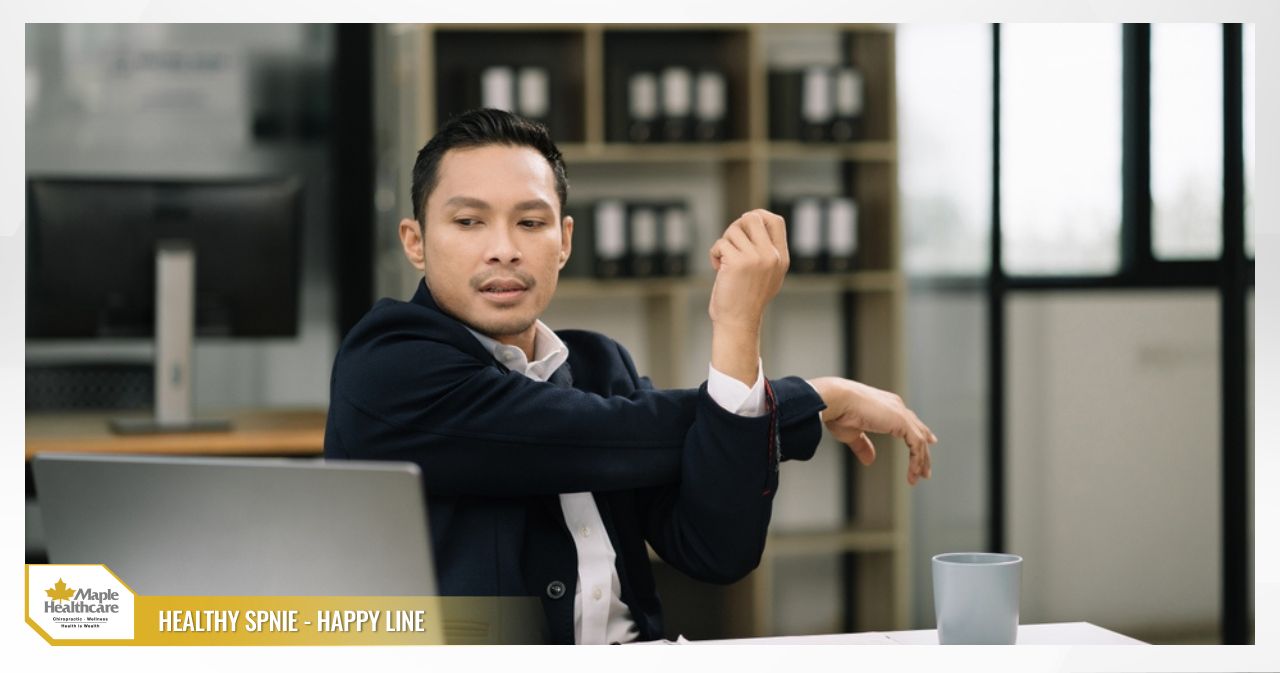
- Take regular breaks: Set a reminder to stand up, move around, and do a few gentle stretches every 30–60 minutes of sitting.
Increasing Daily Movement
- Rather than remaining seated for long stretches, take every opportunity to move: fetch a glass of water, take the stairs instead of the lift.
- Schedule regular exercise, prioritising activities that strengthen the back and core muscles, such as swimming, yoga, or Pilates.
Choosing the Right Sleep Pillow
Choose a pillow with an appropriate height that keeps your neck aligned with the rest of your spine when lying on your back or on your side. Avoid using an overly high pillow or sleeping face down.
Exercises to Help Improve Forward Head Posture
Performing the following exercises consistently each day can help you release tight muscles and strengthen weakened ones, gradually working to restore better postural alignment.
Safety notes before you begin:
- Always perform movements slowly and with control. Never force, jerk, or abruptly rotate the neck.
- Only exercise within a pain-free range. If you experience increased pain, arm numbness, or dizziness, stop immediately.
- If you have an existing cervical spine condition such as a herniated disc, please consult a doctor or physiotherapist before starting these exercises.
Chin Tuck Exercise
Purpose: This is the most important exercise for counteracting Forward Head Posture. It helps activate the deep cervical flexor muscles and gently guides the head back into a neutral position.
How to perform:
- Sit or stand upright with your gaze directed straight ahead.
- Slowly draw your chin and head straight back along a horizontal plane, as though you are trying to create a “double chin.” Make sure you do not tilt your head down or tip it back.
- Hold this position for 3–5 seconds, feeling a gentle stretch at the back of the neck.
- Relax and return to the starting position.
Repetitions: Repeat 10–15 times per set, performing 2–3 sets each day.
Lateral Neck Stretch
Purpose: Releases tension in the trapezius and the muscles along the sides of the neck.
How to perform:
- Sit up straight with your shoulders relaxed.
- Gently tilt your head to the right, bringing your right ear toward your right shoulder until you feel a mild stretch along the left side of your neck. Do not raise your right shoulder.
- Hold for 15–20 seconds.
- Switch sides and repeat.

Doorway Chest Stretch
Purpose: Stretches the shortened chest muscles to help reduce the tendency for the shoulders to roll inward.
How to perform:
- Stand facing a doorway.
- Place your forearms against both sides of the door frame, with your elbows bent at 90 degrees and positioned at shoulder height.
- Step one foot forward and gently lean your body through the doorway until you feel a stretch across your chest and the front of your shoulders.
- Hold for 20–30 seconds.
Scapular Retraction Exercise
Purpose: Strengthens the upper back muscles (rhomboids and middle trapezius) to help pull the shoulders back and support upright posture.
How to perform:
- Sit or stand upright with your arms relaxed at your sides.
- Squeeze your shoulder blades together as if you are trying to hold a pencil between them. Be careful not to shrug your shoulders upward.
- Hold for 5 seconds, then slowly release.
Repetitions: Repeat 10–15 times.
Thoracic Extension Over a Chair
Purpose: Reduces upper back rounding and improves thoracic spine extension mobility.
How to perform:
- Sit in a chair with a backrest that reaches to about the middle of your back.
- Interlace your hands behind your head with your elbows spread wide.
- Slowly lean your upper back over the top edge of the chair back, inhaling and gently opening your chest as you do so.
- Hold for 5–10 seconds, then exhale and return to the starting position.
Repetitions: Repeat 8–10 times.
How to Prevent Forward Head Posture
Prevention is always better than treatment. Adopting the following healthy habits can help you reduce the risk of developing Forward Head Posture:
- Stay mindful of your posture: Whether standing, sitting, or walking, try to keep your ear, shoulder, and hip aligned in a straight vertical line.
- Optimise your workspace ergonomics: Adjust the height of your desk, chair, and screen to create a work environment that supports correct posture.
- Use electronic devices mindfully: Limit the time you spend with your head bent over your phone. Make a habit of holding your phone up to eye level.
- Take frequent movement breaks: Do not sit in one position for too long. Stand up, walk around, and do a few gentle stretches every 30–60 minutes.
- Build muscular strength: Maintain a regular exercise routine, focusing on exercises that target the back, shoulder, and core muscles to provide solid structural support for the spine.
- Sleep well: Choose a pillow of appropriate height and avoid sleeping on your stomach to protect the cervical spine.
- Manage stress: Explore relaxation techniques such as deep breathing, meditation, or yoga to help reduce stress-related muscle tension.
How Long Does It Take to Improve Forward Head Posture?
There is no single answer that applies to everyone. The time it takes to see meaningful improvement in Forward Head Posture depends on several factors:
- Severity: A mild, recently developed postural shift is much easier to address than a condition that has persisted for many years and led to structural changes.
- Your consistency: Whether you commit to consistently correcting your daily posture and exercising regularly will largely determine the rate of improvement.
- Underlying health conditions: If you have additional conditions such as cervical spondylosis or disc herniation, the recovery process may be more complex and take longer.
General timeframe as a guide:
- Mild cases: You may begin to notice a reduction in pain and discomfort within a few weeks. A visible improvement in posture can start to emerge after 1–3 months of consistent effort.
- Moderate to severe cases: It may take several months to a year or more to see meaningful change. In these cases, combining self-management with professional treatment such as physiotherapy and rehabilitation is particularly beneficial.
What matters most is not the timeline, but rather building lasting healthy habits and maintaining them over time to protect your spinal health for the long term.
Take Action Early: Managing Forward Head Posture Before It Progresses
Forward Head Posture is not simply a cosmetic concern — it is an important signal about the state of your spinal health in the context of modern living. Its underlying causes stem from habits that may seem harmless: looking down at your phone, sitting at a desk with poor posture for hours on end, and a generally sedentary lifestyle.
If left unaddressed, the early symptoms of Forward Head Posture — such as neck, shoulder, and upper back aching — can progress to more serious issues including chronic pain, cervical spondylosis, and disc herniation, all of which can significantly affect your work and quality of life. In particular, Forward Head Posture in children requires early parental attention and correction to prevent long-term consequences for a child’s development.
The encouraging news is that with action taken today, this condition is manageable and in many cases can be meaningfully improved. Start with small, consistent changes: raise your screen to eye level, stand up and move every hour, and set aside 10 minutes each day for chin tucks, chest-opening stretches, and upper back strengthening exercises.
If your symptoms persist, recur, or are accompanied by warning signs such as radiating pain or numbness, a professional assessment is an important next step. At Maple Healthcare in Ho Chi Minh City, our clinicians can carry out a thorough assessment to identify the underlying mechanical causes, evaluate the extent of the condition, and develop a personalised conservative management plan. This may include chiropractic care, physiotherapy, and targeted rehabilitation exercises — all aimed at supporting pain relief, improving postural alignment, and helping to reduce the likelihood of recurrence. Don’t let Forward Head Posture hold you back from living comfortably.
FAQ: Frequently Asked Questions About Forward Head Posture
Can Forward Head Posture resolve on its own?
Answer: It is unlikely to improve on its own if you do not change the habits that caused it. The condition can only get better when you actively correct your posture, increase your physical activity, and commit to a consistent rehabilitation exercise programme.
Which symptoms of Forward Head Posture indicate that you should see a doctor?
Answer: You should seek professional advice promptly if you experience persistent pain, pain radiating down the arm, numbness or tingling in the arm or hand, frequent dizziness or headaches, or significant neck stiffness that limits your range of movement.
Can Forward Head Posture lead to cervical spondylosis?
Answer: Yes. Carrying the head in a forward position places abnormally high load on the cervical spine, accelerating the wear of the intervertebral discs and joints. This can increase the risk of early-onset degeneration, bone spur formation, and disc herniation.
Is Forward Head Posture dangerous in children?
Answer: It can be a significant concern. Because a child’s skeletal system is still developing, a persistent postural problem left uncorrected can lead to permanent structural changes in the spine, affecting posture, respiratory function, and overall health into adulthood.
Should you use a posture brace to manage Forward Head Posture?
Answer: A posture brace should only be considered a short-term postural reminder tool. It cannot replace the muscle strengthening work needed for lasting improvement. Over-reliance on a brace may actually weaken your muscles further over time.
Can massage resolve Forward Head Posture?
Answer: Massage can provide temporary relief from pain and muscle tension, but it does not address the underlying mechanical cause — the muscular imbalance and poor postural habits. For meaningful, lasting improvement, massage should be combined with consistent postural correction and targeted exercise.
Related articles:
Pain at the Crown of the Head: Causes, Warning Signs, and Effective Treatments
Desk Job Neck Pain: Chiropractic Relief in HCMC
Neck Pain: Signs, Causes, Expert Treatment at Maple Healthcare
Contact for consultation
MAPLE INTERNATIONAL CO., LTD
Phone: 0705 100 100
Tax code: 0311948301
Date Range: 21 - 08 - 2012
Issued: Department of Planning and Investment of Ho Chi Minh City
Medical Practice License: No. 08834/HCM-GPHĐ
Healthcare Group Members



Contact Us
COPYRIGHT