A dull, persistent backache, especially one that worsens at night and in the early morning, accompanied by a stiff, difficult-to-move feeling, might not be your typical mechanical back pain. These could be the first signs of Ankylosing Spondylitis (AS), a chronic inflammatory arthritis that can severely impact your quality of life if not recognized and managed promptly.
Ankylosing Spondylitis is a chronic inflammatory disease that primarily affects the joints in the spine and the sacroiliac joints (where the spine connects to the pelvis). The condition typically begins in young people under 45, and if left uncontrolled, prolonged inflammation can lead to the fusion of vertebrae, causing spinal deformity and limited movement.
However, the good news is that early diagnosis and a comprehensive treatment plan can effectively control the disease, slow the progression of joint fusion, and help you maintain an active life. This article will provide a detailed A-to-Z guide: from how to recognize inflammatory back pain, the diagnostic process, and treatment options, to essential exercises and lifestyle changes so you can live well with this condition.
Please note: The content in this article is for informational purposes only. You should consult a specialist in musculoskeletal medicine for an accurate diagnosis and a treatment plan tailored to your specific condition.
What are Axial Spondyloarthritis (axSpA) and Ankylosing Spondylitis?
Ankylosing Spondylitis (AS) is a type of disease belonging to a larger group called axial Spondyloarthritis (axSpA). It is a chronic inflammatory arthritis characterized by inflammation in the sacroiliac joints (the joints connecting the sacrum and pelvis) and the joints of the spine. This inflammation can also affect peripheral joints (like hips and knees) and entheses (where tendons and ligaments attach to bone).
In clinical practice, doctors often classify axSpA into two types:
- Non-radiographic axial spondyloarthritis (nr-axSpA): The patient has typical clinical symptoms, but X-rays of the sacroiliac joints do not yet show clear damage. At this stage, inflammation can only be detected by more sensitive methods like Magnetic Resonance Imaging (MRI).
- Ankylosing Spondylitis (radiographic axSpA or AS): This is a later stage when sacroiliitis (inflammation of the sacroiliac joints) has caused structural damage visible on an X-ray.
Mechanistically, this is an immune system-related disease. Due to a malfunction, the immune system mistakenly attacks the structures of the spine and sacroiliac joints, causing a chronic inflammatory response. Key inflammatory mediators like TNF-α and IL-17 play a crucial role in this process. Genetic factors, especially the presence of the HLA-B27 gene, are known to significantly increase the risk of developing the disease.
Symptoms and Early Signs of Inflammatory Back Pain
The most important step for early diagnosis is to recognize the characteristics of “inflammatory back pain,” which is very different from mechanical back pain caused by poor posture or degeneration.
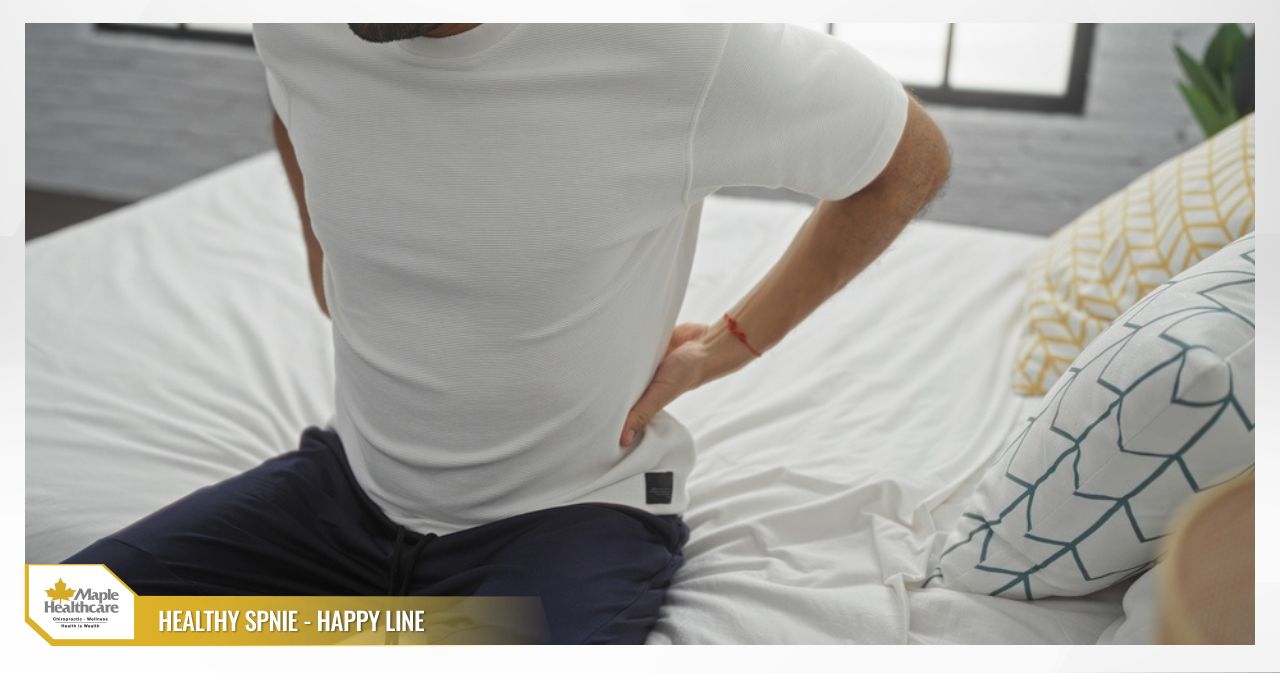
- Inflammatory back pain: This is the core symptom.
- Gradual onset, usually in people under 45.
- Pain lasts for more than 3 months.
- Pain worsens with rest, especially during the second half of the night or early morning, and may wake you up.
- Improves significantly with movement and exercise.
- Morning back stiffness: A feeling of stiffness in the lower back after waking up, lasting for more than 30 minutes. This sensation gradually eases as you start to move.
- Buttock pain: A dull ache in one or both buttocks, sometimes alternating sides. This is a sign of sacroiliitis (inflammation of the sacroiliac joints).
- Limited mobility: Difficulty with movements like bending, arching, or twisting. Over time, the spine can lose its flexibility.

In addition to spinal symptoms, the disease can also have extra-articular manifestations:
- Uveitis: Sudden eye redness, pain, and sensitivity to light (photophobia). This is the most common extra-articular manifestation and requires immediate ophthalmologic treatment.
- Enthesitis: Pain at sites where tendons attach to bone, most commonly the Achilles tendon (causing heel pain) or the plantar fascia.
- Other symptoms: General fatigue, slight weight loss, and in a few cases, it may be associated with psoriasis or inflammatory bowel disease (Crohn’s disease, ulcerative colitis).
Warning Sign: See a Doctor Immediately If you are under 45 and have persistent back pain for more than 3 months with inflammatory characteristics, accompanied by morning stiffness, please see a musculoskeletal specialist for an early examination and diagnosis.
Causes and Risk Factors Related to HLA-B27
The exact cause of ankylosing spondylitis is not yet fully understood, but scientists have identified a combination of several factors:
- Genetic factors: This is the strongest risk factor. The presence of the human leukocyte antigen HLA-B27 is found in about 80-90% of patients. However, it is important to note that not everyone with the HLA-B27 gene will develop the disease; it only increases the risk. If you have a family member with the condition, your risk is also higher.
- Gender and age: The disease is more common in men than women (a ratio of about 2-3 men to 1 woman) and usually begins in adolescence or young adulthood (20-40 years old).
- Environmental and lifestyle factors: Although not a direct cause, factors such as previous intestinal or urinary tract infections are thought to “trigger” the immune response in genetically susceptible individuals. Smoking not only increases the risk of developing the disease but also causes it to progress more severely.
Differentiating from Common Mechanical Back Pain
Many people confuse the pain of ankylosing spondylitis with mechanical back pain from overexertion, poor posture, degeneration, or a herniated disc. Clearly distinguishing between these two types of pain is key to finding the right treatment approach.
Characteristics of Inflammatory Back Pain (Ankylosing Spondylitis)
- Onset: Insidious, gradual, usually in people under 45.
- Timing of pain: Worse with rest, more severe at night and in the early morning.
- Morning sensation: Stiffness lasts for more than 30 minutes.
- Effect of activity: Improves with movement and exercise.
- Response to medication: Responds well to nonsteroidal anti-inflammatory drugs (NSAIDs).
Characteristics of Mechanical Back Pain
- Onset: Often sudden after an activity, at any age.
- Timing of pain: Worse with activity and heavy lifting.
- Morning sensation: Mild or no stiffness, improves quickly.
- Effect of activity: Relieved by rest.
- Response to medication: May be relieved by common painkillers.
If your back pain has many features of “inflammatory back pain,” delaying a medical visit could mean missing the “golden window” for treatment.
The Diagnostic Process for Ankylosing Spondylitis
To make a definitive diagnosis, a doctor will combine several methods rather than relying on a single factor.
- Clinical examination and medical history: The doctor will ask detailed questions about your symptoms (pain characteristics, duration of stiffness) and family history. Physical tests such as Schober’s test, chest expansion measurement, and occiput-to-wall distance may be performed.
- Blood tests: An HLA-B27 gene test to assess risk factors. Inflammatory markers such as CRP and Erythrocyte Sedimentation Rate (ESR) are often elevated during active disease phases.
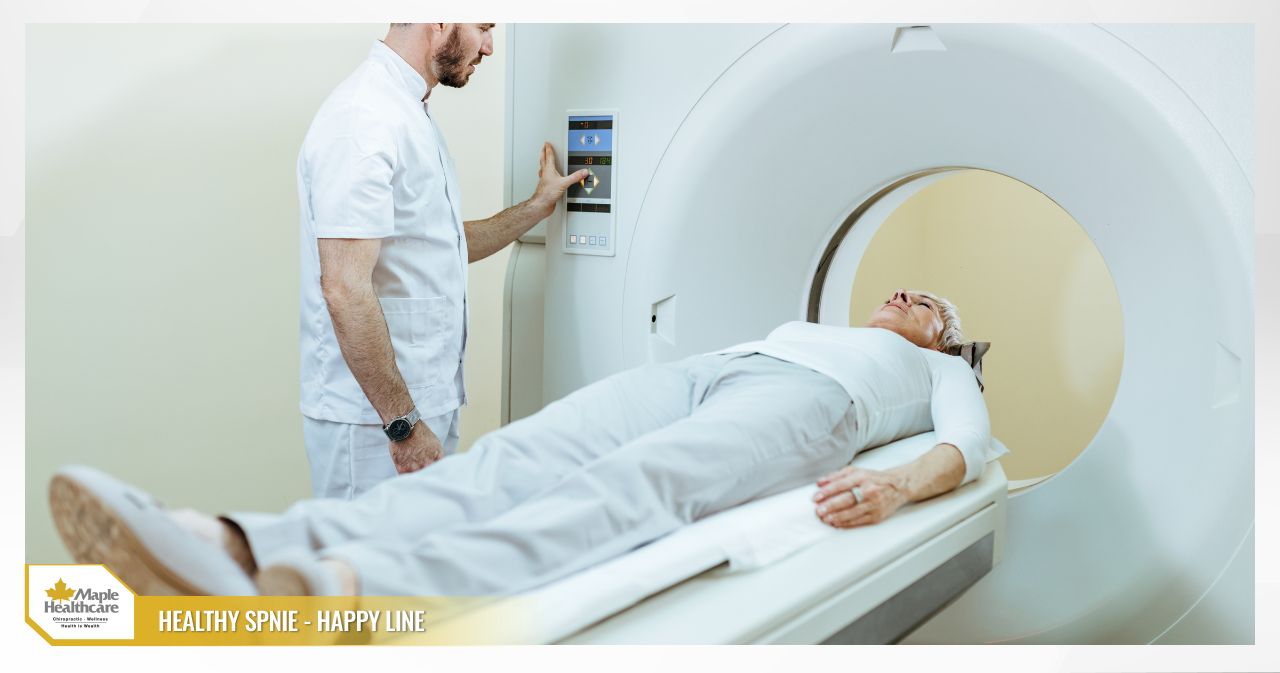
- Imaging: X-ray is the basic method to look for signs of inflammation and joint fusion, but it may be normal in the early stages. Magnetic Resonance Imaging (MRI) is the most valuable tool in the early stage, as it can detect inflammation even when X-rays show no damage.
- Diagnostic criteria: The doctor will use international criteria sets such as the ASAS criteria for axSpA or the modified New York criteria for AS to synthesize all the information and make a final diagnosis.
Disease Progression and Potential Complications
If not treated and managed well, chronic inflammation will lead to fibrosis and calcification of the ligaments around the spine. Over time, the vertebrae can fuse together, creating a “bamboo spine” appearance on X-rays.
- Spinal deformity: The spine loses its natural curves, leading to a stooped posture (kyphosis) and forward-jutting neck, making it difficult to look straight ahead.
- Restricted respiratory function: When the joints between the ribs and the thoracic spine become fused, the chest has difficulty expanding during breathing, reducing lung capacity.
- Osteoporosis and spinal fractures: Chronic inflammation and limited mobility increase the risk of osteoporosis. A fused spine becomes brittle and more prone to fractures, even from minor trauma.
- Extra-articular complications: Recurrent uveitis can lead to vision loss. The disease also increases the risk of cardiovascular conditions.
Current Treat-to-Target Approaches
The modern goal of treatment is not just pain relief but a “Treat-to-Target” approach, aiming to achieve remission or minimal disease activity. The treatment plan is a combination of medication, physiotherapy, and lifestyle changes.
- Medication (prescribed by a Musculoskeletal Specialist):
- Nonsteroidal anti-inflammatory drugs (NSAIDs): These are the first-line choice for effectively reducing pain and stiffness.
- Biologic drugs: When NSAIDs are not effective enough, the doctor may prescribe targeted therapies such as TNF-α inhibitors or IL-17 inhibitors.
- JAK inhibitors: This is a newer class of oral medication considered when other biologic therapies have failed.
- Safety Note: Before starting biologic or JAK inhibitor therapy, you will need to be screened for latent tuberculosis, hepatitis B and C, and update any necessary vaccinations.
- Physiotherapy and rehabilitation: This is an indispensable pillar of treatment, helping to maintain range of motion, reduce pain, and prevent deformity.
- Surgery: This is only considered in very severe cases, such as hip replacement when the joint is completely destroyed or surgery to correct spinal kyphosis.
Physiotherapy and Exercises for Ankylosing Spondylitis
Regular daily exercise is the most important “medicine” you can manage yourself. The main principles are to focus on stretching, strengthening core muscles, and deep breathing exercises to maintain spinal and chest flexibility.
At Maple Healthcare, our specialists will design a personalized program, but you can start with these basic exercises (perform gently and stop if pain increases):
Chest Stretch
Stand in a doorway and place your forearms on the frame with your elbows at shoulder height. Step one foot forward and gently lean forward until you feel a light stretch in your chest and the front of your shoulders. Hold for 20-30 seconds, and repeat 2-3 times on each side. This exercise helps counteract the tendency to stoop and opens up the chest.
Thoracic Spine Extension in Sphinx Pose
Lie on your stomach with your forearms on the floor and elbows directly under your shoulders. Press your forearms down and slowly lift your head and chest, keeping your hips and legs on the floor. This exercise helps improve the flexibility of the thoracic spine. Hold for 5-10 seconds, and repeat 10-12 times.
Modified Plank
Start in a push-up position but rest on your forearms and knees (easier) or toes (harder). Tighten your abdominal muscles to keep your back straight from your shoulders to your hips. This exercise strengthens the core muscle group, which stabilizes and protects the spine. Hold for 15-30 seconds, and repeat 3-5 times.
Chest Expansion Breathing Exercise
Sit or stand up straight, placing your hands on your lower rib cage. Inhale deeply through your nose, feeling your chest and abdomen expand. Exhale slowly through your mouth, feeling your chest fall. This exercise helps maintain chest expansion and improves respiratory function. Perform 5-10 deep breaths, several times a day.
Recommended sports: Swimming is the most ideal sport as it works the entire body without putting pressure on the joints. Walking, cycling, yoga, and Pilates (with modifications) are also very good.
Building a Healthy Lifestyle to Manage the Condition
Small changes in daily habits can make a big difference.
- Quit smoking: This is a top priority. Smoking has been shown to worsen the disease and reduce the effectiveness of treatment.
- Maintain a healthy weight: This reduces pressure on the spinal and hip joints.
- Diet: Prioritize an anti-inflammatory diet rich in omega-3 fatty acids, green vegetables, fruits, and whole grains. Ensure adequate calcium and vitamin D intake to protect bone health.
- Sleeping posture: Lie on a firm, flat mattress. Try to sleep on your back, using a thin pillow under your head.
- Workplace ergonomics: Adjust your chair and position your computer monitor at eye level. Stand up, walk around, and stretch every 30-45 minutes.

Life Considerations: Work, Sports, and Pregnancy
- Work: Apply ergonomic principles. If your job requires prolonged standing or sitting, change your posture frequently and perform short stretching exercises.
- Sports: Prioritize low-impact sports. Avoid activities with a high risk of injury or those that require sudden spinal flexion or rotation.
- Pregnancy: Women with the condition can absolutely have a healthy pregnancy and baby. However, this needs to be carefully planned with a musculoskeletal specialist and an obstetrician to adjust medications safely and monitor closely.
Useful Tools for Monitoring the Condition at Home
To communicate more effectively with your doctor, you can monitor your condition at home using standardized questionnaires like the BASDAI (Bath Ankylosing Spondylitis Disease Activity Index) and BASFI (Bath Ankylosing Spondylitis Functional Index). Recording these scores before each follow-up appointment will give your doctor a clearer picture of your disease progression and response to treatment.
Conclusion
Ankylosing spondylitis is a long journey, but you are not alone. The key to successful management lies in early detection of inflammatory back pain signs, accurate diagnosis, and adherence to a comprehensive treatment plan. A combination of targeted medical therapy, regular physiotherapy exercises, and a healthy lifestyle will help you control symptoms, prevent deformity, and maintain a full life.
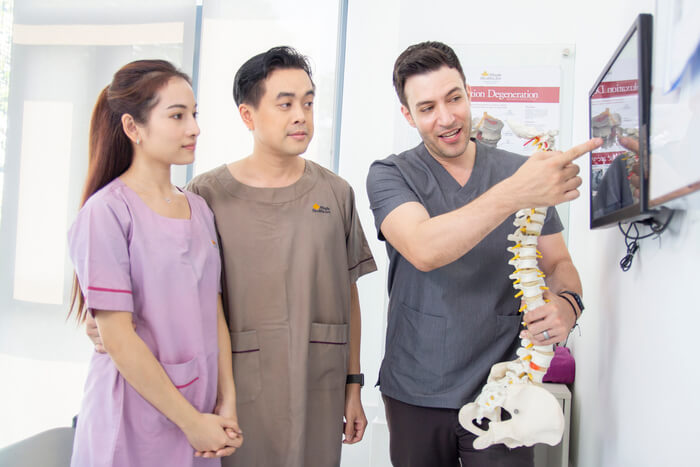
Please book an appointment with the musculoskeletal specialists at Maple Healthcare for an accurate diagnosis and a personalized treatment plan. With our combination of advanced conservative treatments like Chiropractic care, Physiotherapy, and Rehabilitation, we will support you on your path to managing the disease and rediscovering the joy of movement.
FAQ: Frequently Asked Questions about Ankylosing Spondylitis
1. Can Ankylosing Spondylitis be completely cured?
Answer: Currently, there is no complete cure for ankylosing spondylitis. However, with modern treatments, the disease can be managed very well, helping patients reduce pain, maintain function, and live an almost normal life.
2. If I don’t have the HLA-B27 gene, can I still get the disease?
Answer: Yes. About 10-20% of patients with ankylosing spondylitis do not carry the HLA-B27 gene. The diagnosis is based on a combination of factors, including clinical symptoms and imaging, not just genetic testing alone.
3. Can I do weightlifting at the gym with Ankylosing Spondylitis?
Answer: It is possible, but extreme caution is needed. You should focus on exercises that strengthen core and back muscles with proper technique and moderate weight. Avoid exercises that put heavy compressive loads on the spine (like heavy squats) or deep bending movements. It is best to consult with a physiotherapist.
4. Do biologic drugs have any dangerous side effects?
Answer: The main side effect of biologic drugs is an increased risk of infection. Therefore, your doctor will always require thorough screening for latent infections like tuberculosis and hepatitis before starting treatment to ensure your safety.
5. Can chiropractic care help treat the condition?
Answer: Methods like chiropractic care can help reduce pain, improve the mobility of non-fused joints, and correct posture. This is an effective supportive therapy that should be performed by well-trained professionals and must be combined with primary medical treatments.
Related articles:
Contact for consultation
MAPLE INTERNATIONAL CO., LTD
Phone: 0705 100 100
Tax code: 0311948301
Date Range: 21 - 08 - 2012
Issued: Department of Planning and Investment of Ho Chi Minh City
Medical Practice License: No. 08834/HCM-GPHĐ
Healthcare Group Members



Contact Us
COPYRIGHT