Morton's Neuroma: Causes, Symptoms And Treatment
A sharp, burning pain in the ball of your foot — as if you’re stepping on a pebble, yet you look down and find nothing there? This is one of the most common descriptions of Morton’s neuroma, a benign but genuinely disruptive condition that affects quality of life and mobility. It involves a thickening of nerve tissue between the bones of the foot — not a cancerous growth — yet the pain it causes can become intense, particularly for those who regularly wear high heels, pointed-toe shoes, or participate in high-impact activities.
This article provides a comprehensive and detailed look at Morton’s neuroma, helping you recognise symptoms early, understand how a doctor makes a diagnosis, explore treatment options ranging from conservative care to surgery, and — most importantly — learn how to prevent Morton’s neuroma pain from returning.
What Is Morton’s Neuroma? Mechanism and Relevant Anatomy
Morton’s neuroma is not a neoplastic or cancerous tumour. The term refers to a condition in which a nerve between the toes — known as the common plantar digital nerve — becomes thickened and fibrotic. This is the nerve’s response to repeated compression or micro-trauma.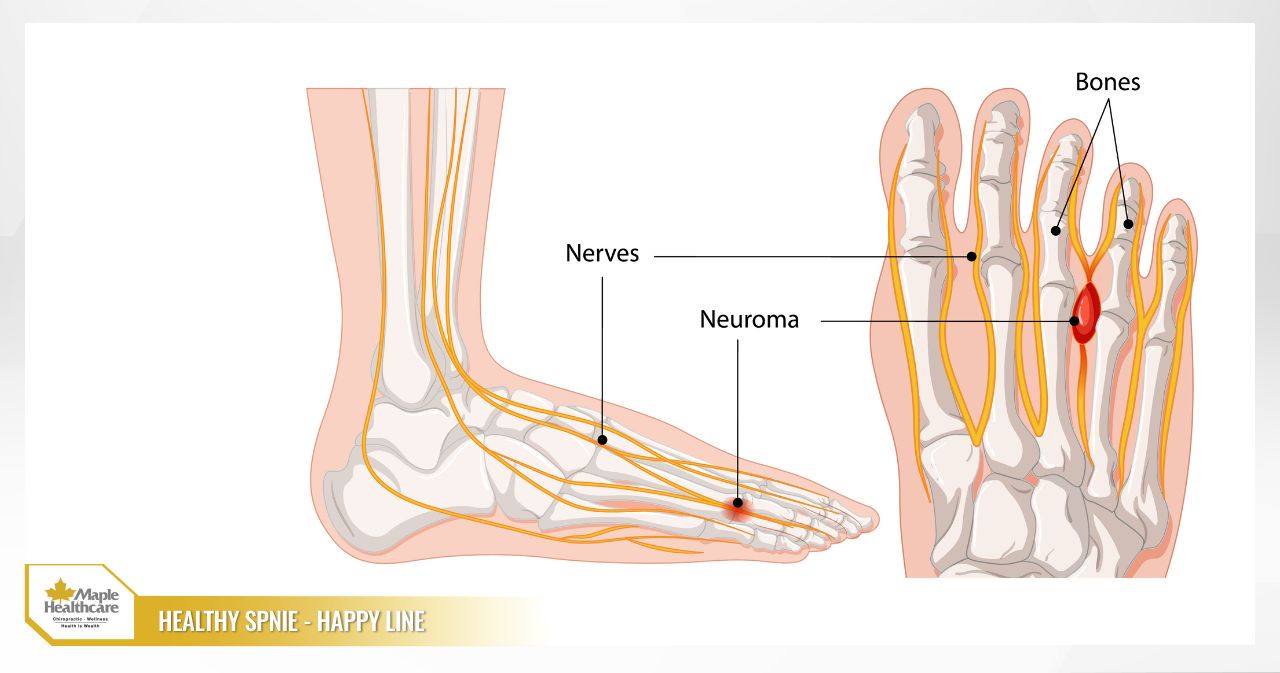
- Detailed definition: This is a compressive neuropathic condition characterised by perineural fibrosis and axonal degeneration. Over time, ongoing irritation causes the nerve and surrounding tissues to thicken, forming a benign “neuroma.”
- Most common location: The most common site for Morton’s neuroma is the web space between the third and fourth toes (counting from the big toe). This is where nerve branches from two different pathways converge, making the nerve larger and more susceptible to compression. The second most common location is the space between the second and third toes. The nerve in this area becomes trapped between the metatarsal heads and an overlying ligamentous structure known as the deep transverse metatarsal ligament.
- Clarifying the terminology: It is important to note that the word “neuroma” can be misleading. This is a reactive lesion caused by mechanical irritation — not abnormal cell growth as seen in cancer. It is therefore entirely benign. Morton’s neuroma pain is a more precise description of what people with this condition experience.
Morton’s Neuroma Symptoms: Early Warning Signs
The symptoms of Morton’s neuroma typically develop gradually and tend to worsen if left unaddressed. Recognising the following signs early can help you seek timely medical care and prevent the condition from progressing.
- Characteristic pain sensations:
- A feeling as though you are stepping on a pebble, a marble, or a bunched-up sock in the ball of your foot.
- Sharp, burning, or stinging pain in the area between the metatarsal heads.
- Numbness, tingling, or pins-and-needles that may radiate into the adjacent toes (usually the third and fourth).
- Factors that worsen or relieve symptoms:
- Worsening factors: Pain typically becomes worse when wearing tight shoes, pointed-toe footwear, or high heels. Activities that load the forefoot — such as running, jumping, or prolonged standing — also aggravate symptoms.
- Relieving factors: Pain often eases noticeably when you remove your shoes, walk barefoot on soft surfaces, or gently massage and stretch your toes.

- A characteristic clinical sign (Mulder’s click): During a physical examination, your doctor may perform a test called Mulder’s sign. They will squeeze the foot laterally with one hand while simultaneously pressing into the affected web space with the thumb and index finger of the other hand. If Morton’s neuroma is present, you may feel a sudden sharp pain, and the clinician may feel or hear a characteristic “click” or “clunk.”
- How the condition progresses: Initially, pain may come and go briefly. However, if compression continues, micro-trauma to the nerve accumulates. The nerve becomes increasingly sensitised and inflamed, leading to more persistent pain that may eventually occur even at rest.

Causes and Risk Factors of Morton’s Neuroma
The precise cause of Morton’s neuroma is thought to result from repeated compression, irritation, or trauma to the interdigital nerve. The following factors increase the risk of developing this condition:
- Inappropriate footwear: This is the leading risk factor. High heels concentrate pressure on the forefoot, while pointed-toe or overly tight shoes squeeze the metatarsal bones together, trapping the nerve.
- High-impact activities: Sports such as running, high jumping, dancing, or occupations requiring prolonged standing can cause repeated micro-trauma to the nerve.
- Foot structure characteristics: Conditions such as flat feet, high arches, bunions, hammer toes, or Morton’s toe alter the mechanical load distribution across the foot.
- Other contributing factors: Being overweight or obese increases the load placed on the feet. A history of foot injury is also a recognised risk factor.

Diagnosing Morton’s Neuroma: What Does Your Doctor Do?
Diagnosis of Morton’s neuroma is primarily based on a detailed medical history and a careful physical examination. Imaging is generally only used to rule out other causes or when the diagnosis is unclear.
Taking Your Medical History
Your doctor will ask targeted questions to better understand your pain — including its location, character (burning, numbness, tingling), factors that make it better or worse (footwear type, activities), and your relevant medical background.
Physical Examination
Your doctor will observe your foot for any structural abnormalities, palpate it to identify the precise point of maximum tenderness, and perform the Mulder’s click test — squeezing the foot laterally while pressing into the web space — to reproduce the pain and detect the characteristic click.
Investigations (When Needed)
- X-ray: Helps rule out other causes such as stress fractures or osteoarthritis.
- Ultrasound: An effective tool for confirming and measuring the size of the neuroma, and can also be used to guide injection procedures.
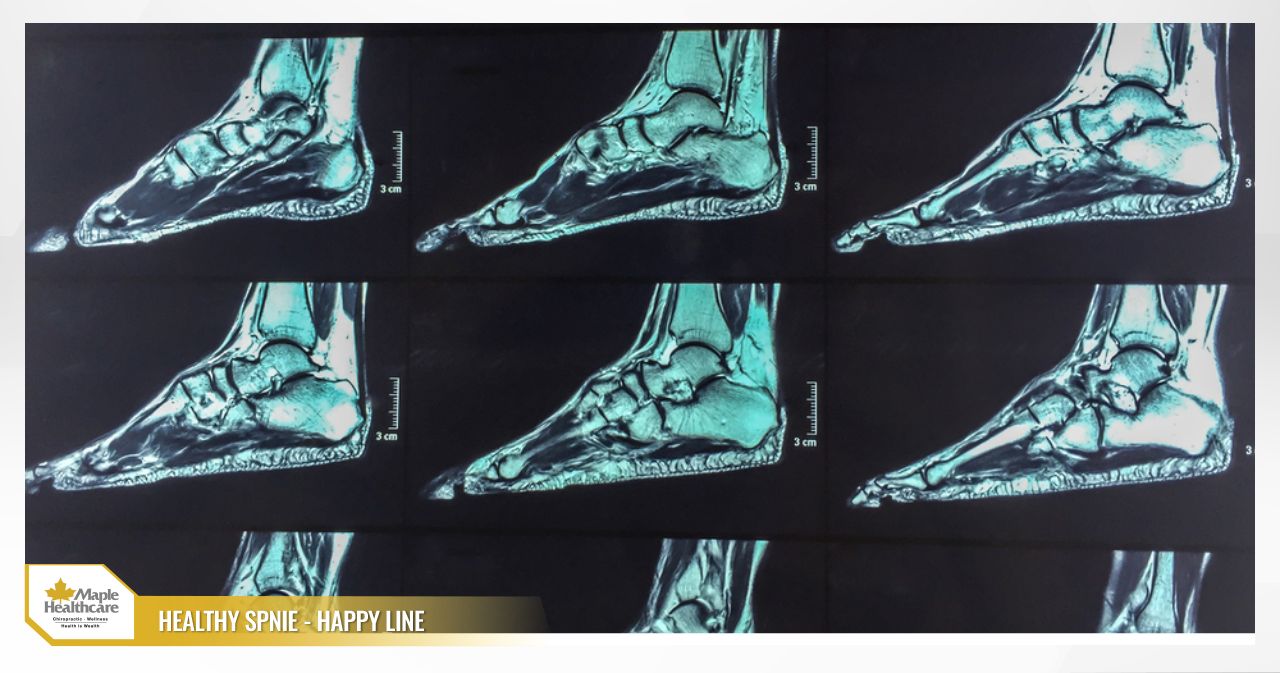
- MRI (Magnetic Resonance Imaging): Provides detailed soft tissue imaging and is particularly useful in complex or uncertain diagnostic cases.
Differential Diagnosis
Your doctor will need to distinguish Morton’s neuroma from other conditions that may cause similar pain, including: metatarsal stress fractures, intermetatarsal bursitis, plantar fasciitis, nerve root compression from the spine (causing sciatica that radiates down the leg), or gout.
Conservative Treatment: The First-Line Approach
The primary goal of conservative treatment is to reduce pressure on the nerve. This is always the first step and can be effective for the majority of cases.
Changing Your Footwear
This is the single most important change you can make. Choose shoes with a wide toe box, avoid high heels and pointed-toe styles, and prioritise footwear with a stable, well-cushioned sole.
Using Metatarsal Pads or Orthotics
- Metatarsal pad: Placed just behind the metatarsal heads, this pad helps lift and splay the metatarsal bones apart, creating more space for the nerve.
- Custom orthotics: If you have underlying structural foot issues, custom-made orthotics can help improve foot mechanics and redistribute pressure more evenly.
Activity Modification
During periods of acute pain, temporarily avoid aggravating activities such as running and jumping, and switch to lower-impact alternatives like swimming or cycling. Once pain has settled, you can gradually return to your usual activities.
Local Pain Relief and Anti-Inflammatory Measures
You can apply an ice pack to the affected area for 10–15 minutes at a time, 2–3 times per day. Non-steroidal anti-inflammatory drugs (NSAIDs) may also help provide temporary pain relief, but should only be used under the guidance of a doctor.
Physiotherapy and Rehabilitation Exercises
Calf stretching exercises, intrinsic foot muscle strengthening (such as towel scrunches or picking up marbles with your toes), and manual therapy techniques performed by a physiotherapist can help improve foot stability and flexibility.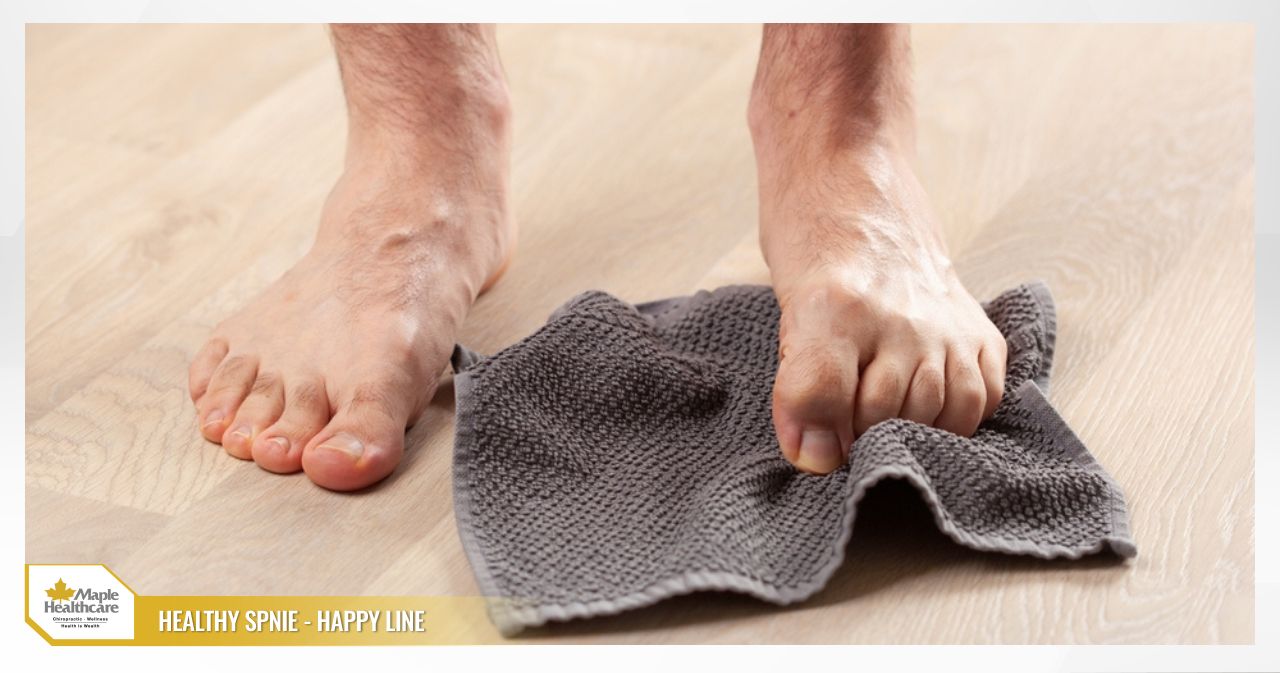
Injections and Minimally Invasive Procedures
If conservative measures do not provide sufficient relief after 6–12 weeks, your doctor may consider more interventional options:
- Corticosteroid injection: A targeted injection of a strong anti-inflammatory medication around the neuroma can provide relatively rapid pain relief. This procedure should ideally be performed under ultrasound guidance for greater precision.
- Alcohol sclerosing injections: A dilute alcohol solution is injected in a series of sessions to gradually shrink and sclerose the nerve tissue, reducing its pain-signalling capacity.
- Radiofrequency ablation (RFA) or cryoablation: These techniques use thermal energy or extreme cold, respectively, to disrupt the affected nerve tissue and reduce its ability to transmit pain signals.
Surgery: When Is It Needed and What Does It Involve?
Surgery is considered a last resort, reserved for cases of Morton’s neuroma that cause severe, persistent pain and have not responded to all conservative treatment options over a period of at least 3–6 months.
- Neurectomy (nerve excision): The most common surgical approach, in which the surgeon removes the thickened segment of nerve entirely. The main recognised side effect is permanent numbness in the skin between the corresponding toes.
- Nerve decompression: The surgeon cuts the deep transverse metatarsal ligament to create more space for the nerve without removing it. This technique preserves sensation but carries a higher risk of recurrence.
The rehabilitation process following surgery is gradual and guided by your doctor and physiotherapist, typically requiring several weeks of reduced weight-bearing on the foot.
Living Well and Preventing Recurrence
Even after successful treatment, applying consistent prevention strategies is essential to reduce the likelihood of Morton’s neuroma pain returning.
- Make smart footwear choices (wide toe box, low heel) a daily habit.
- Maintain foot strengthening and flexibility exercises regularly.
- Manage your weight to reduce the load placed on your feet.
- Manage physical activity loads carefully — warm up thoroughly and increase intensity gradually.
- Recognise early warning signs and adjust your activities promptly.
Morton’s Neuroma in Runners and Athletes
For runners, Morton’s neuroma can be a particularly frustrating and persistent injury. Here are some practical guidelines:
- Adjust your training plan: Reduce your total running volume and temporarily eliminate speed sessions and hill runs when symptoms are present.
- Reassess your running shoes: Try shoes with a wider toe box and potentially a lower heel-to-toe drop.
- Cross-training: Strengthen your glutes and core muscles to improve running form and reduce forefoot loading.
- Return to running gradually: Begin with a walk-run interval programme, and only increase running duration when you are pain-free.
When Should You See a Doctor and Which Specialist?
You should seek professional medical care if:
- Pain has persisted for more than 2–3 weeks despite changing your footwear and resting.
- Pain is progressively worsening or is now present even at rest.
- Numbness or weakness in your toes is spreading or becoming more pronounced.
- Pain is significantly interfering with your ability to walk or carry out daily activities.
Relevant specialties include Orthopaedics, Musculoskeletal Medicine, or Physiotherapy and Rehabilitation. If your pain has not settled and you are looking for a comprehensive, conservative-first approach, seeking an early assessment is well worthwhile. At Maple Healthcare in Ho Chi Minh City, our clinicians can carry out a detailed evaluation of your foot mechanics and structure, then develop a personalised care plan — combining physiotherapy, rehabilitation exercises, and lifestyle adjustments — to help manage your pain and support long-term recovery.
Morton’s neuroma is a common condition that can be effectively managed, particularly when identified early. The key to addressing Morton’s neuroma pain lies in reducing the mechanical load on your foot. Start with the simplest yet most meaningful step: take a closer look at your footwear. If symptoms persist, do not hesitate to seek advice from a healthcare professional — so you can work towards walking comfortably and confidently again.
FAQ: Frequently Asked Questions About Morton’s Neuroma
Can Morton’s Neuroma Resolve on Its Own?
Answer: It is very rare for Morton’s neuroma to resolve completely without addressing the underlying compressive factors. However, symptoms can improve significantly if you reduce pressure by switching to appropriate footwear (wide toe box, low heel) and modifying your activities. If symptoms persist, medical intervention is advisable.
Is Morton’s Neuroma a Form of Cancer?
Answer: Absolutely not. This is a benign condition involving a thickening of nerve tissue caused by repeated mechanical irritation. It is not a malignant tumour and has no capacity to spread to other parts of the body.
Can Changing Your Footwear Really Help with Morton’s Neuroma Pain?
Answer: Yes — this is the single most important and effective step in conservative management. Switching to shoes with a wide toe box and a low heel allows the metatarsal bones to splay naturally, directly reducing compressive pressure on the affected nerve.
When Should I See a Doctor If I Suspect Morton’s Neuroma?
Answer: You should seek medical attention if pain has lasted more than 2–3 weeks despite self-care measures, if it is progressively worsening or present at rest, or if numbness and weakness in your toes are increasing. Early diagnosis supports more effective conservative treatment and reduces the likelihood of needing invasive procedures.
What Role Does Physiotherapy Play in Treating Morton’s Neuroma?
Answer: Physiotherapy plays an important role in addressing the mechanical factors that contribute to this condition. A physiotherapist can guide you through stretching and foot strengthening exercises, and apply manual therapy techniques to improve flexibility — all of which help reduce load on the inflamed nerve and support long-term prevention of recurrence.
Related articles:
Treating Flat Feet in Adults: Pain Relief and Functional Recovery
Knee Osteoarthritis: What It Is and Effective Supportive Care.
Contact for consultation
MAPLE INTERNATIONAL CO., LTD
Phone: 0705 100 100
Tax code: 0311948301
Date Range: 21 - 08 - 2012
Issued: Department of Planning and Investment of Ho Chi Minh City
Healthcare Group Members



Contact Us
COPYRIGHT