Left buttock pain is a common condition that may feel like a dull ache, sharp pain, pain after prolonged sitting, pain during movement, or pain radiating down the left leg. Many people who experience this discomfort search for answers to the question, what causes left buttock pain, particularly when the pain persists, recurs, or is accompanied by symptoms such as numbness, back pain, or pain extending down the leg.
This condition is not a disease in itself, but rather a symptom that may signal various health problems. Sometimes, it is simply left gluteal muscle pain caused by muscle strain, prolonged sitting, or poor movement patterns. However, one-sided left buttock pain may also indicate more complex conditions, such as sciatica, piriformis syndrome, a lumbar disc herniation, sacroiliac joint inflammation, hip joint disorders, or an injury to the bones and soft tissues in the area.
This article provides useful medical information to help you understand the possible causes, recognize associated symptoms, identify warning signs that require medical attention, and learn about safe conservative treatment options. Please note that the information in this article is for reference only and cannot replace an in-person diagnosis by a doctor.
Gluteal muscle pain and general information about this condition
To better understand left buttock pain, it is helpful to review some basic information about the structure and function of this area. This can help you describe your pain more clearly and recognize when medical support may be needed.
What is left buttock pain?
Left buttock pain refers to pain or discomfort localized to the left side of the buttocks. It may originate from several different structures, including:
- Muscles and soft tissues: The pain may simply be left glute pain caused by muscle tightness or injury.
- Bones and joints: Pain may arise from the hip joint, sacroiliac joint, or pelvis. You may perceive this as pain in the left buttock bone.
- Referred pain: Pain may originate in the lumbar spine, such as from a disc herniation, or result from compression of the sciatic nerve.
The way you describe your pain may provide an initial clue about its cause:
- A tight or aching sensation that worsens when contracting the muscles or moving: This is often associated with an injury to the gluteal muscles.
- Deep or sharp pain around the bone, pain after a fall, or pain when walking: This may indicate a bone or joint problem involving the hip, sacroiliac joint, or an injury.
- Burning pain, electric-shock-like pain, or pain radiating down the leg with numbness: This is often a sign of a nerve-related problem, particularly sciatica.
In clinical practice, distinguishing muscle and soft-tissue pain from nerve or joint pain is very important because the treatment approach for each group of causes is different.
Why is the left buttock area prone to pain?
The buttocks are a complex structure that plays a central role in many body movements. There are two main reasons why this area is prone to pain:
- Weight-bearing and movement: The buttocks support much of the body’s weight when you sit and are central to movements such as standing, walking, running, jumping, climbing stairs, and rotating the hips. Prolonged sitting, sitting unevenly on one side, overexertion, or lifting heavy objects with poor technique can overload the gluteal and lower-back muscles, leading to pain.
- Complex anatomical connections: The buttock area brings together several important structures, including the large gluteal muscles, the piriformis muscle, the hip joint, sacroiliac joint, lumbar spine, and especially the sciatic nerve—the largest nerve in the body. Because these structures are closely connected, a problem involving the lumbar spine, sciatic nerve, hip joint, or sacroiliac joint may present as one-sided left buttock pain.
Is left buttock pain dangerous?
The answer depends on the underlying cause. Most cases of left buttock pain caused by muscle strain, prolonged sitting, or poor posture are not particularly dangerous. This type of pain may improve significantly with rest, activity modification, and appropriate stretching exercises.
However, you should not ignore it. Left buttock pain may be a warning sign of a more serious health problem if it occurs with any of the following symptoms:
- Pain that persists and is getting worse.
- Pain radiating down the leg, causing numbness, leg weakness, or difficulty walking.
- Pain with fever, swelling, warmth, or redness in the buttock area, which may suggest an infection or abscess.
- Pain after a fall or accident, especially if it feels like left buttock bone pain and you cannot stand or bear weight.
Common symptoms associated with buttock pain
Recognizing associated symptoms can help you and your doctor identify the likely cause more accurately. Common symptoms include:
- Aching or sharp pain in the left buttock: An ache is common when the muscles are overloaded, while sharp pain may occur suddenly after a change in position or nerve irritation.
- Pain that worsens after prolonged sitting: This is particularly common among office workers and drivers. Sitting for long periods increases pressure on the gluteal muscles, piriformis muscle, spinal structures, and sacroiliac joint.
- Pain that worsens when standing up, climbing stairs, or rotating the hip: These activities require the gluteal muscles, hip joint, and sacroiliac joint to work, so increased pain may indicate a problem involving one of these structures.
- Pain radiating from the buttock to the thigh, calf, or foot: This is a classic sign of sciatica, piriformis syndrome, or nerve-root compression caused by a disc herniation.
- Numbness, tingling, or burning: These sensations often indicate irritation or injury to a nerve.
- Tight gluteal muscles and difficulty moving the hip: This may result from muscle spasms, tendon inflammation, or the body’s protective response to limit painful movement.
- Pain accompanied by lower-back pain: This may suggest that the problem originates in the spine, such as spinal degeneration or a disc herniation.
- Swelling or bruising of the buttock after an impact: This is a clear sign of soft-tissue injury. If the pain is severe and you cannot walk, a bone or joint injury should be ruled out.


Warning signs of left buttock pain that require prompt medical attention
Although many cases of buttock pain improve on their own, seek medical attention immediately if you experience any of the following red flags:
- Severe, sudden pain that prevents you from sitting, standing, or walking.
- Increasing numbness or weakness in the left leg, a heavy feeling in the leg, difficulty walking, or frequent tripping.
- Loss of bladder or bowel control, which is a medical emergency.
- Pain with fever, unexplained weight loss, or persistent fatigue.
- A swollen, warm, red, and tender buttock area, suggesting a possible abscess or infection.
- Pain after a fall, accident, or significant impact, especially if you suspect left buttock bone pain.
- Pain lasting longer than 1–2 weeks without improvement despite rest and self-care.
- A history of serious conditions such as cancer, osteoporosis, or spinal disease, or current use of immunosuppressive medication.
Common causes of left buttock pain
So, what causes left buttock pain? Below are the most common causes, grouped to make them easier to understand.
Gluteal muscle strain or soft-tissue injury
This is the most common cause of left gluteal muscle pain. It occurs when muscle fibers are overstretched due to sudden movement, overtraining—particularly exercises targeting the glutes and thighs—running, or lifting heavy objects. The pain is usually localized to the muscle and worsens when you contract the muscle, walk, or squat.
Prolonged sitting, poor posture, or low physical activity
Sitting continuously for many hours without changing position increases pressure on the gluteal muscles and spinal discs. Crossing your legs or leaning to one side while sitting can also create uneven loading, making one-sided left buttock pain more likely. This is common among office workers and drivers.
Piriformis syndrome
The piriformis is a small muscle located deep in the buttock, close to the sciatic nerve. When this muscle spasms, becomes inflamed, or enlarges, it may compress or irritate the sciatic nerve, causing deep pain in the left buttock that may radiate down the back of the thigh. Pain often worsens with prolonged sitting, climbing stairs, or rotating the hip.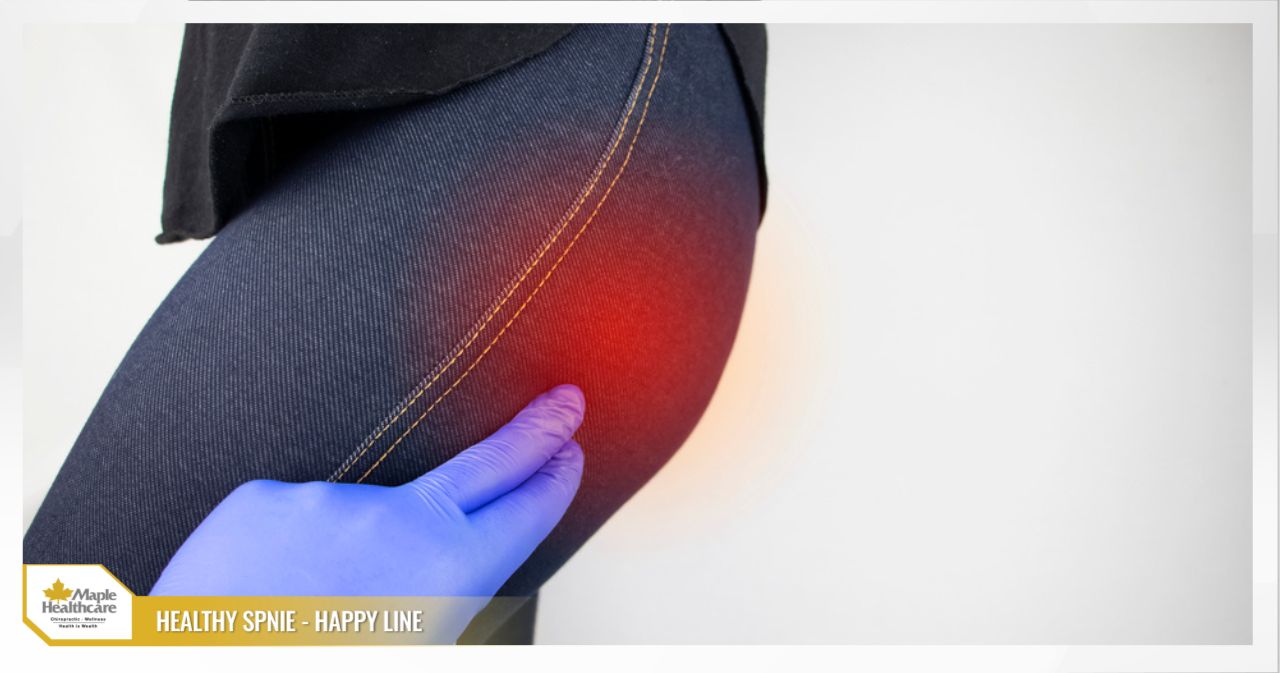
Sciatica
Sciatica describes pain that follows the path of the sciatic nerve. It commonly begins in the lower back, travels through the buttock, and extends down the back of the thigh, sometimes reaching the foot. Typical symptoms include sharp or electric-shock-like pain with numbness and burning. If you have left buttock pain that radiates down the leg, sciatica is one possibility that should be considered.
Lumbar disc herniation
When a disc between the lumbar vertebrae herniates, its inner material may compress a nerve root emerging from the spine and affecting sensation and movement in the leg. This can cause pain that travels from the back to the left buttock and leg. The pain often worsens with coughing, sneezing, bending forward, or prolonged sitting.
Lumbar spinal degeneration
Natural aging, heavy physical work, or prolonged poor posture can cause wear and changes in spinal structures, leading to an ache in the lower back that radiates into the buttock. Pain often worsens with movement and may be accompanied by morning stiffness.
Sacroiliac joint inflammation
The sacroiliac joint connects the sacrum—the lower end of the spine—with the pelvis. When this joint becomes inflamed or does not function properly, it may cause deep pain in the lower buttock near the lower back, which may radiate into the thigh.
Hip joint disorders
Problems such as hip osteoarthritis or hip inflammation may cause pain in the groin and hip that spreads toward the back of the buttock. The pain often worsens when walking or rotating the leg.
Other causes
- Hip bursitis: Inflammation of a fluid-filled sac that reduces friction around the hip joint, causing pain when lying on the affected side.
- Abscess or infection: This can cause swelling, warmth, redness, and severe soreness in the buttock area.
- Bone injury: A pelvic or coccyx fracture after an accident may cause severe left buttock bone pain.
What conditions can be associated with left buttock pain?
In summary, left buttock pain may be related to several body systems:
- Muscles, tendons, and ligaments: Muscle strain, gluteal muscle tightness, or tendon inflammation. These commonly cause left gluteal muscle pain that is tender to touch and worsens with movement.
- Nervous system: Sciatica, piriformis syndrome, or nerve-root compression. These often cause pain radiating down the leg with numbness.
- Spine: Disc herniation, spinal degeneration, or spinal stenosis. These commonly cause back pain that radiates into the buttock.
- Joints: Sacroiliac joint inflammation or hip disorders. These often cause pain when walking, standing for long periods, or rotating the hip.
- Infection or injury: Abscesses, hematomas, or fractures. These are often accompanied by swelling, warmth, redness, fever, or a history of impact.
How to assess the severity of left buttock pain at home
This self-assessment is intended only as an initial guide and does not replace a medical diagnosis. Consider the following questions:
-
- Where exactly is the pain? Is it in the center of the buttock, near the back, or on the outer hip? Is it superficial muscle pain or deep pain around the bone?
- What does the pain feel like? Is it an ache, a sharp pain, or a burning, electric-shock-like sensation?
- What makes the pain better or worse? Does it worsen with prolonged sitting, walking, bending, or lying on your side? Does it improve with rest?
- Are there any associated symptoms? Numbness, leg weakness, fever, redness or swelling, or back pain?
- How long has the pain lasted? Did it just begin, has it recurred several times, or has it been continuous?
If the pain persists or you develop unusual symptoms, you should see a doctor for an accurate diagnosis.
When should you see a doctor for left buttock pain?
You should consult a specialist in Musculoskeletal Medicine, Neurology, or Rehabilitation Medicine if:
- The pain lasts longer than 1–2 weeks without improving.
- The pain is severe and affects your sleep or daily activities.
- Pain radiates down the leg with numbness, tingling, or muscle weakness.
- You develop any of the red-flag symptoms described above.
How is the cause of left buttock pain diagnosed?
To identify the underlying cause, your doctor may take the following steps:
- Medical history: Your doctor will ask about the pain in detail, including how it began, associated symptoms, daily habits, and any underlying health conditions.
- Physical examination: Your doctor may observe your walking pattern and ask you to perform certain movements to assess the range of motion of your spine and hip. Specific examination tests can help identify the affected structure, such as a muscle, nerve, or joint.
- Additional tests, if needed: Depending on the initial assessment, your doctor may recommend X-rays, MRI, ultrasound, or blood tests.
How can left buttock pain be treated safely?
The key principle of treatment is to address the underlying cause. There is no single method that can resolve every case of buttock pain because each cause requires a different treatment plan.
Home care for mild pain
If your pain is mild and has recently developed after physical activity or prolonged sitting, you may try the following measures:
- Relative rest: Avoid activities that cause pain, but do not remain completely inactive. Gentle movement within a pain-free range is encouraged.
- Cold therapy during the first 24–48 hours: If the pain is due to an injury or swelling, apply an ice pack wrapped in a towel for 15–20 minutes.
- Warm therapy: If the pain is due to prolonged muscle tightness, warmth may help the muscles relax.
- Change position regularly: Avoid sitting for long periods and stand up to walk around every 30–60 minutes.

Use medication only as directed
A doctor may prescribe medicines such as pain relievers, anti-inflammatory drugs, or muscle relaxants to control acute symptoms. However, do not self-medicate or use these medicines for an extended period, as they may cause side effects affecting the stomach, liver, or kidneys.
Physiotherapy and rehabilitation
This is an effective and safe conservative treatment approach that plays an important role in managing pain and reducing the risk of recurrence. A comprehensive rehabilitation program may include stretching exercises, strengthening exercises, posture modification advice, and targeted modalities such as therapeutic ultrasound and electrical stimulation.
For a safe and appropriate physiotherapy and rehabilitation plan, consult a qualified professional. At Maple Healthcare in Ho Chi Minh City, doctors and therapists develop individualized care plans that combine conservative treatment approaches such as chiropractic care, physiotherapy, and specialized exercises to address the underlying causes of pain.
Targeted treatment of the underlying cause
- Disc herniation or sciatica: Active conservative treatment is usually recommended. Surgery may be considered if conservative treatment does not help or if there is severe nerve compression.
- Arthritis or joint disorders: The underlying condition should be treated and inflammation controlled.
- Abscess or infection: Antibiotics may be needed, and a surgical procedure may be required to drain pus.
Exercises that may support relief from left buttock pain
Important: Perform these exercises only when your pain is mild and you have no warning signs. Stop immediately if your pain increases.
Exercise: Piriformis stretch (figure-four position)
How to do it: Lie on your back with both knees bent. Place your left ankle over your right thigh. Hold your right thigh with both hands and gently pull it toward your chest until you feel a stretch in the left buttock.
Hold: 20–30 seconds. Repeat 3 times.
Exercise: Gluteal stretch (cross-body knee-to-chest stretch)
How to do it: Lie on your back with both legs extended. Use both hands to pull your left knee toward your right shoulder until you feel a stretch in the buttock.
Hold: 20–30 seconds. Repeat 3 times.
Exercise: Glute bridge
How to do it: Lie on your back with your knees bent and feet flat on the floor, hip-width apart. Tighten your abdominal and gluteal muscles, then slowly lift your hips off the floor.
Hold: 3–5 seconds, then slowly lower your hips. Perform 10–12 repetitions.
How to help prevent left buttock pain from recurring
- Avoid sitting for too long: Stand up and move around every 30–60 minutes.
- Maintain good sitting posture: Sit with your back straight, distribute your weight evenly across both buttocks, and avoid crossing your legs.
- Exercise regularly: Strengthen your abdominal, back, and gluteal muscles.
- Warm up thoroughly before playing sports.
- Lift heavy objects correctly: Bend your knees and keep your back straight.
- Maintain a healthy weight to reduce stress on the spine and joints.
Conclusion
Left buttock pain is a common symptom with many possible causes, ranging from simple problems such as left gluteal muscle pain due to poor posture to more complex conditions such as disc herniation, sciatica, or arthritis.
If your pain is mild, you may try appropriate home-care measures. However, if you have persistent pain, pain radiating down the leg, numbness or weakness, fever, or left buttock bone pain after an injury, seeking medical attention early is important for an accurate diagnosis. Treating the underlying cause through conservative approaches such as physiotherapy, rehabilitation, and lifestyle changes is a safe and effective way to manage left buttock pain and reduce the risk of recurrence.
FAQ: Frequently asked questions about left buttock pain
Could left buttock pain be sciatica?
Answer: It could be, especially if the pain radiates down the leg. However, gluteal muscle pain, piriformis syndrome, and joint disorders can cause similar symptoms. A doctor’s assessment is needed to distinguish between them.
Is left buttock pain that radiates down the leg dangerous?
Answer: Pain radiating down the leg suggests nerve irritation or compression. You should see a doctor, particularly if numbness or leg weakness is also present, to rule out more serious causes.
What causes left buttock pain after prolonged sitting?
Answer: Common causes include muscle strain, poor sitting posture that places pressure on the gluteal muscles, piriformis syndrome, or problems originating in the lumbar spine that are aggravated by sitting posture.
Can left gluteal muscle pain go away on its own?
Answer: If it is due to a mild strain after physical activity or prolonged sitting, it may improve with rest and gentle stretching. However, if the pain persists, recurs, or worsens, you should see a doctor to identify the underlying cause.
Should you use heat or cold for left buttock pain?
Answer: Use cold therapy during the first 48 hours if the pain is caused by an acute injury or swelling, as this may help reduce inflammation. After that, or for pain caused by prolonged muscle tightness, warmth may help relax the muscles and improve circulation.
Related articles:
Contact for consultation
MAPLE INTERNATIONAL CO., LTD
Phone: 0705 100 100
Tax code: 0311948301
Date Range: 21 - 08 - 2012
Issued: Department of Planning and Investment of Ho Chi Minh City
Healthcare Group Members



Contact Us
COPYRIGHT