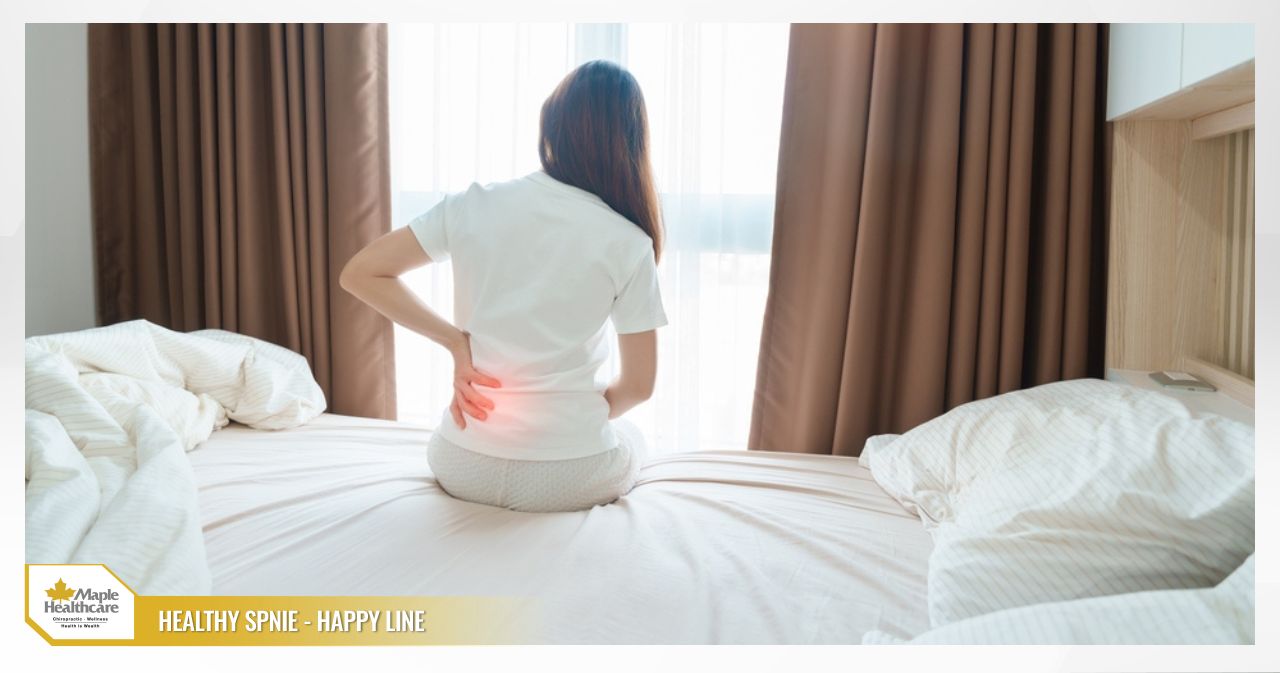
Are you experiencing discomfort from lower back pain when lying flat? This is a common condition that can disturb sleep and affect your daily quality of life. A dull ache or sharp pain when lying flat—especially at night—often signals issues related to posture or spinal health.
When you lie on your back, the natural curve of the lumbar spine may flatten or arch excessively, placing increased pressure on the discs and nerve roots. Inadequate support from your mattress or pillow, along with underlying spinal conditions, can worsen this pressure. Understanding the root causes can help you choose effective solutions, improve sleep, and move more comfortably.
In this article, Maple Healthcare explains the main causes of lower back pain when lying flat, ranging from sleep posture and mattress choice to more complex spinal conditions. Below, you will find detailed guidance on proper sleeping positions, specific exercises, safe home pain-relief methods, and warning signs that indicate when medical evaluation is needed.

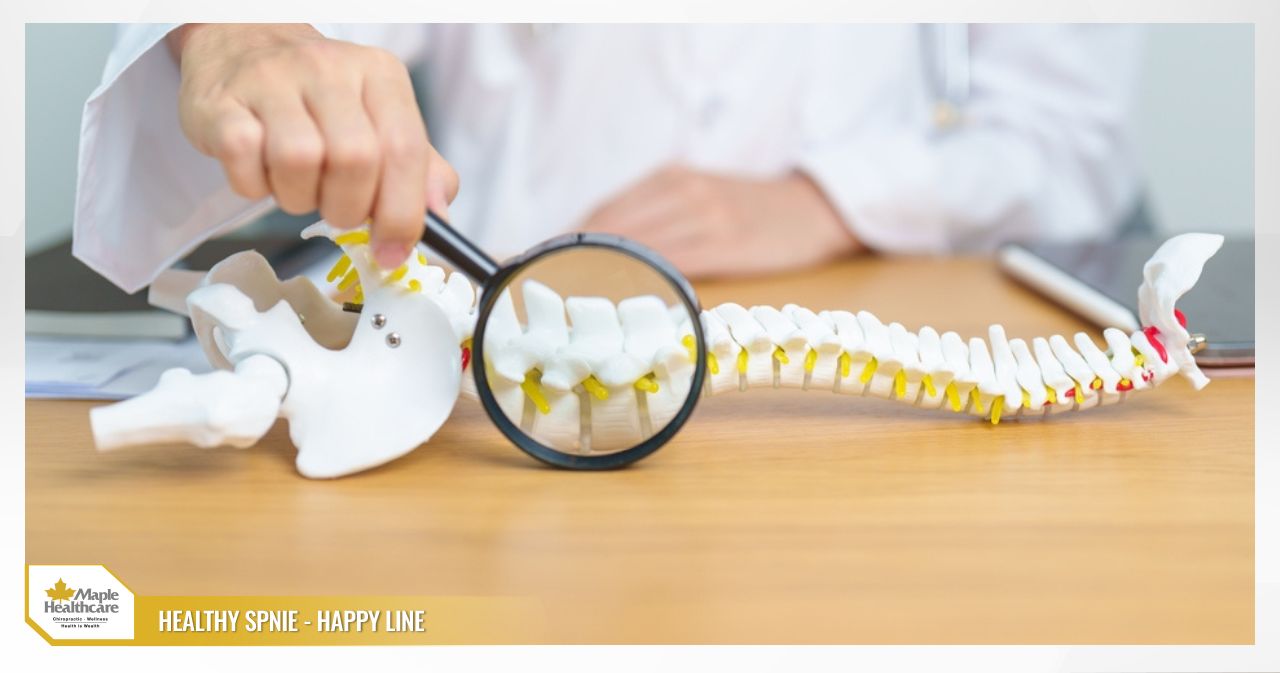
 In some cases, pain when lying flat is a symptom of conditions such as:
Symptoms and When to Seek Immediate Attention
When experiencing nighttime back pain or pain that worsens while lying on your back, you may notice symptoms such as:- A dull ache or sharp pain in the lower back that increases when lying flat.
- Morning stiffness that takes some time to loosen.
- Pain radiating to the buttocks or thighs, sometimes accompanied by mild tingling, which may suggest nerve root irritation.
- Pain that worsens at night: The pain becomes severe when lying down and does not improve with position changes.
- Persistent pain: Pain continues for several weeks despite home care.
- Fever or unexplained weight loss: These could be signs of an infection or other serious conditions.
- Progressive numbness or leg weakness: This may indicate severe nerve compression.
- Loss of bladder or bowel control: This is a medical emergency (possible Cauda Equina Syndrome) requiring immediate attention.
- Pain after trauma: Any back pain appearing after a fall or accident requires evaluation.
Why Does Your Lower Back Hurt When You Lie on Your Back?
To find an effective solution, it is important to understand the potential root causes:Sleep Posture and Spinal Pressure
Sleeping posture plays a critical role. When lying flat without proper support, the lumbar spine may be forced into:- Flexion (Reduced Curve): The lower back presses flat against the mattress, straining ligaments and increasing disc pressure.
- Hyperextension (Excessive Arching): For those with an anterior pelvic tilt, lying flat can exaggerate the arch, compressing the facet joints.
Inadequate Mattress or Pillow Support
- Mattress too soft: Allows the hips to sink, causing the spine to misalign.
- Mattress too firm: May create pressure points and fail to support natural spinal curves.
- Unsuitable pillows: Lack of support for the neck or lower back forces muscles to work continuously to maintain alignment, leading to fatigue.
Muscle Tension and Soft Tissue Injury
- Tight Hip Flexors: Prolonged sitting can shorten hip flexor muscles. When lying flat, these tight muscles pull the pelvis forward, increasing the lumbar arch and causing pain.
- Soft Tissue Strain: Minor injuries or muscle strains from daily activities can cause discomfort that becomes noticeable when the body tries to relax at night.
 In some cases, pain when lying flat is a symptom of conditions such as:
- Degenerative Disc Disease: Changes in disc pressure when lying down can trigger pain.
- Spondylitis (Spinal Arthritis): Inflammation causing stiffness, often worse after rest.
- Herniated Disc: Can cause sharp pain or sciatica that varies with position.
- Spinal Stenosis: Narrowing of the spinal canal can cause pain when the back is extended (lying flat).
Adjusting Sleeping Positions for Relief
Adjusting your sleeping posture is often one of the first steps many people find helpful in managing back pain when lying flat.Proper Supine Position
If you prefer lying on your back:- Place a pillow under your knees: This helps relax the back muscles, reduces excessive lumbar arching, and maintains the natural physiological curve.
- Use lumbar support: A small rolled towel placed under the curve of the lower back may provide additional support.
- Avoid stomach sleeping: This position places significant stress on the spine and neck.
Side-Lying Alternative
- Pillow between the knees: When lying on your side, placing a pillow between your knees helps keep the hips and spine aligned (neutral).
- Head alignment: Ensure your pillow keeps your neck aligned with the rest of your spine.
Pre-Sleep Checklist
- Check that your neck pillow supports a neutral position.
- Assess if your mattress is sagging under your hips.
- Experiment with lumbar support (towel roll) for 2–3 nights to see if comfort improves.
Choosing the Right Mattress and Pillow
Mattress Selection
A medium-firm mattress is commonly suggested for back pain. It typically provides a balance of support to keep the spine aligned while contouring enough to reduce pressure points. A mattress that is too soft often causes the spine to sag, while one that is too hard may be uncomfortable.
Pillow Support
- Cervical Pillow: Should maintain the neck’s natural curve.
- Lumbar Roll: Specifically designed to support the lower back when lying supine.
- Orthopedic Pillows: May be beneficial for those needing specific structural support.
Exercises and Stretches for Pain Relief
Gentle movement can help strengthen the core and improve flexibility. General Note: Perform these only when pain is mild. Stop if you feel sharp pain or numbness.Core Activation and Decompression
Basic Bridge- How to: Lie on your back, knees bent, feet flat. Lift hips until the body forms a straight line.
- Benefit: Activates glutes and core to stabilize the spine.
- Execution: Hold 2–3 seconds, repeat 10–12 times.
- How to: Lie on your back, pull one knee gently toward the chest.
- Benefit: Stretches the lower back and glutes.
- Execution: Hold 15–20 seconds per side.

- How to: On hands and knees, alternate between arching the back (Cat) and dropping the belly (Cow).
- Benefit: Increases spinal mobility.
- Execution: Perform slowly 8–10 times.
- How to: Lie on your back with a small rolled towel under the lumbar curve. Relax and breathe deeply.
- Benefit: Reduces pressure on discs and relaxes muscles.
- Execution: Rest for 5–10 minutes.
- How to: Lie on back, knees bent. Gently rotate knees to one side.
- Benefit: Improves flexibility.
- Execution: 10–12 times per side.
Best Times to Stretch
- Before bed: 5–10 minutes of gentle stretching (e.g., Knee-to-Chest) to relax muscles.
- Morning: 10–15 minutes of movement to reduce stiffness.
Safe Home Pain Relief Methods
Heat and Cold Therapy
- Cold packs: Useful for acute pain or inflammation (apply 10–15 minutes).
- Warm compresses: Helpful for chronic muscle tension or stiffness (apply 15–20 minutes).
- Safety: Always wrap packs in a cloth to protect the skin.

Over-the-Counter Medication
Short-term use of acetaminophen or NSAIDs may help manage symptoms. Note: Always follow dosage instructions and consult a pharmacist or doctor, especially if you have other medical conditions.Massage and Relaxation
Gentle massage and stress management techniques can help reduce muscle tension and improve sleep quality.When to See a Specialist and Advanced Care
While home remedies are helpful, professional intervention is sometimes necessary.Seek Professional Evaluation If:
- Pain persists for more than 2–4 weeks.
- Night pain significantly disrupts sleep.
- Symptoms include numbness, weakness, or radiation to the legs.
Physiotherapy and Chiropractic Care
At Maple Healthcare, the focus is on conservative, non-invasive management:- Physiotherapy: Involves posture analysis, core strengthening, and restoring spinal mobility.
- Chiropractic Care: Clinicians use gentle adjustments to help restore alignment, reduce nerve irritation, and support the body’s natural function.
Surgery
Surgery is typically reserved for severe cases (such as significant nerve compression) when conservative care has not provided relief over time.Conclusion
Lower back pain when lying flat is a common issue that is often manageable with the right approach. Improving sleep posture, selecting suitable support, and practicing targeted exercises are key steps that can lead to meaningful improvement. If pain persists or is accompanied by warning signs, professional assessment is recommended. The team at Maple Healthcare in Ho Chi Minh City offers personalized treatment plans—combining chiropractic care, physiotherapy, and rehabilitation—to help you manage symptoms and support long-term spinal health. Results vary between individuals, and some people notice improvement within a few weeks, while others progress more gradually.FAQ – Frequently Asked Questions
Is it better to sleep on your back or side with lower back pain? There is no single “best” position. Many people find relief lying on their back with a pillow under the knees, while others prefer side-sleeping with a pillow between the knees. The most important factor is finding a neutral position that feels comfortable for you. Is a soft or firm mattress better for back pain? A medium-firm mattress is often suggested as it supports spinal alignment while contouring to the body’s natural curves. How long does it take for exercises to show results? With consistent practice (3–4 times per week), many people notice improvement within 2–6 weeks. If symptoms worsen, stop and consult a healthcare provider.Related articles:
Upper Back Pain Relief in Ho Chi Minh City Low Back Pain And Sciatica Treatment With Acupuncture In VietnamContact for consultation
MAPLE INTERNATIONAL CO., LTD
Phone: 0705 100 100
Tax code: 0311948301
Date Range: 21 - 08 - 2012
Issued: Department of Planning and Investment of Ho Chi Minh City
Medical Practice License: No. 08834/HCM-GPHĐ
Healthcare Group Members



Contact Us
COPYRIGHT