

Contact for consultation
Energy IV Therapy in Ho Chi Minh City for Busy Expats
Low energy can have many causes, from poor sleep to gaps in nutrition. At Maple Wellness Clinic in Ho Chi Minh City, we assess the whole picture first. For selected patients, an energy IV drip can deliver fluids and key nutrients quickly. This approach supports short-term alertness while you build solid habits. Our doctors also counsel on sleep, nutrition, and pacing for sustainable energy.
Doctors design each energy boost IV session through careful screening. Our screening covers symptoms, medications, and prior labs to reduce risks. We prioritize hydration and evidence-informed ingredients such as B vitamins, magnesium, and vitamin C. Monitoring continues in the clinic to track your response. Afterward, you leave with clear aftercare and a practical plan.

What is an Energy IV drip?
Definition & how energy IV therapy works
An energy IV drip delivers sterile fluids and nutrients straight into your bloodstream. Many travellers find an energy IV drip supports short-term alertness during work peaks and recovery weeks. Clinicians use it as an adjunct, not a replacement for food, sleep, or movement. Doctors first assess fatigue causes, medications, and labs to target the blend to you.
Typical ingredients (what’s inside Energy IV drip)
Typical formulas feature b-complex IV with B1, B2, B3, B5, and B6. We add B12 when lab results indicate the need, tailoring amounts to clinical goals. Magnesium, vitamin C, and electrolytes such as sodium and potassium support hydration and cellular processes. Amino acids may join after screening, and our team checks allergies and interactions carefully. We screen for interactions and prior supplement use.
Who may fit vs who should avoid this therapy in Vietnam
Candidates for Energy IV therapy to consider after screening
Women 40 to 60 often juggle travel, deadlines, and routines that erode daily energy. You may consider energy IV therapy when fatigue persists despite solid sleep and balanced meals. Clinicians also evaluate dehydration signs and documented deficiencies such as B12, vitamin D, or magnesium. After respiratory illness or stressful months, some patients seek short-term support while rebuilding habits.
Caution and avoid groups
Patients with heart or kidney disease need a physician’s review before any infusion plan. Pregnancy or breastfeeding leads our clinicians to defer treatment until safety conditions change. Allergies or drug interactions such as diuretics or antihypertensives guide ingredient choices. Suspected anemia or endocrine disorders require diagnostics and cause us to pause an energy IV drip.
Realistic expectations with energy IV therapy (what it can & can’t do)
Expected effect & duration
Many women feel a lift in alertness within hours, though responses vary by individual and context. An energy IV drip supports hydration and nutrient delivery, which can ease sluggishness for the short term. Best results appear when you optimize fluids, address proven deficits, and maintain consistent sleep and routine.
What it cannot replace
Nutrition still carries the foundation for energy, so whole foods and adequate protein remain central. Regular movement and quality sleep continue to matter more than any infusion, every week of the year. This service does not treat conditions such as anemia, thyroid disorders, or major depressive illness.
Max frequency & program design
We tailor the plan to your labs, symptoms, and response across visits. Clinicians may use an energy boost IV when tests confirm deficits or absorption limits. For safety, we space visits every two to four weeks and limit to two per month. After each energy IV drip, clinicians reassess energy, blood pressure, and symptoms before planning next steps.
Safety first: risks & monitoring at Maple Wellness
Common local risks
Some patients experience brief pain or bruising at the insertion site during or after infusion. Staff watch for phlebitis, infiltration, or extravasation and respond with elevation, warm compresses, or cannula change. An energy IV drip requires correct rate control to prevent local swelling or discomfort.
Systemic risks & interactions
Large volumes can shift fluids and electrolytes, which may lower blood pressure in sensitive patients. Clinicians review comorbidities and screen medications such as diuretics and antihypertensives to avoid unwanted effects, including rare hypersensitivity reactions. Allergies influence ingredient choices, and we keep b-complex IV, magnesium, and vitamin C within appropriate ranges for each energy IV drip.
Monitoring & stop criteria
We record baseline vitals and repeat checks every fifteen to thirty minutes during the visit, and track infusion rate. Nurses inspect the IV site frequently and pause the infusion if redness or swelling appears. Report spreading pain, dizziness, or sudden nausea at once so the team can stop and treat. Before discharge, staff review aftercare and explain when to call for further assessment or follow up.
How Energy IV fits with long-term habits (for women 40-60)

Nutrition-first (natural vitamins)
- Prioritize protein at meals and build plates with leafy greens, vegetables, and beans.
- Include nuts and seeds daily, and choose fatty fish to supply Omega-3s and protein.
- Emphasize magnesium and B vitamins from food before considering an energy IV drip.
- Schedule coffee early in the day to protect sleep quality and stable energy.
Movement & sleep
- Train with light to moderate resistance two or three times to rebuild stamina.
- Add brisk walks or swimming on alternate days to improve circulation and steadiness.
- Protect sleep with regular bed and wake times, limited screens, and a calming routine.
- Seek morning daylight within an hour of waking to stabilize circadian rhythm.
Travel/jet-lag support (expat)
- Plan travel weeks by pacing commitments and reserving recovery time on arrival.
- Time light exposure, naps, and meals to destination to reduce fog and speed adjustment.
- Consider energy IV therapy or a targeted energy IV drip after long-haul flights when screening supports it.
- Hydrate before boarding, sip water during flights, and favour electrolyte-rich foods on landing.
Below is a summary table from a study that evaluated the functional evaluation of anti-fatigue and exercise performance improvement following vitamin B complex supplementation in healthy humans, a randomized double-blind trial.
| Aspect | What was measured | Effect of Ex PLUS® vs placebo | Interpretation |
| Diet & body composition | 3-day dietary intake (carb, protein, fat) and body comp. | No significant differences between groups; no changes within groups after intervention | Ex PLUS® did not change diet or body composition |
| General biochemical & hematology | Routine serum biochemistry and blood counts (Table 3) | No harmful changes; indicators stayed within healthy range | Supplement was well tolerated, no blood damage. |
| Fatigue markers - Lactate | Blood lactate during exercise & recovery (Figure 3A) | Significantly lower lactate from 5-30 min of exercise and faster recovery from 20 min rest onward (p < 0.05) | Ex PLUS® reduced lactate buildup and sped up recovery |
| Fatigue markers - NH3 (ammonia) | Blood NH3 during exercise & recovery (Figure 3B) | Significantly lower NH3 from 5-30 min of exercise and faster recovery at 20 & 40 min rest (p < 0.05) | Ex PLUS® reduced ammonia accumulation and sped recovery |
| Glucose & CK (muscle damage marker) | Blood glucose and creatine kinase (CK) during recovery | No significant changes and no difference between groups (Figures 3C, 3D) | Ex PLUS® did not affect blood sugar or CK levels. |
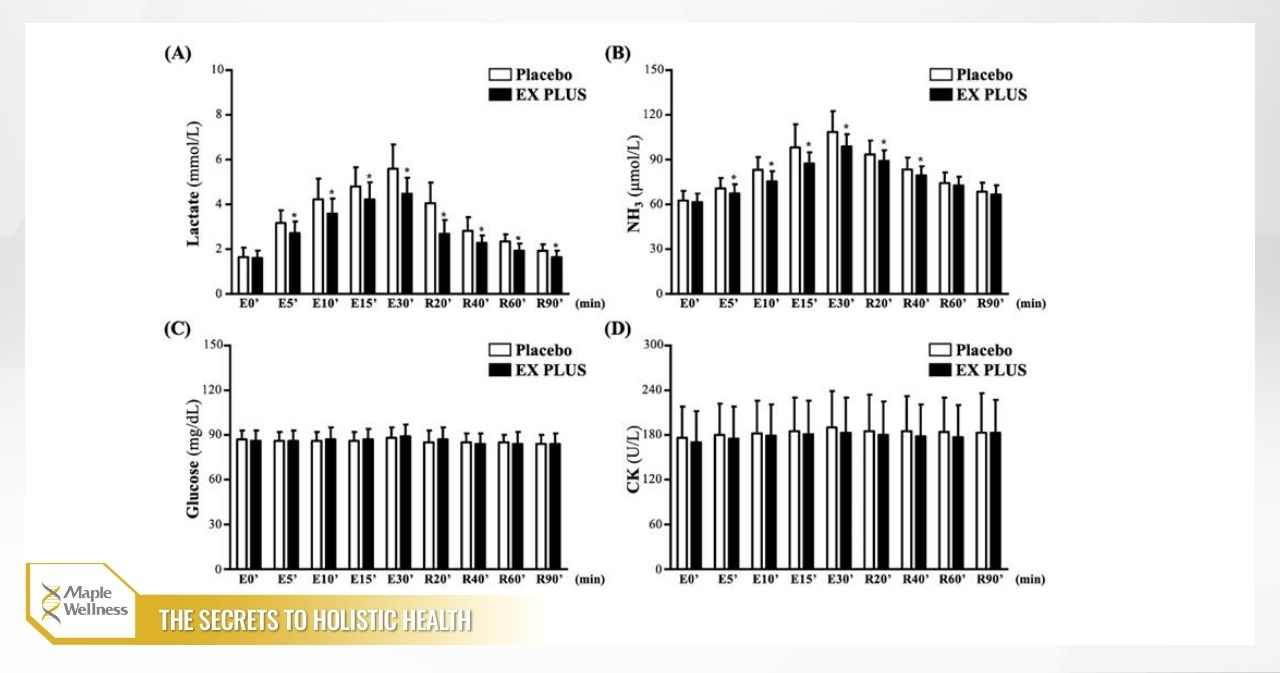
You can see the report details here: B vitamins, exercise performance, antifatigue, endurance, health
The Maple Wellness process
Step 1: Pre-IV screening
Your clinician reviews symptoms, supplement and medication history, and medical background, then books a pre-IV screening appointment. You bring prior labs and details about travel, sleep, diet, and any previous infusions to guide safe choices.
Step 2: Micronutrient testing
Based on findings, the team orders targeted tests for B12, vitamin D, and magnesium. They may add iron, CRP, or TSH when red flags appear, and they discourage indiscriminate supplementation.
Step 3: Personalized drip plan
Clinicians select B-complex, B12, magnesium, vitamin C, and electrolytes to match goals and labs, creating a personalized energy IV drip. Patient consent follows a plain-language review of benefits, risks, alternatives, and options such as an energy boost IV for travellers.
Step 4: Infusion and monitoring
Nurses prepare equipment using sterile technique and set an appropriate rate, then monitor vitals at regular intervals. Staff check the IV site every fifteen to thirty minutes and coach you on red-flag symptoms to report immediately.
Step 5: Aftercare and follow-up
You leave with hydration tips, medication guidance, and a simple sleep and energy diary for two to four weeks. At follow-up, clinicians adjust composition and frequency based on response to the energy IV drip and current priorities.
Quick comparison: IV vs oral options
When to start with oral
Most women start with oral nutrients for cost and everyday sustainability. Choose a balanced multivitamin and food-first strategies such as protein-rich meals and leafy greens.
When IV may be preferable
Consider an energy IV drip when you need faster effect or absorption issues limit oral uptake. Clinicians escalate to targeted blends for confirmed deficiencies, poor appetite, or post-illness recovery. Those who travel often may also prefer clinic care for structured hydration and monitoring.
How to combine safely
Oral nutrients provide the foundation, while periodic b-complex IV can accelerate repletion when screening supports it. Maintain diet, movement, and sleep as pillars, then use IV sessions to address specific gaps. Reassess with your clinician to adjust timing, ingredients, and frequency as your goals evolve.
FAQs (People Also Ask)
Which comes first, oral B-complex or a clinic infusion, and how long do results last?
Start with oral B-complex; schedule an energy IV drip for faster support that often lasts hours to days.
What goes into the blend, and how do you personalize for women forty to sixty?
Typical energy IV drip formulas include B-complex, B12, magnesium, vitamin C, and electrolytes; clinicians tailor choices to goals and labs.
Who should avoid infusions, and what schedule protects safety throughout a busy month?
Clinicians avoid infusions for heart or kidney disease, pregnancy, allergies, or uncontrolled blood pressure, and limit visits to two monthly.
Will my medicines interact, and do I need tests first?
Bring a complete medication and supplement list; clinicians check B12, vitamin D, and magnesium before individualizing the plan.
What side effects should I watch for, and when should I call?
Expect brief soreness or bruising; call immediately for spreading pain, redness, dizziness, faintness, or blood-pressure drops after energy IV therapy.
Conclusion & CTA
If low energy keeps holding you back, book a pre-IV screening at Maple Wellness Clinic. We’ll review your routine, medications, and labs, then design a personalized plan that may include an energy IV drip. Our clinicians pair targeted nutrients with nutrition, sleep, and movement coaching. For travel weeks, consider an energy boost IV as short-term support. Patients feel confident knowing each step protects well-being while addressing persistent sleep concerns with measured, practical care. Feel free to reach out for consultation here: MAPLE HEALTHCARE FANPAGE.
Related articles:
Contact for consultation
MAPLE INTERNATIONAL CO., LTD
Phone: 0705 100 100
Tax code: 0311948301
Date Range: 21 - 08 - 2012
Issued: Department of Planning and Investment of Ho Chi Minh City
Healthcare Group Members



Contact Us
COPYRIGHT




