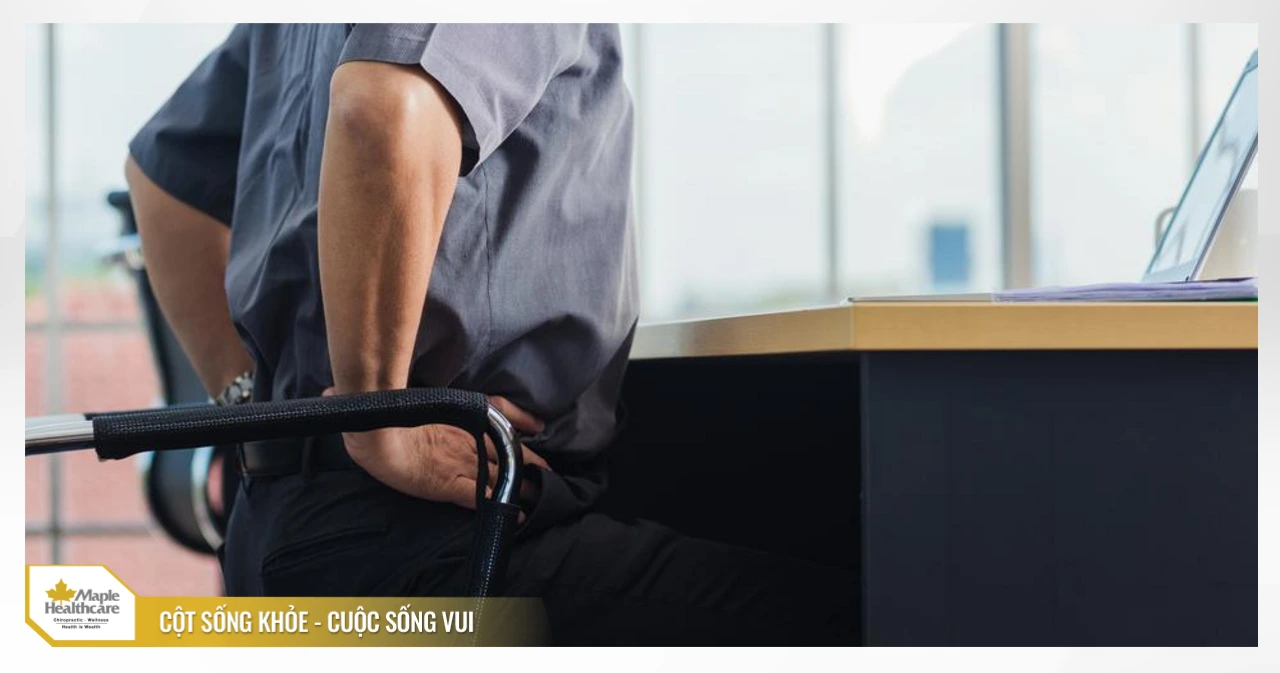
Piriformis muscle pain is deep pain in the buttock that may sometimes spread down the back of the thigh or lower leg when the piriformis muscle irritates or compresses the sciatic nerve. Also known as piriformis syndrome, this condition can interfere with daily activities, particularly prolonged sitting, climbing stairs, or exercising.
The piriformis muscle, also known as the pyramidal muscle or pear-shaped muscle, is a small muscle located deep in the buttock. It plays an important role in supporting hip movement. In practice, piriformis syndrome symptoms can easily be confused with sciatica caused by spinal conditions, particularly a lumbar disc herniation. However, it is important to understand that piriformis syndrome is an uncommon cause of sciatic-type pain.
This article will help you understand:
- Where the piriformis muscle is located and what it does.
- What piriformis syndrome is.
- Common symptoms of piriformis muscle pain.
- Common causes of piriformis muscle pain or inflammation.
- Ways to manage piriformis muscle pain, including home care, physiotherapy, medication, and when to see a doctor.
A Quick Overview of Piriformis Muscle Pain
Before going into detail, here are the key points about piriformis muscle pain:
- What is piriformis muscle pain? It is pain arising from the piriformis muscle, also called the pyramidal muscle, in the buttock. When this muscle spasms, becomes tight, swollen, or inflamed, it may irritate or compress the nearby sciatic nerve.
- Common signs:
- Deep pain on one side of the buttock.
- Pain that worsens with prolonged sitting, standing up after sitting, climbing stairs, or rotating the hip.
- Pain that may spread down the back of the thigh or calf, together with numbness, tingling, or burning.
- Who is more likely to experience it? People who sit for long periods, such as office workers and drivers; runners and cyclists; people who train excessively; those with a previous buttock or hip injury; and people with muscle imbalances around the pelvis.
- How does piriformis syndrome treatment usually begin? Treatment generally begins with conservative approaches, such as relative rest, avoiding movements that worsen pain, applying heat or cold, taking medication as prescribed by a doctor, and combining physiotherapy with suitable stretching and strengthening exercises.
- When should you see a doctor? You should seek medical attention if pain lasts longer than 1–2 weeks without improving, spreads down the leg with numbness or weakness, progressively worsens and affects walking or sleep, follows a significant injury, or occurs with warning signs such as changes in bladder or bowel control.

What Is the Piriformis Muscle and Where Is It Located?
The piriformis muscle is a small, flat, pear-shaped muscle located deep in the buttock, behind the gluteus maximus. In some medical and sports literature, it is also called the pyramidal muscle.
The location of the piriformis muscle is anatomically important. It originates from the front surface of the sacrum, the lower part of the spine just above the tailbone, and runs diagonally across the buttock to attach to the greater trochanter of the femur.
The main functions of the piriformis muscle include:
- Assisting with outward rotation of the thigh when the hip is extended.
- Helping move the hip away from the body when the hip is flexed.
- Contributing to hip-joint and pelvic stability while walking, running, climbing stairs, or changing direction suddenly.
The most notable feature of this muscle’s location is its close relationship with the sciatic nerve, the largest nerve in the body. In most people, the sciatic nerve runs directly beneath the piriformis muscle, although it may sometimes pass through it. Because of this close relationship, when the piriformis muscle spasms, tightens, swells, or becomes inflamed, it may directly irritate or compress the sciatic nerve. This is why piriformis muscle pain can cause symptoms that spread down the leg and closely resemble sciatica caused by a spinal problem.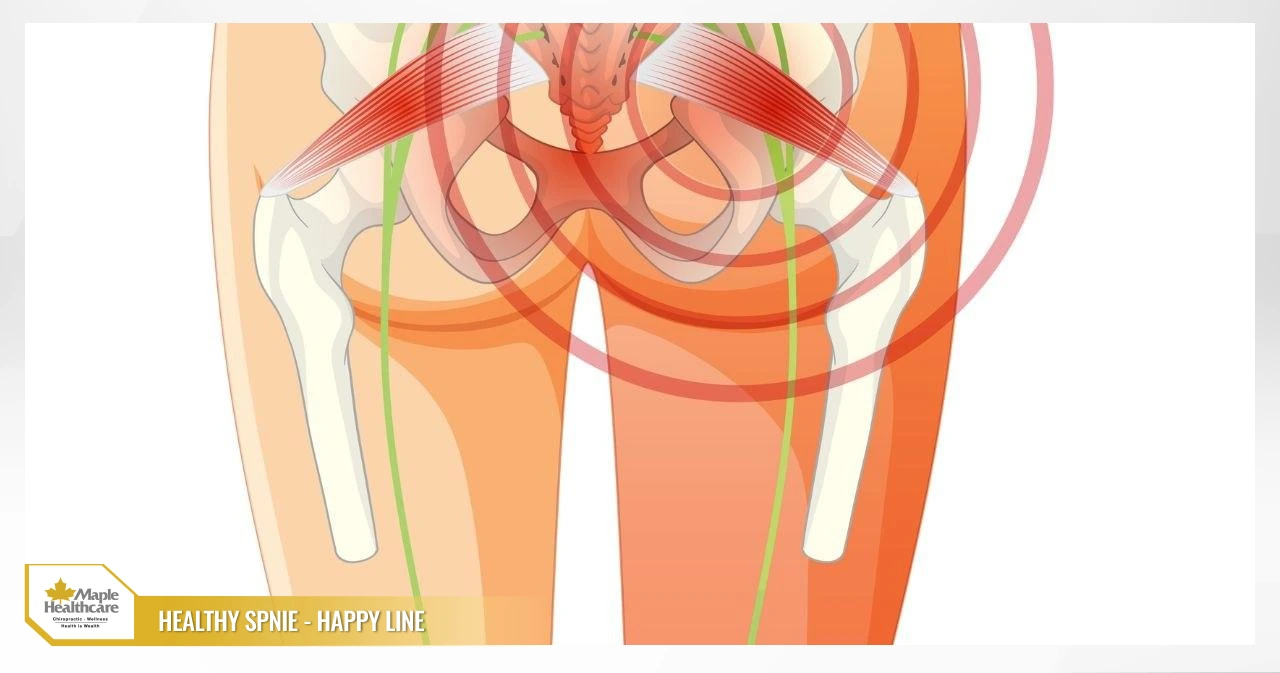
What Is Piriformis Syndrome?
Piriformis syndrome is a medical term describing a condition in which the piriformis muscle spasms, tightens, swells, or becomes inflamed, irritating or compressing the nearby sciatic nerve. As a result, you may feel pain in the buttock as well as pain, numbness, or tingling that travels along the back of the leg.
These terms can be distinguished as follows:
- Piriformis muscle pain: A general symptom-based term referring to pain in the area of the piriformis muscle.
- Piriformis syndrome: A clinical diagnosis in which piriformis-area pain occurs together with signs of sciatic-nerve irritation, such as radiating pain, numbness, or tingling.
- Piriformis muscle inflammation: This term indicates a true inflammatory response in the muscle, often caused by injury or overuse. In many cases, however, the muscle may simply be in spasm or tight without actual inflammation.
The pain mechanism is relatively straightforward: when the piriformis muscle spasms or becomes swollen, it takes up more space and places pressure on the sciatic nerve. This pressure can interfere with nerve signals and cause pain or unusual sensations in the leg.
It is important to emphasize that piriformis syndrome is an uncommon cause of sciatic-type pain. Most cases of pain radiating down the leg originate from problems in the lumbar spine, such as a disc herniation. You should therefore not assume that you have piriformis syndrome without a medical assessment.
Who Is More Likely to Develop Piriformis Muscle Pain?
Anyone can develop piriformis muscle pain, but some groups may have a higher risk because of their habits, work, or body structure. Key risk factors include:
- People who sit frequently: Office workers, students, and people who work at a computer for many hours. Prolonged sitting places continuous pressure on the buttock, which may cause the piriformis muscle to tighten and reduce circulation.
- Long-distance drivers: A fixed sitting position with little movement, combined with vibration while driving, may irritate the buttock and hip area.
- Athletes and people who exercise regularly: Repetitive activities such as running, cycling, or demanding lower-body exercises, including squats and lunges, may overload the piriformis muscle, particularly if training intensity increases suddenly or you do not warm up properly.
- People with a buttock or hip injury: A direct fall onto the buttock, a road accident, or a sports injury may cause inflammation, spasm, or scar tissue around the piriformis muscle, leading to persistent pain.
- People with poor posture or muscle imbalance: An abnormal gait, pelvic misalignment, weak gluteal muscles, or overly tight hip flexors may require the piriformis muscle to work harder to stabilize the pelvis, resulting in overload.
- People who frequently carry heavy loads or climb stairs: These activities increase the load on the hip and buttock area and may contribute to pain.
- Pregnant people or those who are overweight: Increased body weight and changes in pelvic mechanics may increase pressure on the muscles around the hip, including the piriformis muscle.
Common Piriformis Syndrome Symptoms
Symptoms of piriformis syndrome vary from person to person, but they usually affect the buttock and may spread down the leg.
Deep Pain on One Side of the Buttock
This is the most characteristic symptom. The pain is often described as:
- A dull ache, soreness, or deep pressure in the buttock.
- Occasionally, sharp or burning pain.
- Usually occurring on only one side.
- Discomfort that makes it difficult to find a comfortable sitting position.
Pain That Worsens with Prolonged Sitting or Position Changes
Pressure on the piriformis muscle or stretching and contracting it may worsen pain. Common activities that increase symptoms include:
- Sitting for long periods, especially on hard surfaces.
- Standing up after sitting for a long time.
- Climbing stairs or walking uphill.
- Sitting with your legs crossed.
- Rotating the hip.
Pain Radiating Down the Leg Resembling Sciatica
Because the piriformis muscle is located close to the sciatic nerve, irritation in this area may cause symptoms along the nerve’s pathway, including:
- Pain spreading from the buttock down the back of the thigh and calf, and sometimes to the foot.
- Numbness or a pins-and-needles sensation.
- Burning or crawling sensations.

Hip Tightness or Limited Movement
A piriformis muscle spasm may reduce the hip joint’s range of motion. You may experience:
- Difficulty rotating the hip inward or outward.
- Difficulty performing movements such as squats or crossing your legs.
- Tightness in the buttock after prolonged sitting or exercise.
Symptoms May Worsen After Exercise
Although gentle movement may be helpful, strenuous activities may increase pain, including:
- Long-distance running.
- Cycling.
- Heavy leg and buttock exercises.
Signs That May Point to Another Condition
It is important to recognize that piriformis muscle pain can resemble other conditions. Pain radiating down the leg is also a classic symptom of a lumbar disc herniation. It may also be confused with problems involving the hip or sacroiliac joints. If your pain occurs with significant back pain, leg weakness, extensive numbness, or changes in bladder control, medical assessment is essential.
Causes of Piriformis Muscle Pain
The exact cause of piriformis syndrome is not always clear, but it is often associated with muscle overload, spasm, injury, or anatomical factors.
Prolonged Sitting and Inactivity
This is a leading cause in modern life. Sitting continuously for many hours compresses the buttock, reducing blood flow to the piriformis muscle and causing it to become tight.
Repetitive or Excessive Exercise
Activities such as running, cycling, or repeatedly climbing stairs may cause small injuries and overload the piriformis muscle. Increasing exercise intensity or duration too quickly without allowing the body time to adapt is also a significant risk factor.
Poor Exercise or Movement Technique
Performing exercises such as squats or deadlifts with poor form may destabilize the pelvis. When larger muscles, such as the gluteus maximus, do not work effectively, the smaller piriformis muscle may have to take on more of the workload, leading to overload and spasm.
Buttock or Hip Injuries
A fall, strong impact, or sports accident may directly injure the piriformis muscle, causing inflammation, swelling, and spasm. Over time, an injury may leave scar tissue that reduces muscle flexibility and makes irritation of the sciatic nerve more likely.
Poor Posture and Pelvic Muscle Imbalance
Pelvic misalignment, one leg being longer than the other, or imbalance between muscle groups—such as tight hip flexors and weak gluteal muscles—may change hip mechanics and cause the piriformis muscle to work harder to compensate.
Anatomical Variations
In a small proportion of people, the sciatic nerve follows an unusual pathway and passes through the piriformis muscle rather than underneath it. These individuals may have a higher risk of piriformis syndrome because any muscle spasm may compress the nerve directly.
Being Overweight or Pregnancy-Related Changes in Pelvic Mechanics
Additional body weight increases the load on the joints and muscles of the lower body. During pregnancy, hormonal changes and a shift in the body’s center of gravity may also contribute to tightness in the pelvic muscles, including the piriformis muscle.
Is Piriformis Muscle Pain Dangerous?
The good news is that in most cases, piriformis syndrome is not life-threatening. When recognized early and managed appropriately, symptoms often improve.
However, if left untreated, it may significantly affect your quality of life:
- Chronic pain: Pain may persist and make daily activities such as working while seated, driving, or even sleeping uncomfortable.
- Reduced mobility: Pain and tightness may reduce hip movement, making it difficult to walk, run, or take part in activities you enjoy.
- Changes in walking pattern: To avoid pain, you may unconsciously change the way you walk, potentially contributing to other musculoskeletal problems in the back, hip, or knee.
The potential danger does not usually come from the piriformis muscle itself, but from an incorrect diagnosis. If your pain is actually caused by a more serious spinal problem, such as a disc herniation severely compressing a nerve root, treating it only as piriformis syndrome could delay appropriate care.
What Is the Treatment for Piriformis Syndrome?
Piriformis syndrome treatment generally focuses on conservative, non-invasive approaches. The goals are to reduce muscle spasm and inflammation, relieve pressure on the sciatic nerve, restore movement, and help prevent recurrence.
Relative Rest and Activity Modification
“Relative rest” does not mean that you must remain in bed. Instead, you should:
- Temporarily avoid or reduce activities that cause pain, such as running, long-distance cycling, or sitting for too long.
- Break up sitting time and stand up to walk gently every 30–45 minutes.
- Avoid sitting on very hard surfaces or sitting on a thick wallet in your back pocket.
Cold or Heat Therapy
- Cold therapy: This may be useful during the acute phase, within the first 48–72 hours, or after exercise causes pain to increase. Apply an ice pack wrapped in a towel to the painful buttock for 15 minutes several times a day to help reduce inflammation and swelling.
- Heat therapy: This may be useful for dull pain and chronic muscle tightness. Applying gentle warmth for 15–20 minutes may help relax the muscle and improve circulation.

What Medication Can Help with Piriformis Muscle Pain?
A doctor may prescribe certain medications to manage symptoms of piriformis muscle pain. However, you should never self-medicate. Medication options may include:
- Nonsteroidal anti-inflammatory drugs (NSAIDs): Such as ibuprofen or naproxen, which may reduce pain and inflammation.
- Muscle relaxants: These may be prescribed if the piriformis muscle is experiencing severe spasm.
Safety warning: Medication should be used only as directed by a doctor, particularly if you have a history of stomach, liver, kidney, or cardiovascular disease, or if you are pregnant. Medication may provide temporary symptom relief but does not address the underlying muscle tightness or imbalance.
Physiotherapy and Rehabilitation
This is one of the most important and effective approaches for piriformis syndrome. A physiotherapist may help you:
- Perform targeted stretching techniques to reduce tightness in the piriformis muscle.
- Use hands-on therapy techniques to release tight points in the muscle.
- Develop an exercise program to strengthen the surrounding muscles, particularly the gluteal and core muscles, including the abdominal and lower-back muscles, to reduce the load on the piriformis muscle.
- Advise you on modifying sitting, standing, and movement posture to help prevent recurrence.
Home Exercises for Piriformis Pain Relief
Gentle stretches may help reduce tension in the piriformis muscle. Here are some exercises you may try; stop if your pain increases:
Exercise 1: Supine Piriformis Stretch
- How to do it: Lie on your back with both knees bent and your feet flat on the floor. Cross the ankle on the painful side over the thigh of the other leg to form a figure four. Hold the thigh of the supporting leg with both hands and gently pull it toward your chest until you feel a stretch in the painful buttock.
- Hold: Hold for 30 seconds while breathing evenly. Repeat 3 times.
Exercise 2: Lying Gluteal Stretch
- How to do it: Lie on your back and bring one knee toward your chest. Use your hands to gently draw that knee across toward the opposite shoulder until you feel a deep stretch in the buttock.
- Hold: Hold for 30 seconds. Repeat 3 times on each side.
Exercise 3: Glute Bridge
- How to do it: Lie on your back with your knees bent and feet flat on the floor, hip-width apart. Tighten your gluteal muscles and lift your hips off the floor until your body forms a straight line from your shoulders to your knees.
- How to perform: Hold for 2–3 seconds at the top, then slowly lower your hips. Repeat 10–15 times. This exercise strengthens the gluteal muscles and may help reduce the load on the piriformis muscle.

When Should You See a Doctor?
Although many cases may improve on their own, you should see a doctor if you experience any of the following:
- Pain lasting longer than 1–2 weeks despite rest and self-care.
- Pain spreading down the leg with numbness, muscle weakness, or increasingly severe tingling.
- Pain severe enough to affect walking, sitting at work, or sleeping.
- Pain that develops after an accident or significant injury.
- “Red flag” symptoms, such as loss of bladder or bowel control or loss of sensation in the saddle area between the legs.
If your symptoms persist and affect your daily life, assessment at a specialized healthcare facility is important. At Maple Healthcare in Ho Chi Minh City, specialist clinicians can perform the necessary clinical examinations to identify the likely cause of your pain and rule out other conditions. Based on the findings, an individualized conservative care plan combining chiropractic care, physiotherapy, and rehabilitation exercises may be developed to support safe and effective pain relief.
Conclusion
Piriformis muscle pain is a common condition, particularly among people who sit frequently or exercise regularly. Although deep buttock pain that spreads down the leg can be worrying because it closely resembles sciatica caused by the spine, most cases of piriformis syndrome respond well to conservative care.
Effective piriformis syndrome treatment generally involves a multifaceted approach, including modifying daily habits, performing appropriate stretching and strengthening exercises, and using physiotherapy when needed.
Listen to your body. Changing your posture, making time for movement, and stretching each day can help reduce the risk of recurrence. If your pain persists, affects your quality of life, or occurs with warning signs, do not hesitate to seek advice from a healthcare professional for an accurate diagnosis and suitable care plan.
FAQ: Frequently Asked Questions About Piriformis Muscle Pain
Can Piriformis Muscle Pain Go Away on Its Own?
Answer: Mild cases may improve with appropriate rest, avoiding activities that cause pain, and performing gentle stretches. However, if the pain persists, returns, or is accompanied by neurological symptoms, you should have a medical assessment.
Is Piriformis Syndrome the Same as Sciatica?
Answer: Piriformis syndrome is one possible cause of sciatic-type pain. However, it is not the only cause and is less common than spinal problems such as a disc herniation.
What Can You Do for Fast Piriformis Pain Relief?
Answer: You may try cold therapy for acute pain or heat therapy for muscle tightness, together with gentle stretching and avoiding prolonged sitting.
Is the Pyramidal Muscle the Same as the Piriformis Muscle?
Answer: Yes. “Pyramidal muscle” is another name for the “piriformis muscle.”
Should You Exercise If You Have Piriformis Muscle Pain?
Answer: You should temporarily stop high-intensity exercises that cause pain. Instead, focus on gentle activities such as walking, swimming, and stretching and strengthening exercises designed for your condition.
Related article:
What Causes Right Flank Pain? Safe Treatment
What Is Sciatica? Signs to Recognize and How to Treat Sciatic Nerve Pain
Pain at the Crown of the Head: Causes, Warning Signs, and Effective Treatments
Contact for consultation
MAPLE INTERNATIONAL CO., LTD
Phone: 0705 100 100
Tax code: 0311948301
Date Range: 21 - 08 - 2012
Issued: Department of Planning and Investment of Ho Chi Minh City
Medical Practice License: No. 08834/HCM-GPHĐ
Healthcare Group Members



Contact Us
COPYRIGHT