
Do you often feel a dull, aching pain in your shoulder—especially when reaching overhead, brushing your hair, or even while sleeping? This discomfort may not just be ordinary muscle fatigue; it could be a sign of shoulder arthritis. This is a common condition that can significantly affect your quality of life, making even the simplest daily activities difficult.
Shoulder arthritis refers to inflammation affecting the structures of the shoulder joint, including the cartilage, synovial membrane, tendons, and surrounding bursae. Common causes include repetitive overuse, trauma, rotator cuff problems such as tendonitis or tendon tears, age-related shoulder osteoarthritis, and autoimmune conditions like rheumatoid arthritis.
This article will help you understand more about shoulder arthritis—from recognizing early warning signs, to the diagnostic process, effective treatment options, and lifestyle strategies to help protect your shoulder health over the long term.
What Is Shoulder Arthritis?
“Shoulder arthritis” is a general term describing inflammation that occurs in the shoulder joint or the soft tissues surrounding it. This inflammation may originate from the synovial membrane (the inner lining of the joint), the joint cartilage, the rotator cuff tendons, or the bursae (fluid-filled sacs that reduce friction). If left unmanaged, prolonged inflammation can damage the joint cartilage, leading to chronic pain and significant loss of mobility.
This condition directly affects your daily activities:
- Difficulty moving your arm: Raising your arm overhead, reaching behind your back (such as fastening a bra or pulling up a zipper), or reaching for items on a shelf can become painful.
- Impact on personal activities: Tasks like brushing your hair, getting dressed, or driving may also be affected.
- Sleep disruption: Shoulder pain is often worse at night, especially when lying on the affected side, leading to poor sleep and fatigue.
Shoulder arthritis is fairly common, particularly among older adults due to natural joint degeneration. It is also frequently seen in people with autoimmune conditions such as rheumatoid arthritis, which tends to affect both shoulders symmetrically. Additionally, individuals who frequently perform repetitive overhead movements—such as athletes, painters, or construction workers—are at higher risk for tendonitis and shoulder bursitis.
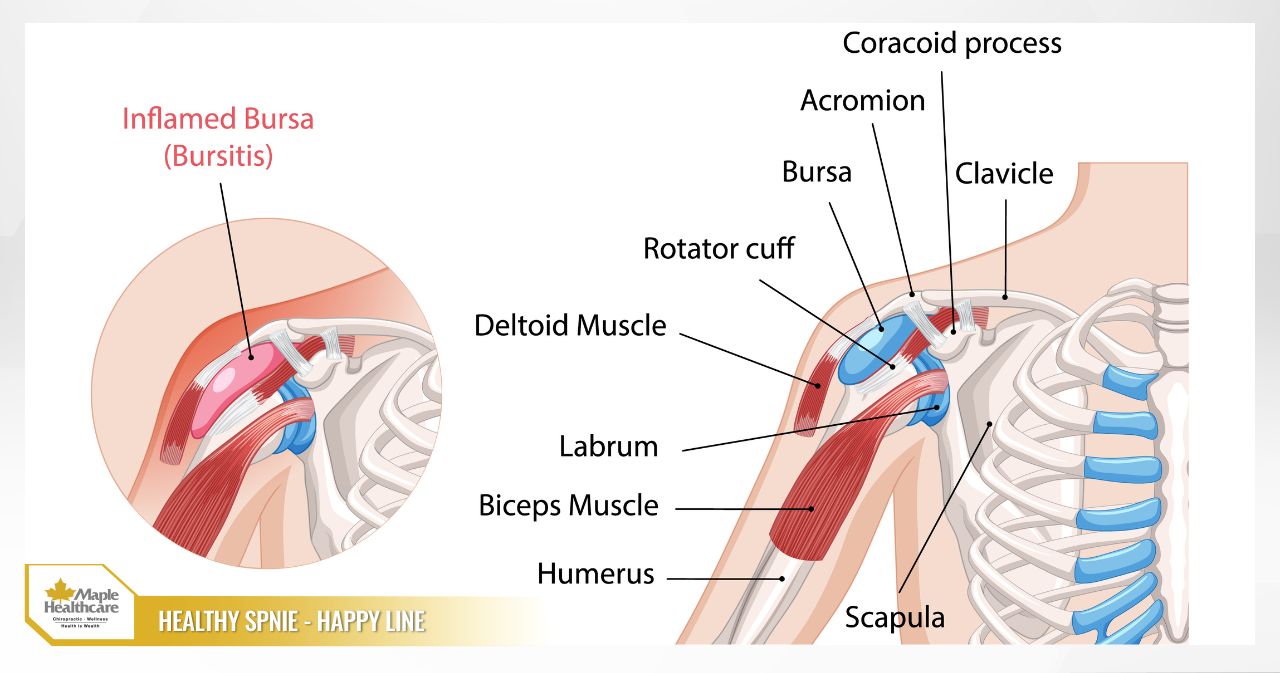
The shoulder joint (glenohumeral joint) has the greatest range of motion of any joint in the body. It is formed by the head of the humerus (upper arm bone) articulating with the glenoid cavity of the scapula (shoulder blade). To maintain stability and ensure smooth movement, the shoulder is surrounded by a complex system including the joint capsule, synovial membrane, bursae, and—most notably—the rotator cuff. This group consists of four main tendons that form a “cuff” around the head of the humerus, helping to lift and rotate the arm. When any of these structures becomes inflamed or injured, the function of the entire shoulder joint can be affected.
Common Causes of Shoulder Arthritis
Identifying the underlying cause of shoulder arthritis is essential for developing an effective treatment plan. Below are the most common causes:
- Overuse and repetitive movements (Tendonitis, Bursitis): Activities that require repeated overhead arm movements—such as tennis, swimming, badminton, or occupations like house painting and electrical work—can irritate and inflame the rotator cuff tendons or shoulder bursae.
- Rotator cuff injuries (Tendon tears or degeneration): The rotator cuff tendons can tear due to an acute injury (such as a fall or accident) or gradually wear down over time. When a tendon is damaged, it triggers an inflammatory response and persistent shoulder pain.
- Shoulder osteoarthritis (OA): This is the most common form of arthritis, occurring when the cartilage covering the ends of the bones wears away. Without this protective cushion, the bones rub against each other, causing pain, stiffness, and the formation of bone spurs.
- Rheumatoid arthritis (RA): This is an autoimmune disease in which the body’s immune system mistakenly attacks the synovial membrane of the joint, causing inflammation, swelling, and pain. Rheumatoid arthritis in the shoulder often affects both sides and can lead to joint damage if not treated early.
- Frozen shoulder (Adhesive capsulitis): This condition occurs when the shoulder capsule becomes thick, stiff, and contracted, causing pain and significantly limiting the shoulder’s range of motion—even when someone else tries to move your arm.
- Other causes: In some cases, shoulder arthritis may result from crystal deposits in the joint (pseudogout) or calcific tendonitis, which can cause sudden, severe pain. Occasionally, inflammation may develop without an identifiable cause.

Key point: Accurate diagnosis is essential. The treatment approach for osteoarthritis differs from that for rheumatoid arthritis, and managing a rotator cuff tear requires a different strategy than treating frozen shoulder.
Symptoms of Shoulder Arthritis
Symptoms of shoulder arthritis may develop gradually or appear suddenly, depending on the underlying cause. Below are warning signs you should not ignore:
- Shoulder pain: This is the most prominent symptom. The pain may be dull and aching, or sharp when performing certain movements (such as reaching overhead), and often worsens toward the end of the day. Notably, night pain can disrupt sleep, especially when lying on the affected side. Pain related to rotator cuff problems often makes it very difficult to find a comfortable sleeping position.
- Stiffness and reduced range of motion: You may feel that your shoulder is stiff and difficult to move, especially in the morning after waking or after a period of inactivity. The shoulder’s range of motion decreases, making it hard to rotate the arm inward or outward, or to raise it overhead.
- Swelling, warmth, and redness: The shoulder area may be slightly swollen, feel warm to the touch, or appear reddish. These are clear signs of an active inflammatory process.
- Grinding sounds or muscle weakness: When moving the shoulder, you may hear crackling, popping, or feel a catching sensation in the joint. Over time, the muscles around the shoulder may weaken due to pain and reduced use.
Symptoms can vary depending on the cause. For example, osteoarthritis typically progresses from mild pain during movement to significant stiffness, while calcific tendonitis may cause sudden, intense pain that feels like a stabbing sensation.
Diagnosis and Treatment of Shoulder Arthritis
To guide appropriate treatment, accurate diagnosis is the first and most important step.
Diagnostic Process
- Medical history and symptom review: Your doctor will ask detailed questions about the nature and location of your pain, activities that make it better or worse, any history of injury, and other systemic conditions (such as diabetes or autoimmune diseases).
- Clinical examination: The doctor will physically examine your shoulder to identify tender points, swelling, and warmth. Tests of active and passive range of motion, along with assessment of rotator cuff strength, help pinpoint the affected structures.
- Imaging studies:
- Shoulder X-ray: Usually ordered first to evaluate bone structure, detect signs of osteoarthritis such as joint space narrowing or bone spurs, or rule out fractures.
- Shoulder MRI: Provides detailed images of soft tissues including tendons, cartilage, and bursae. MRI is particularly useful for diagnosing rotator cuff tears, bursitis, and the extent of cartilage damage.
If left untreated, shoulder arthritis can lead to complications such as further cartilage damage, larger tendon tears, joint instability, chronic pain, and prolonged sleep disturbances.
Treatment Options
- Level 1: Activity modification and home care
- Relative rest: Avoid activities that cause pain, especially overhead movements.
- Cold/heat application: Apply cold packs for 15–20 minutes during the acute phase (when the shoulder is swollen and warm) to help reduce inflammation. Apply heat before gentle exercise to help relax the muscles.
- Level 2: Advanced conservative treatment
- Physiotherapy and rehabilitation: A specialized physiotherapy program helps reduce pain, restore range of motion, and strengthen the muscles that support the shoulder joint—especially the rotator cuff. Therapists may also use manual therapy techniques and therapeutic modalities to support recovery.
- Chiropractic care: Chiropractic adjustments can help improve joint mobility and alignment, potentially reducing pain and supporting overall shoulder function as part of a comprehensive care plan.
- Medications: Over-the-counter pain relievers and anti-inflammatory drugs (NSAIDs) may be used short-term to manage pain and inflammation. In some cases, corticosteroid injections may be considered to provide temporary relief.
- Level 3: Surgical intervention
- Surgery is typically considered only when conservative treatments have not provided sufficient relief. Options may include arthroscopic procedures to repair damaged tissues or, in severe cases, joint replacement surgery.
Prevention and Risk Reduction
While not all causes of shoulder arthritis can be prevented, you can take steps to reduce your risk and protect your shoulder health:
- Warm up properly: Always warm up before exercise or physical activity, especially before sports or tasks involving repetitive arm movements.
- Strengthen supporting muscles: Regular exercises that strengthen the rotator cuff and shoulder stabilizers can help protect the joint from injury.
- Practice good posture: Maintaining proper posture—especially when sitting at a desk or using electronic devices—helps reduce unnecessary strain on the shoulders and upper back.
- Avoid prolonged repetitive overhead activities: If your work or sport requires frequent overhead movements, take regular breaks and vary your tasks when possible.
Lifestyle Changes to Support Shoulder Health
A healthy lifestyle plays an important role in managing shoulder arthritis and supporting overall musculoskeletal health.
- Anti-inflammatory diet: Prioritize foods rich in omega-3 fatty acids (salmon, herring, walnuts), extra virgin olive oil, leafy green vegetables, berries, and spices like turmeric. Limit processed foods, refined sugars, and saturated fats, which may increase inflammation in the body.
- Choose low-impact exercises: Activities such as swimming, brisk walking, and stationary cycling help maintain cardiovascular health and muscle strength without placing excessive stress on the shoulder joint.
- Improve your sleeping position: If you have shoulder pain, try sleeping on your back or on the unaffected side. Placing a thin pillow under the painful arm can help support and keep the joint in a neutral position, reducing nighttime discomfort.
- Maintain a healthy weight: Keeping your weight within a healthy range helps reduce the overall load on your musculoskeletal system, including the shoulder, and may help decrease systemic inflammation.
When Should You See a Doctor?
You may be able to manage mild shoulder pain with home care. However, you should seek advice from a medical professional promptly if you experience any of the following:
- Shoulder pain lasting more than 2–4 weeks without improvement.
- Severe pain, especially at night, that disrupts your sleep.
- Noticeable muscle weakness or inability to lift your arm.
- Loss of shoulder function following an injury.
- Significant swelling, warmth, or redness in the shoulder.
- Visible deformity of the shoulder joint.
- Shoulder pain accompanied by fever or a general feeling of being unwell.
Conclusion
Shoulder arthritis is a complex condition with many possible causes, ranging from simple tendonitis to more serious conditions like osteoarthritis or rheumatoid arthritis. While it can cause significant pain and inconvenience, the good news is that most cases can be managed effectively through accurate diagnosis and a comprehensive treatment plan that prioritizes conservative approaches.

Don’t let shoulder pain hold you back from living your life. If you are experiencing the symptoms described above, take the initiative to consult with a healthcare professional. At Maple Healthcare in Ho Chi Minh City, our team of doctors and physiotherapists is ready to develop a personalized treatment plan—combining chiropractic care, physiotherapy, and rehabilitation exercises—to help you reduce pain, restore mobility, and lower the risk of recurrence in a safe and effective way.
Medical disclaimer: The information in this article is for educational and reference purposes only and is not a substitute for professional medical diagnosis or treatment. Please consult a qualified doctor or healthcare provider for advice specific to your condition.
FAQ: Frequently Asked Questions About Shoulder Arthritis
Is shoulder arthritis dangerous?
Answer: If left untreated, shoulder arthritis can lead to serious complications such as chronic pain, joint stiffness, muscle wasting, significant loss of shoulder mobility, and a major impact on sleep quality and daily activities.
How can I tell the difference between shoulder arthritis and ordinary muscle fatigue?
Answer: Muscle fatigue usually improves after a few days of rest. In contrast, pain from shoulder arthritis tends to persist, often worsens at night, and is accompanied by morning stiffness and a noticeable decrease in range of motion. For an accurate diagnosis, you should see a doctor.
Is physiotherapy effective for shoulder arthritis?
Answer: Yes, physiotherapy is one of the most important and effective conservative treatments. Targeted exercises help reduce pain, restore range of motion, strengthen the muscles that support the shoulder joint (especially the rotator cuff), and help prevent recurrence—without the need for invasive procedures.
Should people with shoulder arthritis exercise?
Answer: Yes, but it’s important to choose appropriate activities. Low-impact exercises such as walking, swimming, and cycling are encouraged. You should avoid overhead movements and contact sports that put pressure on the shoulder. It’s best to consult a physiotherapist for a safe and effective exercise program tailored to your needs.
Related articles:
Contact for consultation
MAPLE INTERNATIONAL CO., LTD
Phone: 0705 100 100
Tax code: 0311948301
Date Range: 21 - 08 - 2012
Issued: Department of Planning and Investment of Ho Chi Minh City
Medical Practice License: No. 08834/HCM-GPHĐ
Healthcare Group Members



Contact Us
COPYRIGHT