At-home elbow rehabilitation exercises play a critically important role in restoring movement, reducing pain, and rebuilding strength after an injury or surgery. When performed correctly and consistently, this process can determine much of the overall treatment outcome, helping you return to daily activities sooner and more safely.
So, what does at-home elbow rehabilitation involve? It is a structured process of gentle, targeted exercises designed to match your current level of injury or recovery. The main goals are to improve range of motion (flexion and extension), rebuild muscle strength, enhance hand coordination, and, importantly, prevent long-term complications such as joint stiffness or muscle atrophy.
Many studies and recommendations from reputable healthcare organizations show that proper and consistent rehabilitation during the first 3–6 weeks after injury can contribute more than 60% to overall treatment effectiveness. Three key principles to remember are: start early, exercise correctly, and monitor progress closely.
In this detailed guide, clinicians at Maple Healthcare will walk you through everything you need to know to carry out this process safely and effectively—from exercise types and step-by-step instructions to optimization tips, progress tracking, and a sample exercise schedule you can easily follow at home.
Understanding elbow function and why rehabilitation matters
To understand why rehabilitation is so important, it helps to first understand the structure and function of the elbow.
The elbow joint functions like a complex hinge and is formed by three bones: the upper arm bone (humerus), the ulna, and the radius. Together, they allow two main groups of movement:
- Flexion and extension: Allowing you to bring your hand closer to or farther away from your body.
- Forearm pronation and supination: Allowing you to turn your palm upward or downward.
These movements are controlled by surrounding muscles, tendons, and ligaments, including the biceps, triceps, and the wrist and finger flexor–extensor muscle groups.
Common causes of reduced elbow function:
- Acute injuries: Falls onto an outstretched hand or direct impacts may cause fractures, tendon tears, or ligament injuries.
- Post-surgical stiffness: Swelling, pain, and joint stiffness commonly occur after fracture fixation or ligament reconstruction surgery.
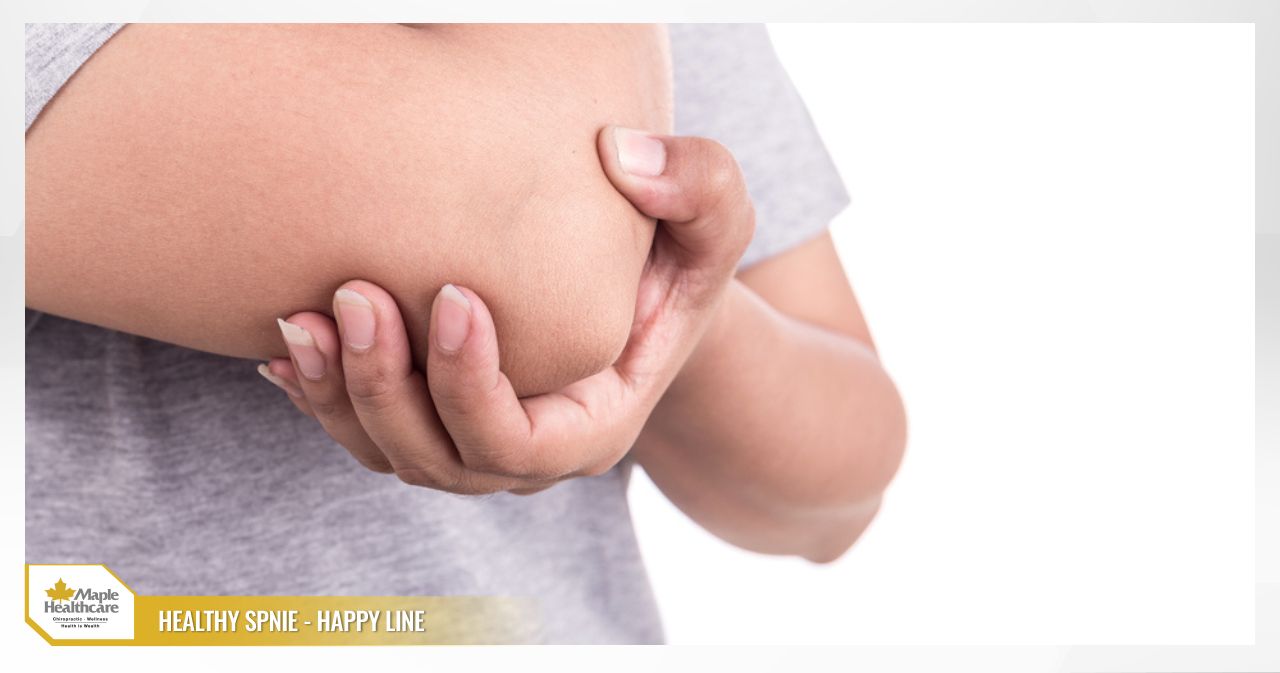
- Tennis Elbow: Inflammation of the wrist extensor tendons where they attach to the outer elbow (lateral epicondyle). This condition causes pain on the outside of the elbow, weakened grip strength, and difficulty with gripping or twisting tasks.
Benefits of early and appropriate rehabilitation:
- Restoring range of motion (ROM): Reducing stiffness and helping you regain full flexion and extension.
- Rebuilding muscle strength: Addressing weakness that develops after injury or immobilization.
- Improving coordination and dexterity: Making daily tasks such as gripping and twisting easier.
- Reducing pain and swelling: Improving circulation to support tissue healing.
- Preventing long-term complications: Lowering the risk of permanent stiffness, muscle atrophy, or chronic pain.
When should you start exercising at home? The ideal time is as soon as your doctor or physiotherapist has assessed you and cleared you for movement. In many cases, the first 3–6 weeks represent a “golden window” to begin gentle exercises that help prevent excessive scar tissue formation and joint stiffness.
Types of elbow rehabilitation exercises and their effects
A comprehensive at-home elbow rehabilitation program typically includes four main groups of upper-limb exercises. Combining these groups supports a more complete recovery.
- Range of motion (ROM) exercises:
- Goal: These foundational exercises help reduce stiffness, “lubricate” the joint, and gradually restore natural movement such as flexion, extension, pronation, and supination.
- When to use: Very early stages, as soon as movement is medically permitted.
- Stretching exercises:
- Goal: Reducing tightness in the forearm and wrist muscles that often develop after immobilization.
- When to use: Early to mid-stage recovery, usually after ROM exercises. Hold each stretch for 10–30 seconds.
- Strengthening exercises:
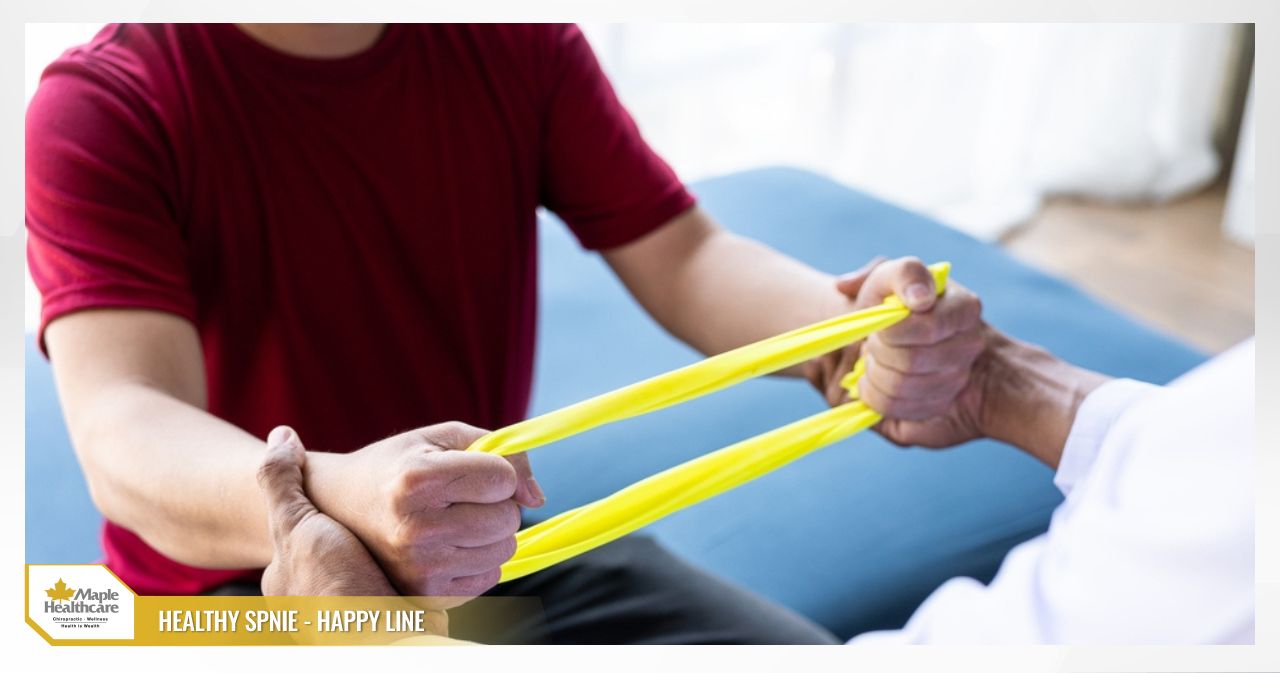
- Goal: Gradually rebuilding muscle strength. Initially, this may involve only arm weight, later progressing to light resistance such as a small water bottle (around 0.5 kg).
- When to use: Mid to late stages, once ROM exercises can be performed comfortably and without pain.
- Dexterity and grip-strength exercises:
- Goal: Improving hand strength and coordination, which are essential for daily activities such as opening doors, writing, or using a phone.
- When to use: Mid-stage recovery, alongside strengthening exercises.
Recovery phases:
- Early phase (Weeks 1–2): Gentle ROM exercises (passive or assisted active) and light stretching.
- Mid phase (Weeks 3–4): Full-range ROM, introduction of light resistance strengthening and dexterity work.
- Late phase (Week 5 onward): Gradual increases in resistance and functional exercises that mimic daily activities.
Simple equipment you can use at home: You do not need complex devices. Most exercises can be performed using:
- A towel (rolled to support the elbow)
- A foam ball or tennis ball
- A 0.5-liter water bottle or smartphone as light resistance
Step-by-step guidance for at-home elbow exercises
This is the most important section. Perform all exercises slowly, with control, and always listen to your body.
General notes before starting:
- Warm-up: Spend 3–5 minutes gently warming the joint by rotating the wrist and lightly shaking the arm. A warm compress around the elbow may help if stiffness is significant.
- Pain guideline: Mild stretching discomfort (1–3 out of 10) is acceptable. Sharp pain or a noticeable increase in pain is not—stop immediately if this occurs.
Elbow bend exercise (Flexion)
- Goal: Improve elbow flexion range of motion.
- Position: Sit or stand upright. Keep the exercising arm straight by your side, palm facing inward.
- How to perform: Slowly bend the forearm upward until your hand moves close to your shoulder. Hold for 5–10 seconds, then slowly return to the starting position.
- Dosage: 10 repetitions per arm, 1–3 sets. Rest 30–45 seconds between sets.
- Common mistake & correction: Shrugging the shoulder while bending the arm. Keep your shoulder relaxed and down throughout the movement.
Forearm rotation exercise (Pronation & Supination)
- Goal: Improve your ability to turn the palm up and down, a vital function for daily tasks.
- Position: Sit with your elbow bent at 90 degrees, tucked close to your side. Position your forearm forward with your palm facing the ceiling.
- How to perform: Keeping your elbow fixed at your side, slowly rotate your forearm until the palm faces the floor. Hold for 5 seconds, then slowly rotate back to the start.
- Dosage: 30 repetitions per arm (15 in each direction), 1–2 sets.
- Common mistake & correction: Moving the whole arm or shoulder. Focus on rotating only the forearm while keeping the elbow stationary.
Elbow extension exercise
- Goal: Strengthen the triceps muscle (the back of the upper arm).
- Position: Sit or stand, holding a light weight (like a 0.5-liter water bottle) in your hand. Raise your arm straight up toward the ceiling.
- How to perform: Keep your upper arm still and close to your head. Slowly bend your elbow to lower the bottle behind your head as far as comfortable. Then, use your triceps to straighten the arm back up.
- Dosage: 10 repetitions per arm, 1–3 sets. Only add weight when you can perform the motion without pain.
- Common mistake & correction: Arching your back or letting the elbow flare out sideways. Engage your core gently to keep your back straight and keep the elbow pointing forward.
Towel wringing exercise
- Goal: Increase grip strength and forearm muscle coordination.
- Position: Sit or stand, holding both ends of a towel with both hands.
- How to perform: Twist the towel as if wringing out water. Hold the tension for 6 seconds, then relax. Switch directions and repeat.
- Dosage: 10 repetitions, 1–2 sets.


Wrist lift exercise
- Goal: Strengthen the wrist flexor and extensor muscles.
- Position: Sit with your forearm resting on a table or your thigh, allowing your wrist and hand to hang off the edge. Hold a light weight (water bottle, phone).
- How to perform:
- Variation 1 (Palm up): Slowly curl your wrist upward toward your body. Hold for 5 seconds then lower.
- Variation 2 (Palm down): Slowly extend your wrist upward (back of hand toward body). Hold for 5 seconds then lower.
- Dosage: 15 repetitions for each variation, 3 sets.
Foam ball squeeze
- Goal: Increase hand grip force and improve sensation.
- Position: Hold a soft foam ball or tennis ball in your palm.
- How to perform: Squeeze the ball with moderate force, hold for 30 seconds, then slowly relax.
- Dosage: 10–15 repetitions per hand. Perform 2–3 sessions per week; avoid doing this daily to prevent overuse.

Passive elbow flexion
- Goal: Improve flexion range when you cannot yet actively bend your arm fully.
- Position: Sit or lie down, placing a rolled towel under the painful elbow for support.
- How to perform: Use your healthy hand to grasp the wrist of the injured arm. Gently use the force of the healthy hand to bend the painful arm toward the shoulder. Keep the wrist straight.
- Dosage: Hold at the maximum comfortable bent position for 1 minute, repeat 4 times.
Rehabilitation tips and secrets for optimizing results
To achieve high effectiveness in rehabilitation, you need to adhere to a few important principles.
Principles of safe progression:
- Always start light and simple, then gradually progress to heavier and more complex movements.
- Prioritize ROM and stretching exercises first, followed by strengthening exercises.
- If an exercise increases your pain, step back to an easier version or reduce the number of repetitions.
Using support tools correctly:
- When starting strengthening exercises, use very light objects like a phone. Only increase to a 0.5-liter water bottle when you are ready.
- Placing a rolled towel under the elbow during lying or sitting exercises can help reduce pressure on the joint.
The importance of professional guidance: Although you can exercise at home, an initial evaluation by a physiotherapist is essential. At Maple Healthcare, our clinicians will:
- Design a personalized exercise protocol suitable for your specific condition and recovery stage.
- Correct your technique to ensure you exercise properly and avoid secondary injuries.
- Monitor progress and adjust the program as your condition improves.
Tips for maintaining an exercise habit:
- Set a fixed schedule: Choose a specific time of day and make exercise a non-negotiable part of your routine.
- Keep a journal: Record your pain levels, sets, reps, and weights used. This helps you visualize your progress.
- Habit stacking: Attach exercise to an existing habit, for example: “Immediately after finishing the morning news, I will do my elbow exercises.”
Tracking your progress and assessing results at home
How do you know if you are on the right track? Pay attention to the following signs to monitor your progress effectively.
Signs of positive progress:
- Increased Range of Motion (ROM): You can bend your arm closer to your shoulder or straighten it more fully compared to last week.
- Improved strength: You can lift a slightly heavier object without feeling pain.
- Reduced stiffness: Morning stiffness in the elbow has decreased.
- Easier daily function: Tasks like brushing teeth, combing hair, or opening bottles are no longer difficult.
How to self-monitor at home:
- Daily journal:
- Rate your pain level (0-10) before and after exercise.
- Record the number of sets, repetitions, and weight (if any).
- Relative ROM measurement:
- When bending the arm, estimate the distance from your fingertips to your shoulder.
- When straightening the arm, compare it to your healthy side to see if the angle is improving.
- Function checklist: Create a list of daily activities (holding a cup, writing, typing) and rate the difficulty level each week.
When to stop exercising and see a doctor immediately? Safety comes first. You should stop exercising and contact a doctor or specialist at Maple Healthcare if you experience:
- Severe pain, sharp pain, or a sudden spike in pain during or after exercise.
- Unusual swelling, heat, or redness in the elbow.
- No improvement after 2–3 weeks of persistent exercise.
- New symptoms such as numbness or tingling radiating down the forearm or into the fingers.
Re-evaluation schedule: You should check your own progress weekly. However, a follow-up visit with a physiotherapist every 2–4 weeks is crucial to adjust the exercise program to suit your new stage of recovery.
Sample at-home exercise schedule (Weeks 1–6)
Below is a sample schedule. Please remember this is just a guide; you need to listen to your body and adjust accordingly.
Weeks 1–2: Acclimatization phase, prioritize ROM and stretching (Train 5–6 days/week)
- ROM:
- Exercise 1 (Elbow Bend): 2 sets x 10 reps.
- Exercise 2 (Forearm Rotation): 2 sets x 30 reps (15 each direction).
- Exercise 7 (Passive Flexion – if needed): Hold 1 minute x 4 reps.
- Dexterity:
- Exercise 6 (Ball Squeeze): 10 reps x 2 sets, perform every other day.
Weeks 3–4: Gradually increase resistance (Train 4–5 days/week)
- Maintain ROM exercises from weeks 1-2.
- Strengthening:
- Exercise 3 (Elbow Extension): 2 sets x 10 reps (start with no weight, then add a water bottle).
- Exercise 5 (Wrist Lift): 3 sets x 12-15 reps for each variation (use a phone or light object).
- Dexterity:
- Exercise 4 (Towel Wringing): 10 reps x 2 sets.
Weeks 5–6: Consolidate strength and function
- Increase load: If you can perform strengthening exercises easily and without pain for 2 consecutive sessions, try slightly increasing the weight (e.g., from a 0.5-liter bottle to 0.75 liters).
- Functional exercises: Start simulating real-world activities like twisting a bottle cap or lifting a light handbag (1-2 kg) within a pain-free range.
Adjustment rule: If pain exceeds 3/10 or the elbow swells, reduce the training volume by 20-30% (reduce reps or weight) or rest for 1-2 days before returning.
Conclusion: Start safe exercises for elbow rehabilitation
At-home elbow rehabilitation is a journey that requires patience and discipline. But the good news is, if you start early, choose exercises appropriate for each stage, practice consistently, and know how to track progress, the results will be worth the effort. Remember that the first 3–6 weeks are the golden phase to optimize recovery potential and prevent future complications.
Start your recovery journey today with these safe at-home arm exercises.
To ensure your recovery path is as safe and effective as possible, book a consultation with the Physiotherapy – Rehabilitation team at Maple Healthcare. We will build a conservative “drug-free, surgery-free” treatment plan, combining chiropractic care, physiotherapy, and personalized exercises to help you return to an active life with confidence.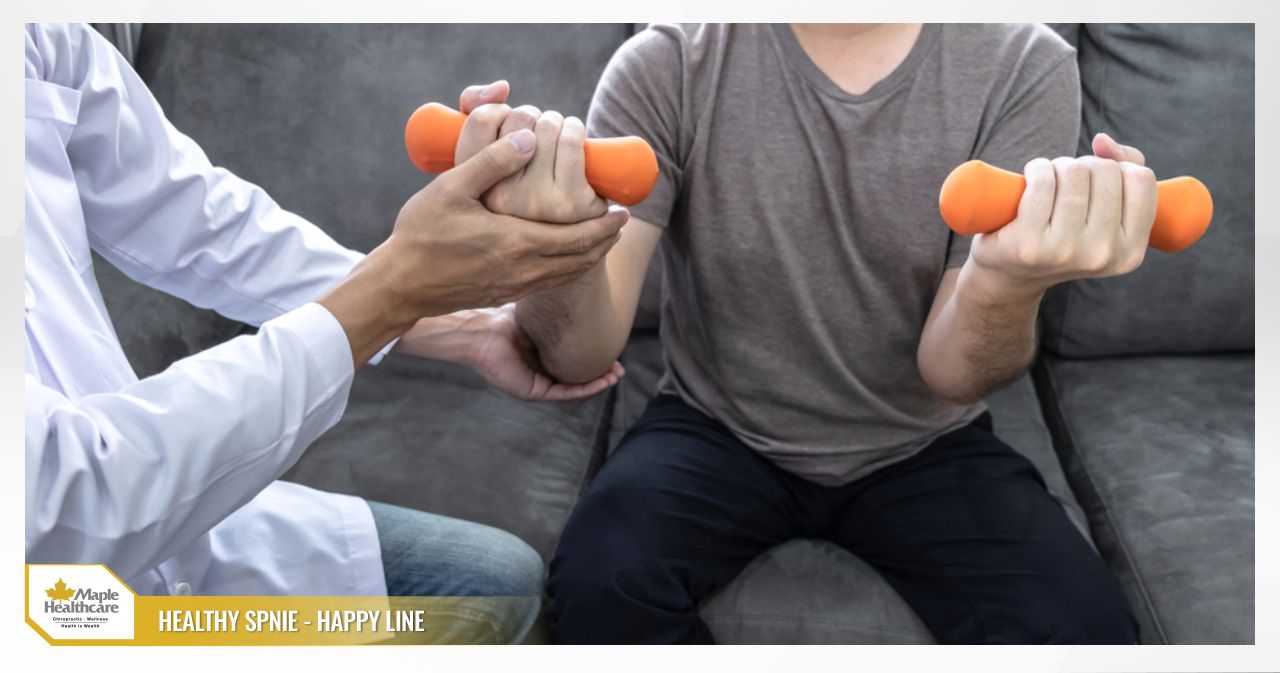
FAQ: Frequently asked questions about elbow rehabilitation
When should I start at-home elbow rehabilitation exercises?
Answer: The ideal time is immediately after being cleared by a doctor or physiotherapist. Typically, the first 3-6 weeks post-injury are the “golden window” to start gentle exercises, helping to prevent joint stiffness and accelerate recovery.
How much exercise is considered too much, and when should I stop?
Answer: You should stop immediately if you feel sharp pain, a sudden increase in pain (above level 3/10), or if the elbow becomes unusually swollen, hot, or red after exercise. Mild muscle tension is normal, but severe pain is a warning sign that you are overexerting yourself.
I have Tennis Elbow; which exercises should I focus on?
Answer: For Tennis Elbow, prioritizing wrist extensor stretching exercises is key. You should also focus on wrist strengthening exercises (Exercise 5) with very light resistance, and grip strength exercises like ball squeezing (Exercise 6) and towel wringing (Exercise 4). Always start gently and ensure movements are pain-free.
Can I use heavier weights to recover faster?
Answer: No, you should not. The most important rule is gradual progression. Start with very light objects like a 0.5-liter water bottle, and only increase gradually when you can perform the exercise easily and without pain. Using weights that are too heavy too soon can cause re-injury.
How long until I see improvement?
Answer: Typically, you will start to feel noticeable improvement in range of motion and pain reduction after 3–6 weeks if you exercise correctly and consistently. However, full recovery time depends on the severity of the injury and your adherence to the exercise program.
Related articles:
Elbow Pain Treatment Tennis & Golfer’s Elbow TreatmentContact for consultation
MAPLE INTERNATIONAL CO., LTD
Phone: 0705 100 100
Tax code: 0311948301
Date Range: 21 - 08 - 2012
Issued: Department of Planning and Investment of Ho Chi Minh City
Medical Practice License: No. 08834/HCM-GPHĐ
Healthcare Group Members



Contact Us
COPYRIGHT